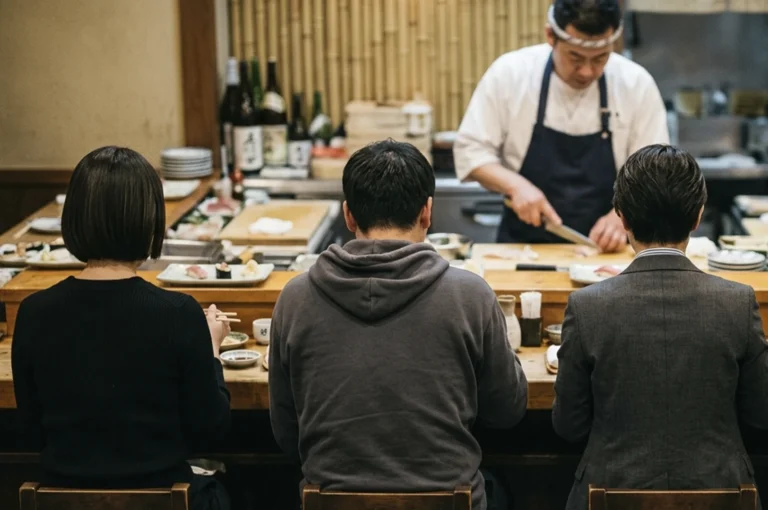
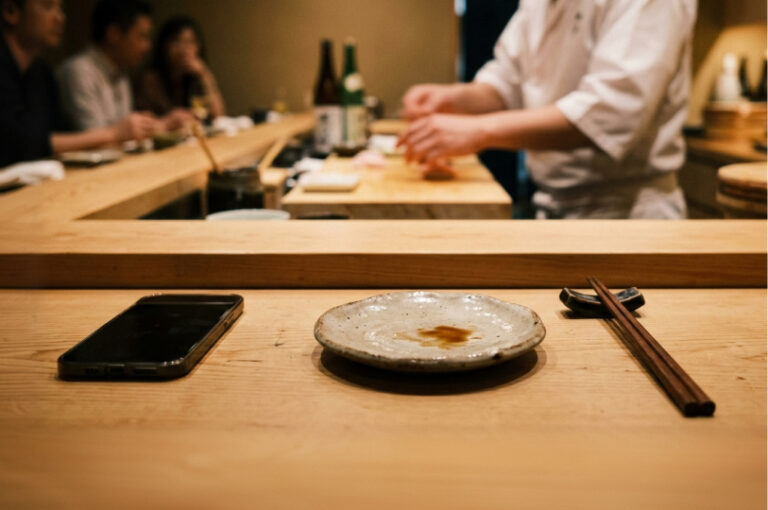
It happened during the transition from the cooked dishes to the nigiri. The chef had just wiped down his board, a ritualistic clearing of the stage that signals the main act is about to begin. I had my phone ready, face down on the cypress counter, the camera app already open in the background. I was prepared to document the progression, to capture the gloss of the soy sauce on the fish. It is a reflex now, a modern muscle memory that twitches before the fork or chopsticks even lift.
Then he placed it in front of me.
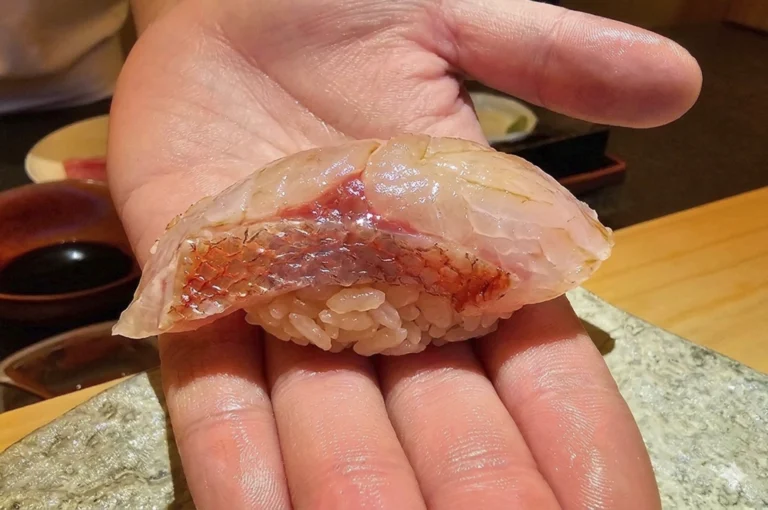
It was not the most expensive cut. It wasn’t the otoro with its marble-like fat, nor was it a mound of uni piled high like golden treasure. It was a simple piece of kohada, gizzard shad, its silver skin scored in a precise, geometric pattern that caught the light like a prism. The chef murmured the name, his voice low, almost lost under the quiet jazz playing in the background.
I stared at it. I didn’t reach for my phone. I didn’t frame the shot. My hand, usually so quick to bridge the gap between experience and documentation, stayed resting on my napkin. In that split second, the only thing that mattered was the temperature. I could feel the warmth of the rice radiating upward, a stark contrast to the cool air of the room. I knew, with a certainty that bypassed logic, that this temperature was fleeting. It was a living thing, decaying the moment it left the chef’s hand. To pause, to frame, to focus, would be to let that perfect equilibrium die.
So I ate it.
The vinegar hit first, sharp and bright, cutting through the rich oiliness of the fish. Then the rice crumbled, individual grains retaining their integrity while yielding to the bite. It was a complete sentence, a perfect thought expressed in flavor and texture. It was gone in seconds.
The chef watched me, his eyes crinkling slightly at the corners. He knew. He saw the hesitation, the abandonment of the ritual of capture, and the surrender to the ritual of eating. He didn’t say anything, just gave a barely perceptible nod before turning back to his board to prepare the next piece.
I looked at my empty plate, a small smudge of soy sauce the only evidence that anything had been there at all. There was no record of it. No image to upload, no visual proof to share with the ether. If I told someone about it later, I would struggle to describe the exact shade of silver or the precise angle of the cuts. The memory was already softening, becoming subjective, ours alone.
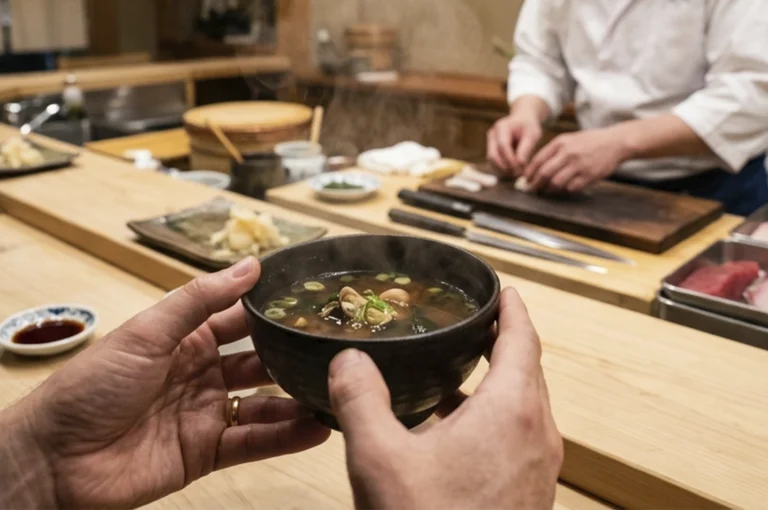
For the rest of the meal, my phone stayed face down. I missed capturing the anago, the tamago, the soup. I realized that by trying to freeze these moments, I had been keeping them at arm’s length, observing my life rather than inhabiting it. The best piece wasn’t the one that looked the most beautiful on a screen. It was the one that demanded my full attention, the one that refused to wait for the shutter to click.