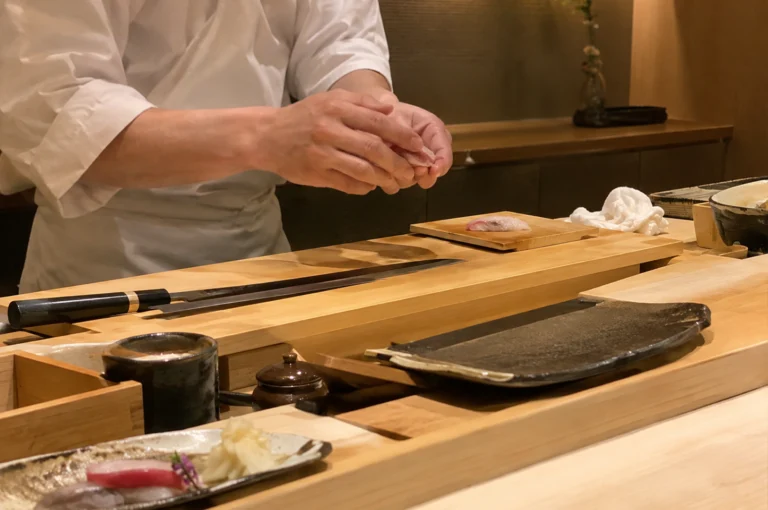
I sat close enough to hear the faint sound of the willow blade moving through the flesh of a lean tuna. The cut took only a fraction of a second. The chef laid the ruby slice gently on his wooden board and immediately turned his attention away from it. He reached into the deep wooden tub beside him. This was the part of the movement that required his true focus.
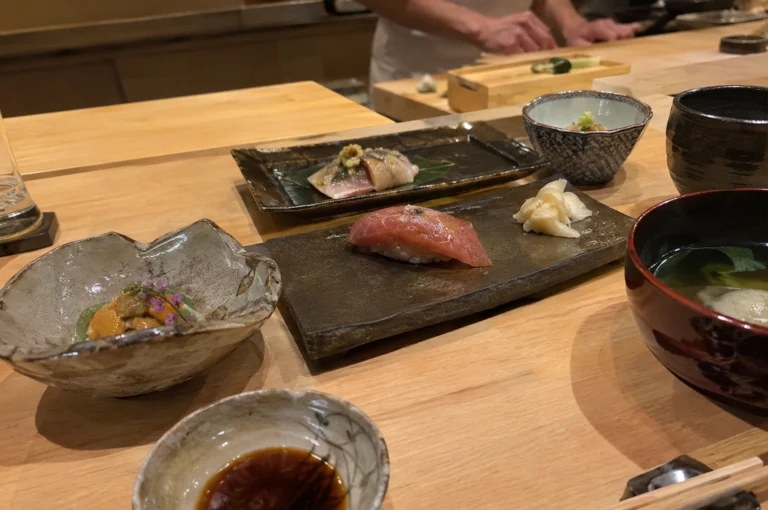
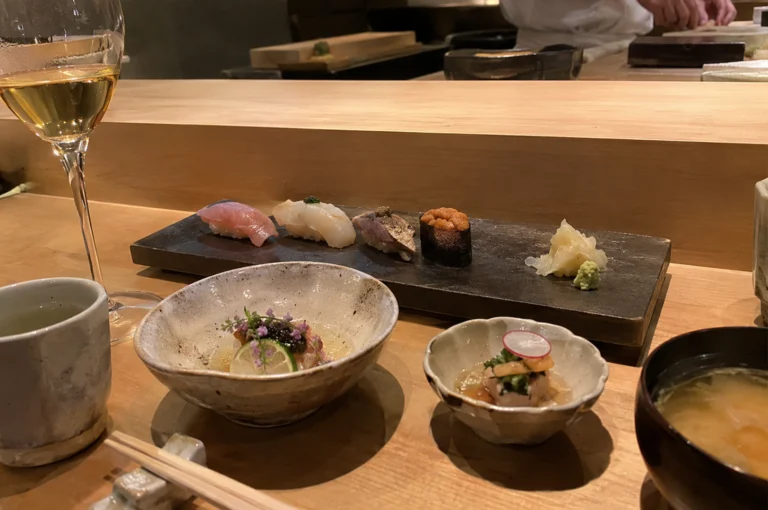
We instinctively marvel at the seafood when we sit at the counter. We admire the exact angle of the scoring on a piece of squid and the shimmering surface of marinated mackerel. The fish is the visual centerpiece of the room. Yet watching the master work I realized the fish was handled as little as possible. The goal was preservation. The raw ingredients were kept pristine and untouched until the final possible moment. The rice was entirely different.
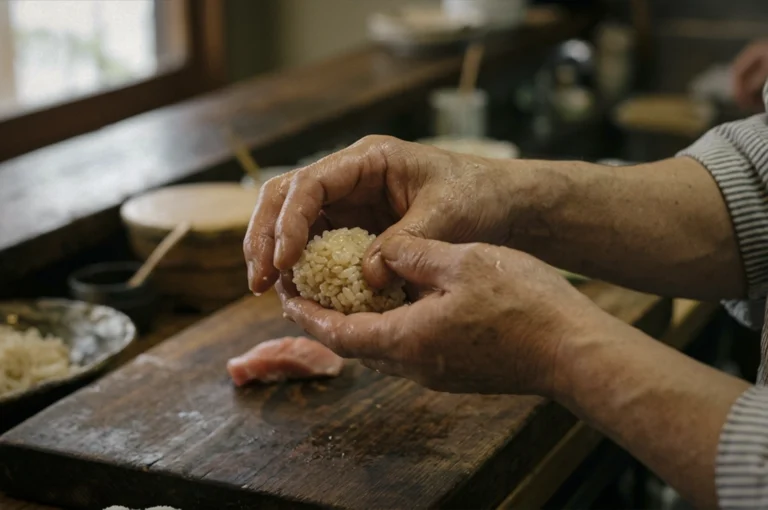
Every time a new piece was formed the chef spent an astonishing amount of time communicating with the rice. He scooped a small mound into his palm and tested its temperature. He used the tips of his fingers to measure the density of the grains. He applied pressure, released it, and applied it again. He was coaxing a delicate structure into the exact shape required to support the weight of the seafood. The rice was touched more than the fish.
This constant physical connection dictates the entire rhythm of the evening. The vinegared grains respond to the heat of the room and the moisture in the air. While the fish remains static in its perfection the rice is in a state of continuous change. The master must negotiate with it for the duration of the meal. He adjusts his grip to support the heavy richness of fatty tuna and softens his touch for the fragile body of sweet shrimp.
The true craftsmanship of the counter hides within this quiet repetition. We are served a beautiful slice of sea bream and we attribute our pleasure to the ocean. We rarely consider the complex architecture resting underneath it. But the foundation is where the chef leaves his personal signature. His hands are intimately imprinted on every single grain. The precise amount of air trapped inside the mound dictates exactly how the bite will collapse on the tongue.The chef wiped his steel blade and returned it to its resting place. He reached into the warm wooden tub one final time. He molded a small portion of rice and cradled it in his right palm. He closed his hand around it for a brief second before lifting the final piece of seafood to meet it.