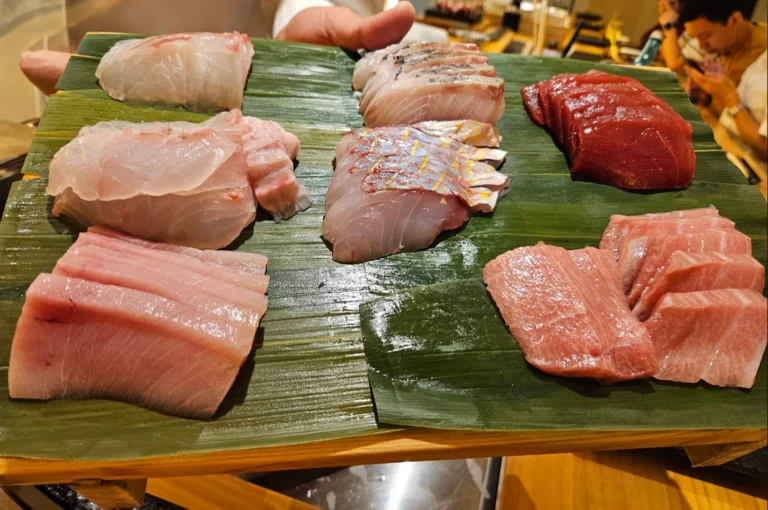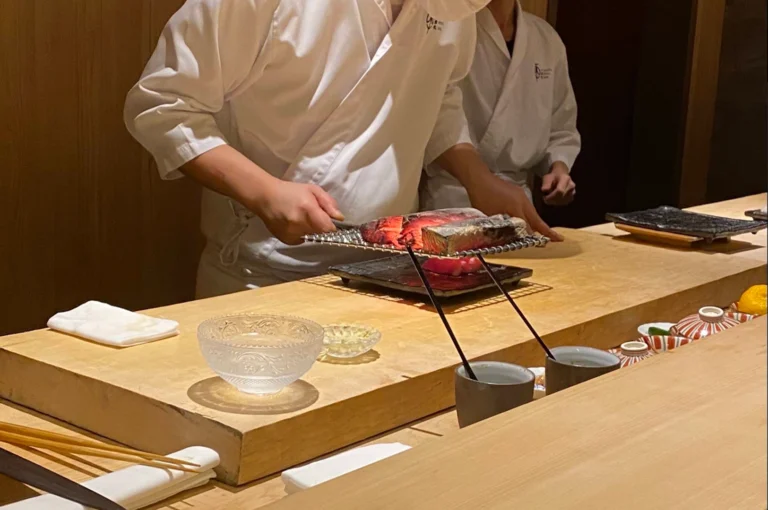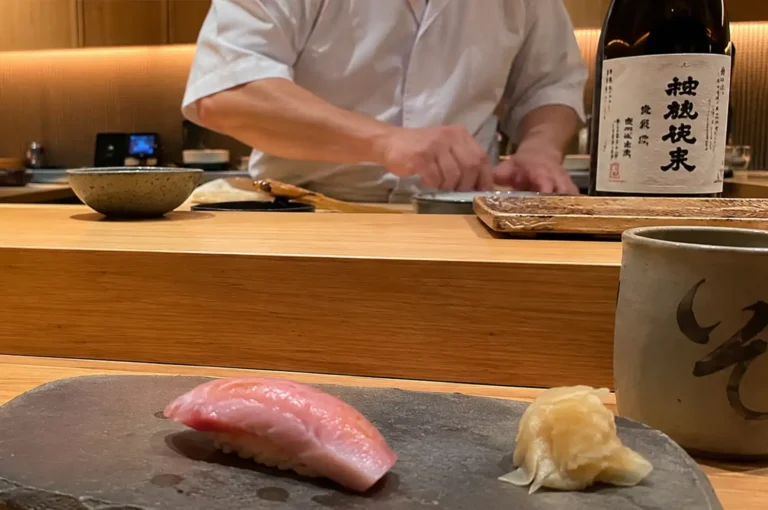
There’s something profound that happens when you surrender control at an omakase restaurant counter. This revered japanese omakase dining style that whispers “I’ll leave it up to you” becomes an invitation to pause, to truly observe. Here, the chef curates a seasonal tasting menu based on the freshest seasonal ingredients, allowing diners to experience a progression that unfolds with the same deliberate care as tea being poured. Each carefully crafted dish arrives not rushed, but in its proper time, encouraging you to notice what might otherwise slip past unnoticed: the gentle warmth of perfectly seasoned rice, the way light catches the surface of pristine fish, and the artistry behind every nigiri and sashimi course.
This thoughtful progression extends beyond the plates themselves. When sake or wine appears alongside each course, there’s intention in every pairing, a crisp sake that seems to awaken the sweetness hiding in today’s catch, or perhaps a delicate wine that finds harmony with the richness of aburi sushi or cooked dishes. These moments reveal how balance becomes more than technique; it transforms into a quiet philosophy that guides both hand and palate. The careful attention to pairing speaks to something deeper, a pursuit of harmony that extends far beyond the meal itself.
The Philosophy Behind Japanese Omakase
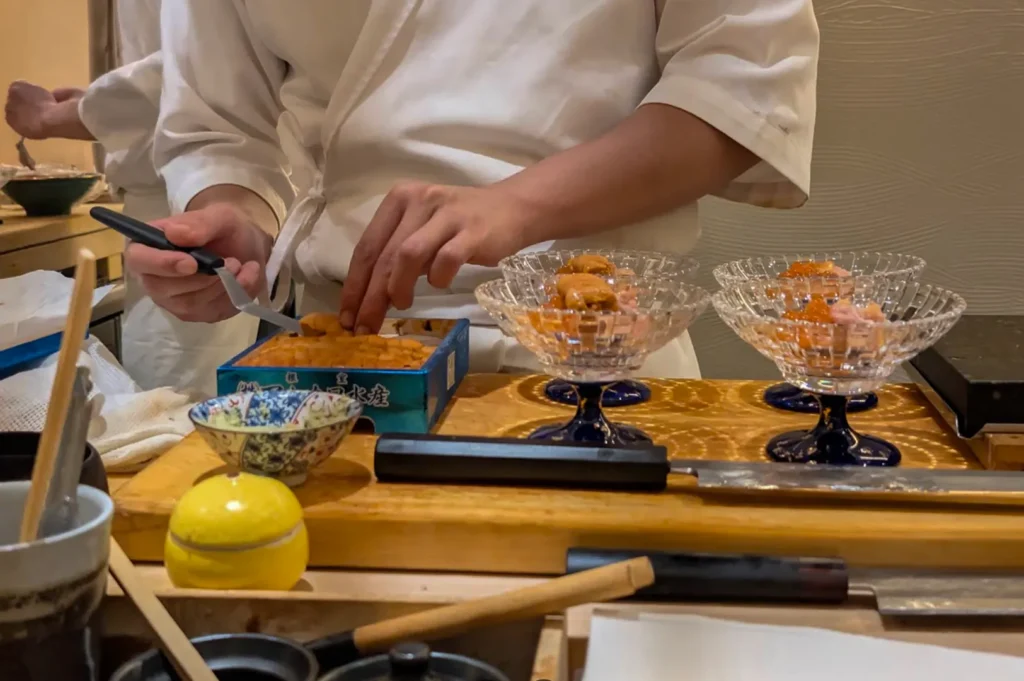
At its heart, omakase rests on something rarely found in modern dining: trust. When you allow the chef to guide your evening, you’re entering a conversation that began hours earlier at markets like Tokyo’s Toyosu Market, where the day’s finest selections of premium seafood and seasonal sashimi were chosen with you in mind. The progression that emerges from delicate sashimi that barely touches the palate to more substantial preparations that linger and satisfy follows an internal logic that reveals itself slowly.
This seasonal tasting menu based approach invites you to notice subtleties that hurried eating tends to obscure. The texture of rice becomes something worth contemplating, the precise angle of a knife cut speaks to years of practice, and the way flavors build and recede across multiple sushi courses creates its own quiet rhythm. There’s wisdom in this pacing; it asks you to be present for each moment rather than anticipating the next.
The Art of Sushi Craftsmanship
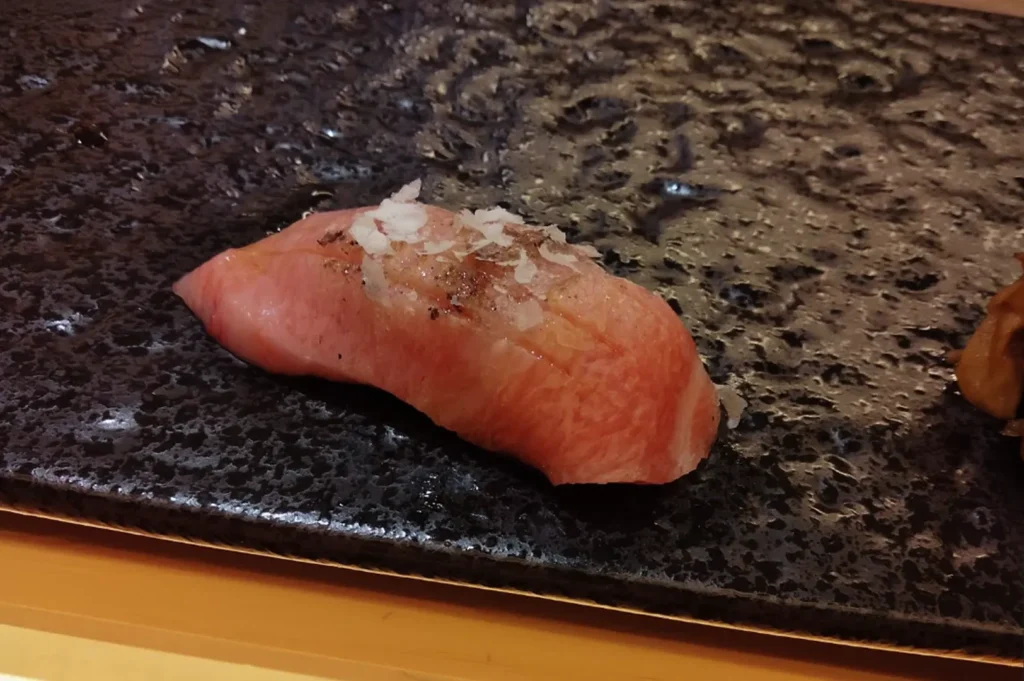
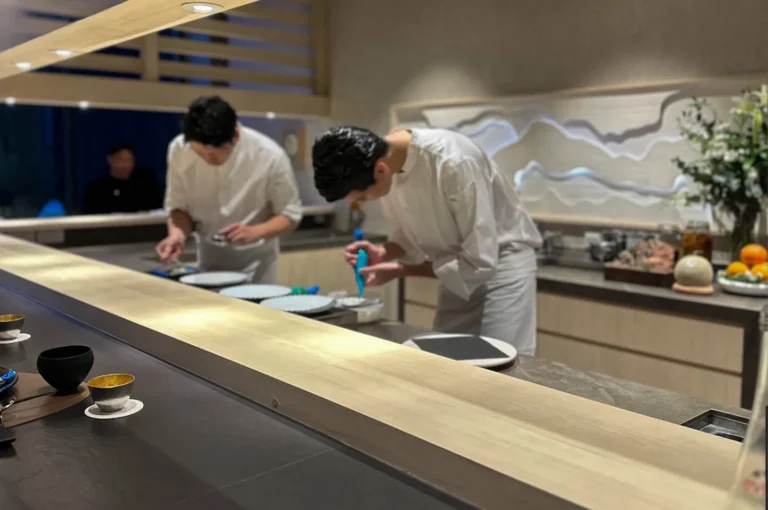
Watching sushi preparation unfold before you reveals the meditation hidden within technique. The preparation of shari or sushi rice becomes almost ritualistic in its precision, each grain warmed to exactly the right temperature, seasoned with a touch that speaks to countless repetitions. At places like Sushi Masa by Ki-setsu, where Chef Masa personally works within arm’s reach, you witness how expertise becomes instinct, how years of practice translate into movements that appear effortless yet carry profound intention.
Every piece that reaches you has been shaped by this dedication, from the day’s sea urchin (uni), sweet and briny, to the careful formation of each nigiri. The seasonal highlights change with a logic that connects you to something larger than the meal itself, reminding you that this craft exists in constant dialogue with nature’s rhythms. Hot dishes arrive when they feel most welcome, their warmth and complexity offering counterpoint to the clean simplicity of raw preparations.
Omakase Dining Experience in Singapore
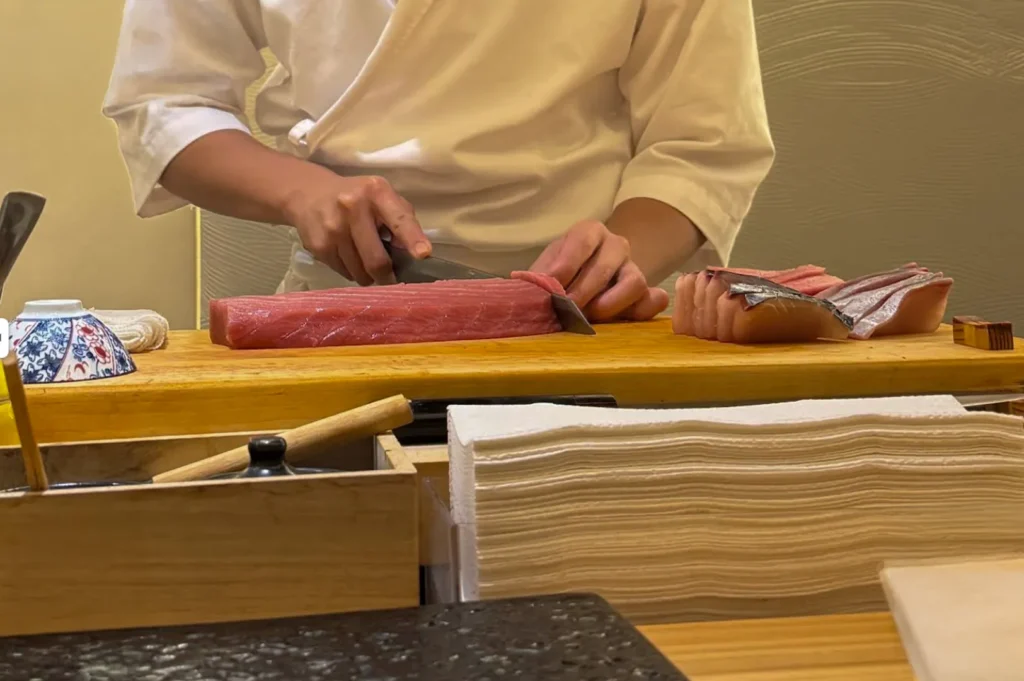
Singapore’s omakase scene understands the power of intimacy. These small counters, often seating just eight or ten guests, create spaces where connection becomes possible, where you can observe not just the chef’s movements but the thought behind them. At Sushi Masa by Ki-setsu, the exclusive counter seating at Cuppage Plaza becomes a stage where Chef Masa’s personal curation unfolds, each course carrying his signature while honoring tradition.
The minimalist surroundings serve a purpose beyond aesthetics; they focus attention where it belongs on the finest ingredients and the hands that transform them. The suggestion of smart casual dress feels appropriate, not pretentious; it acknowledges that you’re participating in something special without making ceremony feel burdensome. These meals stretch across hours not because they must, but because they should because this kind of attention cannot be rushed.
Omakase dining offers a unique culinary journey where the chef expertly crafts a personalized menu, showcasing the freshest ingredients and refined techniques. You can check them out here.
Why Omakase Encourages Mindful Eating
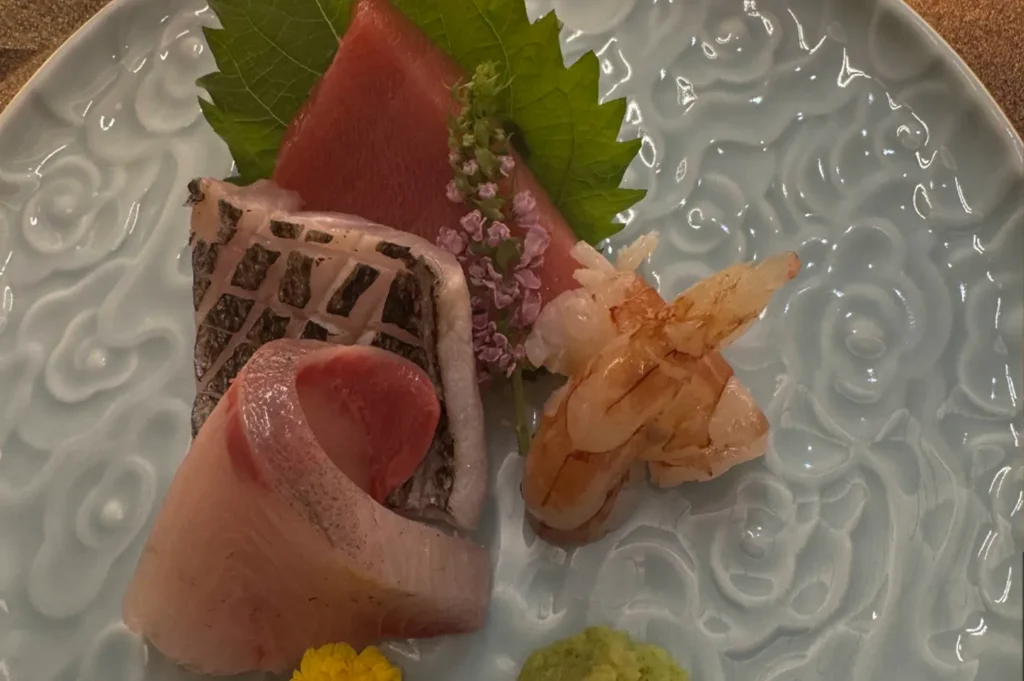
The transformation happens gradually, almost without notice. By placing the chef at the centre stage of your evening, you find yourself following a different rhythm, one that honors the time it takes to truly taste, to appreciate the weight of a piece of fish on your tongue, to notice how temperature and texture work together. Each course arrives with its own timing, creating natural pauses that allow flavors to register fully before the next arrives.
These moments between courses become as meaningful as the food itself. Conversation with the chef deepens your understanding, not just of technique, but of the intention behind each choice. This personal connection elevates the meal beyond nourishment into something closer to performance art, where you’re both audience and participant in an ongoing dialogue about craft, season, and tradition.
Lunch Omakase Menu Options in Singapore
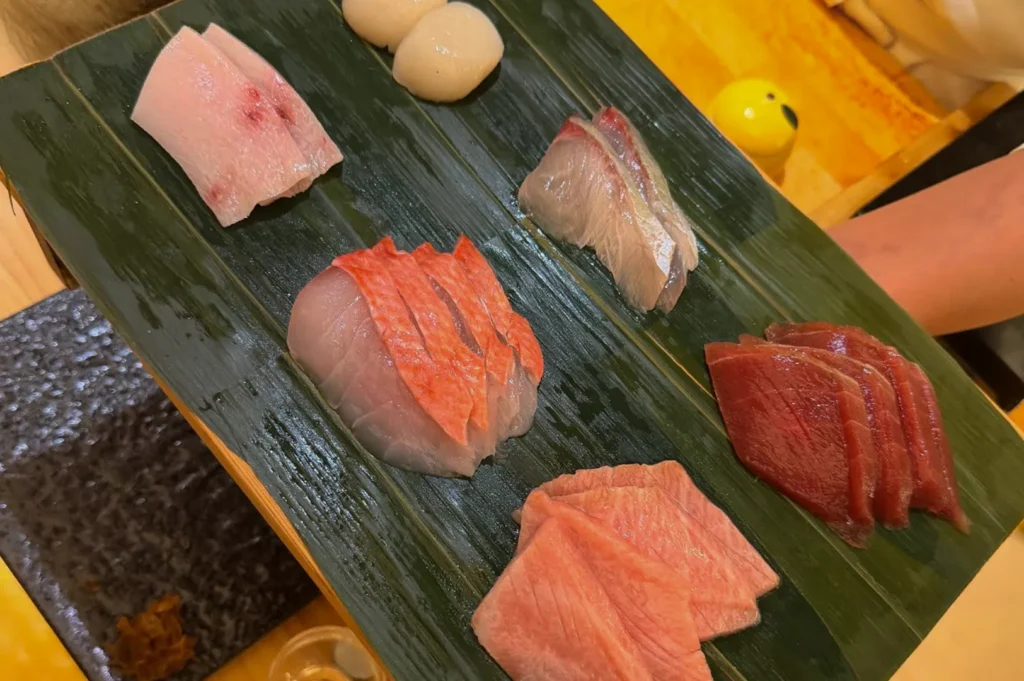
The lunch omakase offers its own particular charm, a more compact expression of this craft that fits within the pace of a Singapore afternoon. These shorter lunch courses distill the essence of omakase into fewer dishes while maintaining the same commitment to freshness and careful preparation. There’s something appealing about experiencing this level of attention during daylight hours, when the intensity feels slightly more approachable.
Places like Sushi Yujo and Sushi Muni have crafted lunch experiences that honor the tradition while acknowledging different appetites and schedules. At Sushi Yujo, Chef Desmond Fong’s interpretations blend innovation with respect for tradition, each lunch course starting from $68 revealing thoughtful balance between creativity and technique. Sushi Muni’s intimate ten-seat setting allows the chef’s Edomae expertise to shine during quieter afternoon service, with offerings from $98 to $198 that span the spectrum from accessible to indulgent.
These lunch omakase menus ranging from reasonable price points provide a gentler introduction to omakase’s particular rhythms. Whether seated at a counter in Cuppage Plaza or another thoughtfully chosen location, you discover how Singapore’s japanese dining style has adapted this tradition without losing its essential character. For those seeking an affordable omakase experience without compromising on quality, several options offer excellent value. The refined execution ensures that compromise never touches the quality of seafood, the precision of preparation, or the care that guides each course from chef to guest.
Conclusion
Japanese omakase reveals itself as something far more nuanced than a meal. It becomes a practice in paying attention, a lesson in trusting another’s expertise, and an invitation to slow down enough to notice what careful hands can create. Whether you find yourself at Sushi Masa by Ki-setsu or another thoughtful establishment across Singapore, the experience offers a rare kind of nourishment that extends beyond the physical. It reminds you that eating can be contemplative, that technique and feeling need not be separate, and that some of life’s most meaningful moments happen when you allow yourself to be guided rather than directing the experience yourself.
Reserve your omakase dining experience today and discover the exquisite world of japanese omakase in Singapore.