Category At the Counter

The diner’s perspective: personal experiences, memorable meals, what you notice from your seat

Every Course Is Carefully Considered

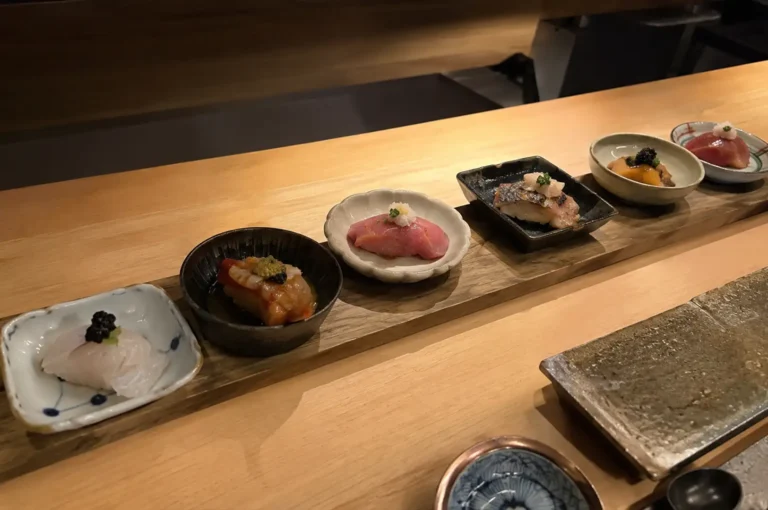
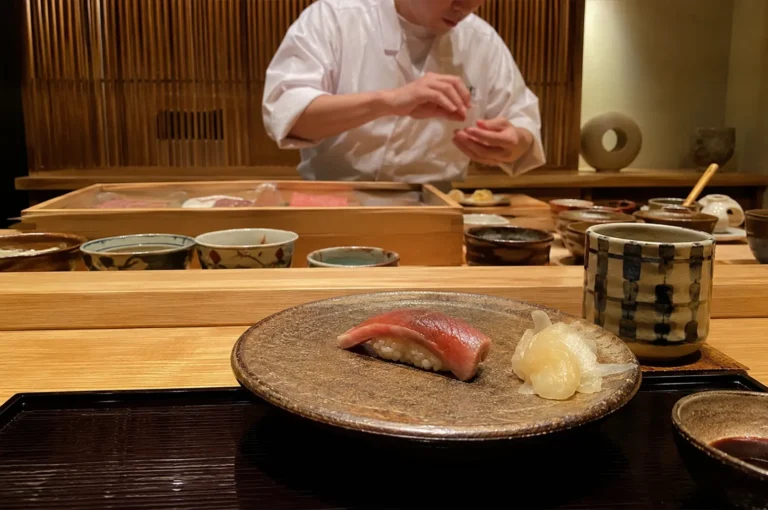
An eye-level shot captures a line of six artisanal omakase dishes arranged across a wooden platter on a light-toned wooden sushi counter. Each piece is individually served in a unique ceramic dish, featuring delicate toppings such as caviar, grated daikon, and fine herbs over various cuts of fish, including white fish, marinated shrimp, fatty tuna, seared mackerel, and uni. In the foreground, a textured rectangular stone plate rests on the counter alongside a small blue ceramic dish.

An omakase menu is never a random collection of dishes. Every course is intentionally placed to create a balanced progression of flavors, textures, and aromas that gradually unfolds throughout the meal. From lighter beginnings to richer finishes, each serving prepares…

How Omakase Celebrates Seasonal Ingredients

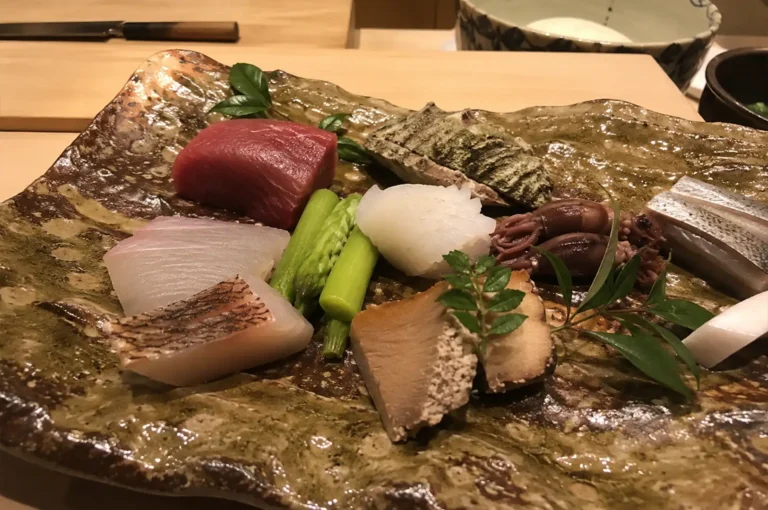
A close-up view of an omakase course presented on an earthy, textured, green-and-brown glazed ceramic platter resting on a light wooden counter. The arrangement features an assortment of fresh seafood and accompaniments, including thick slices of raw red tuna (maguro), pale white fish fillets—one with seared skin—bright green asparagus spears, translucent squid, tiny firefly squid (hotaru ika), tender sliced abalone next to its textured shell, and monkfish liver (ankimo) garnished with green leaves, with a chef's knife and ceramic bowls softly blurred in the background.

Seasonality lies at the heart of every exceptional omakase experience. Rather than relying on a fixed menu, chefs carefully select ingredients at their seasonal peak, ensuring each course reflects the freshest flavors nature has to offer. This commitment allows diners…

Falling in Love With the Art of Omakase

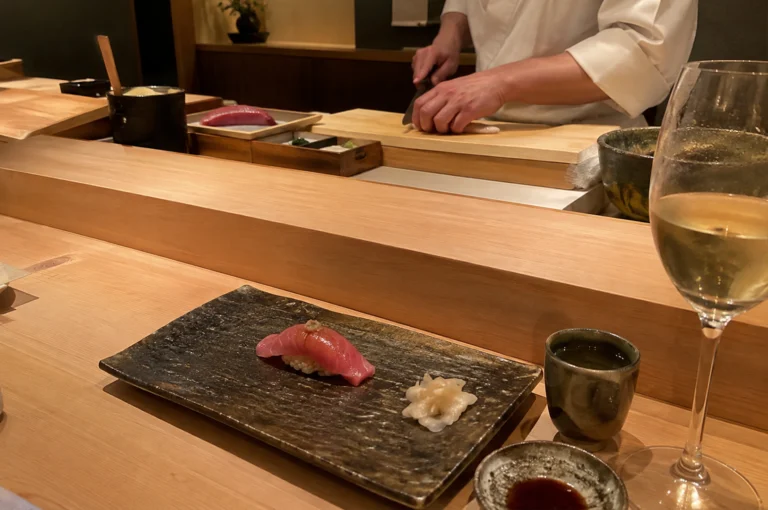
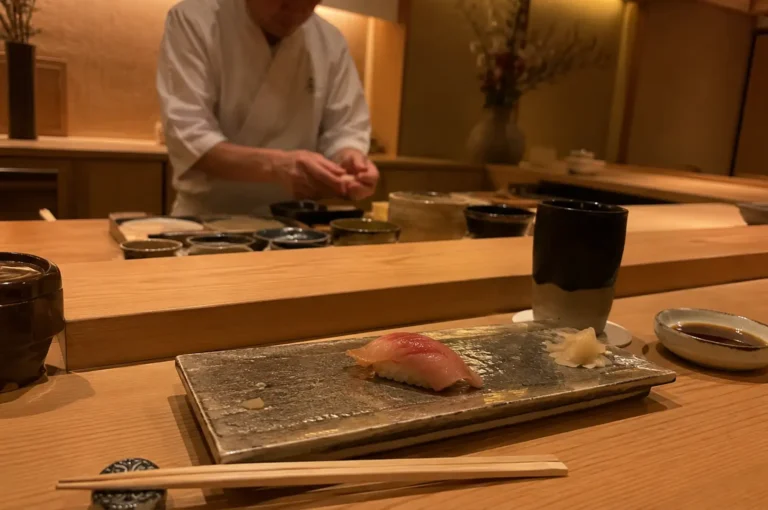
In an intimate, warmly lit Japanese sushi restaurant, a setting for an omakase meal is arranged on a light wood counter. In the foreground, a single piece of fresh nigiri sushi featuring a glistening slice of pink fish rests on a rectangular metallic ceramic platter alongside a small pile of pickled ginger. A pair of wooden chopsticks rests on a patterned stone holder in front, accompanied by a small dish of soy sauce, a dark ceramic teacup, and a lid container. In the softly blurred background, a sushi chef wearing a white chef's coat stands behind the raised prep area, meticulously hand-shaping sushi.

Not every love story begins with a person. Sometimes, it begins with an experience. For many diners, the first encounter with omakase is driven by curiosity. They hear about the intimate setting, the carefully curated courses, and the chef-led experience.…

The Emotional Side of a Chef’s Tasting Menu

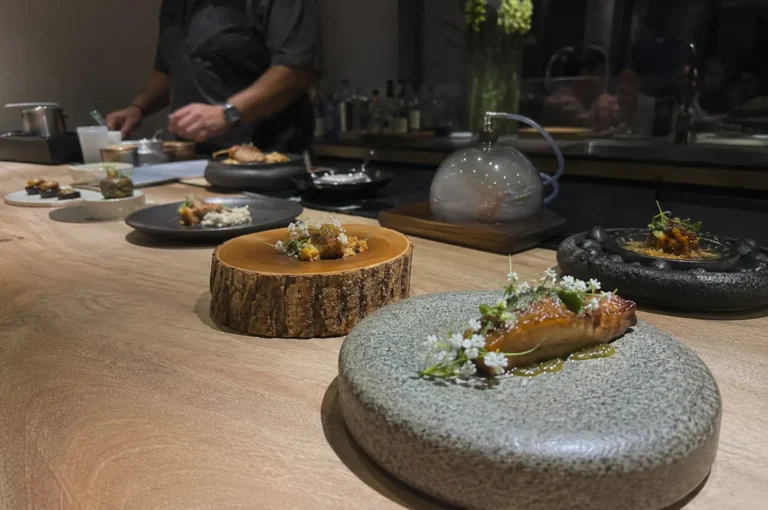
A dimly lit, high-end fine dining counter made of smooth light wood displays an array of artfully plated gourmet dishes stretching into the background. In the immediate foreground, a glazed fillet of fish decorated with delicate white flowers sits on a round, thick grey stone plate. Next to it, a small morsel rests atop a natural, rustic tree stump slab. Further down the counter, other plated courses are arranged on stone, ceramic, and wooden dishware—including one covered with a glass cloche filled with trapped smoke—while a chef in a dark uniform works out of focus in the background.

A chef’s tasting menu is often described through the language of technique, ingredients, and creativity. Diners talk about the number of courses, the quality of produce, and the artistry of presentation. Critics evaluate execution and innovation. Yet beneath the carefully…