There is something different about sitting at an omakase counter.
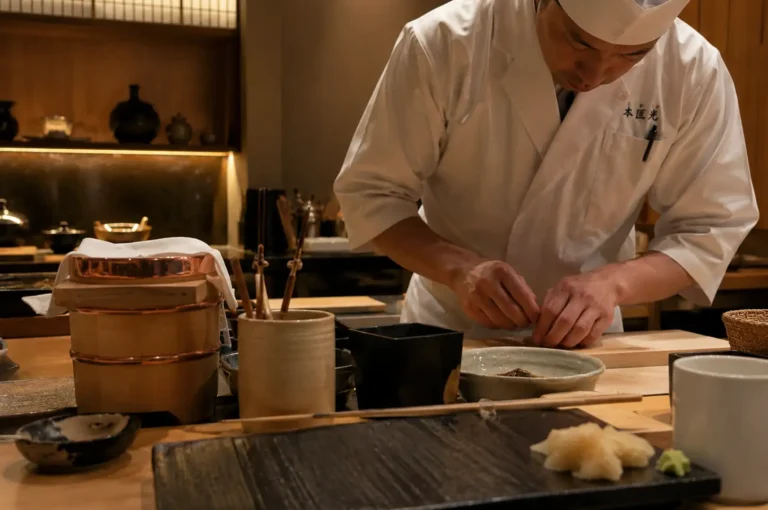
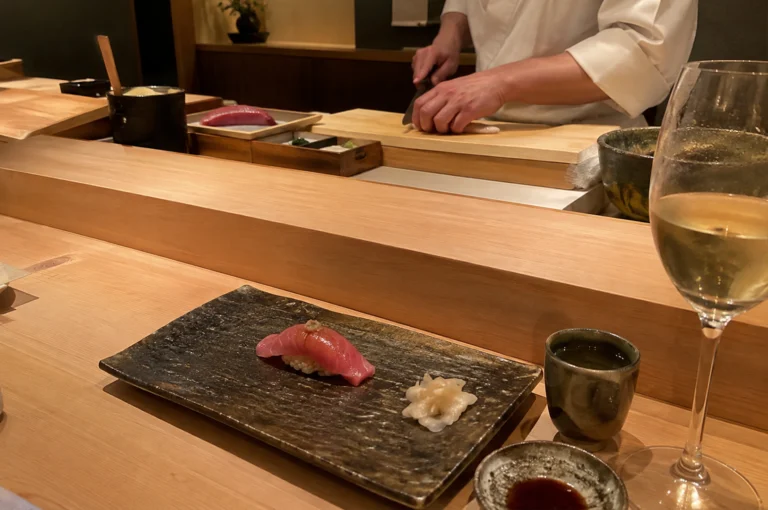
Instead of waiting for a dish to arrive from a kitchen hidden away from view, guests can watch each course take shape directly in front of them.
The preparation becomes part of the experience.
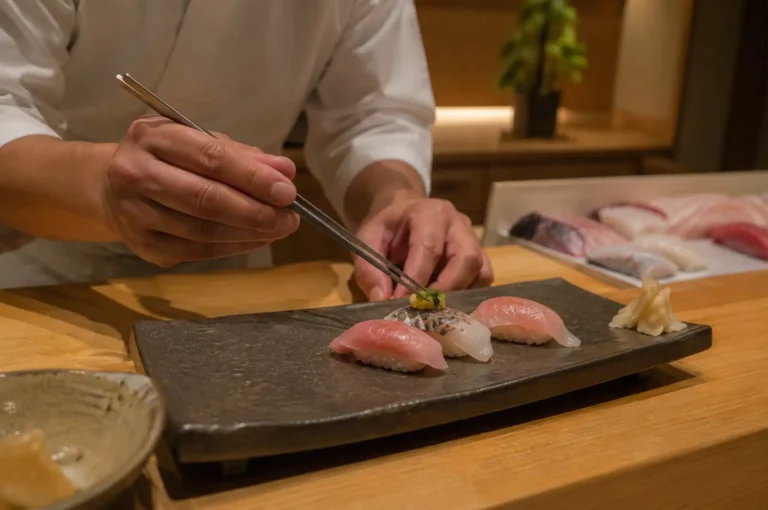
A chef carefully slices a piece of fish, adjusts the seasoning, shapes the rice, and places the finished sushi in front of the diner. Each movement feels deliberate, yet the process often appears effortless.
This closeness creates a stronger connection between the food and the person preparing it.
Guests can notice the small details that might otherwise go unseen, from the handling of seasonal ingredients to the timing of each course.
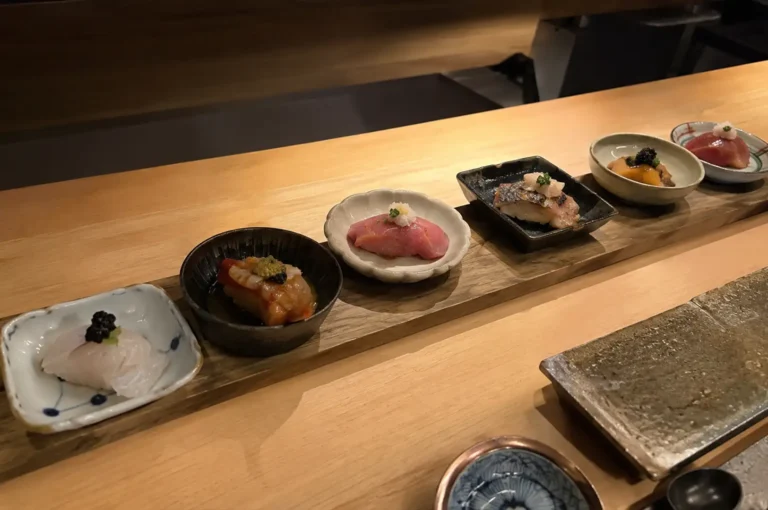
The counter also creates a natural rhythm.
One course arrives, it is enjoyed, and then there is a brief moment of anticipation before the next one appears.
There is no need to rush through the meal.
For many diners, this slower pace is part of what makes omakase so enjoyable. The meal becomes less about simply eating and more about experiencing the craftsmanship behind every bite.
That intimacy is difficult to recreate in a conventional restaurant setting.
At the counter, the distance between chef and diner becomes smaller, turning a meal into something more personal, interactive, and memorable.
It is this combination of craftsmanship, anticipation, and human connection that makes the omakase counter such a distinctive way to dine.