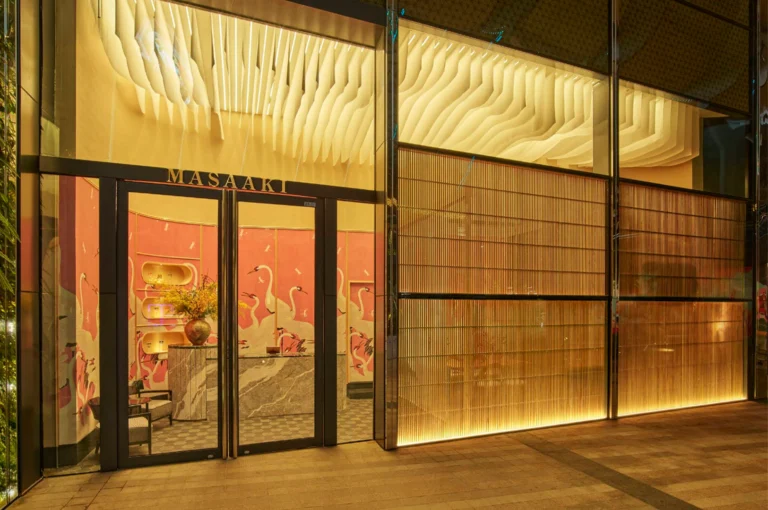
There is something calming about arriving at Ki-sho. Set inside a conserved black-and-white bungalow on Scotts Road, the restaurant feels removed from the traffic outside. It is the sort of place where the surroundings already encourage you to slow down before the first dish is served.
I visited Ki-sho 葵匠 expecting an omakase centred around Japanese cooking, but what stayed with me was how much broader the meal felt than a conventional sushi progression. Under Chef Taro Takayama, the restaurant has taken on a distinctly kappo style, moving between sashimi, cooked dishes, charcoal-grilled preparations, donabe rice made with a special rice blend, and dessert including housemade warabi mochi.
ki sho 葵 匠: A Counter Inside a Heritage Bungalow
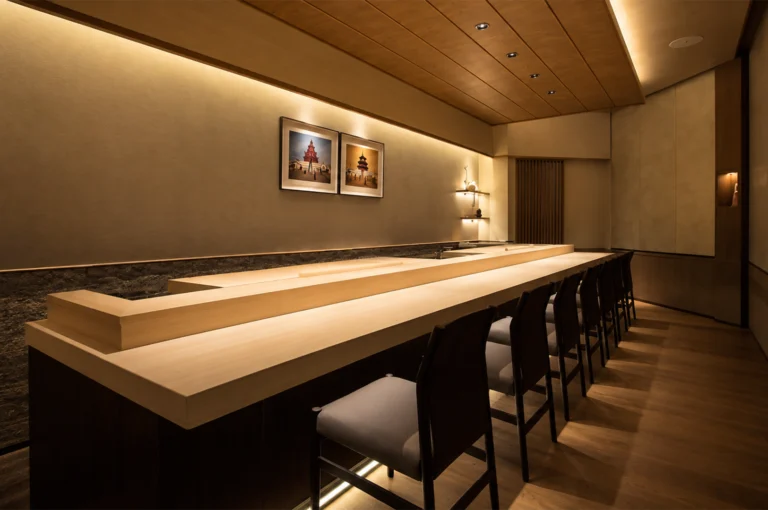
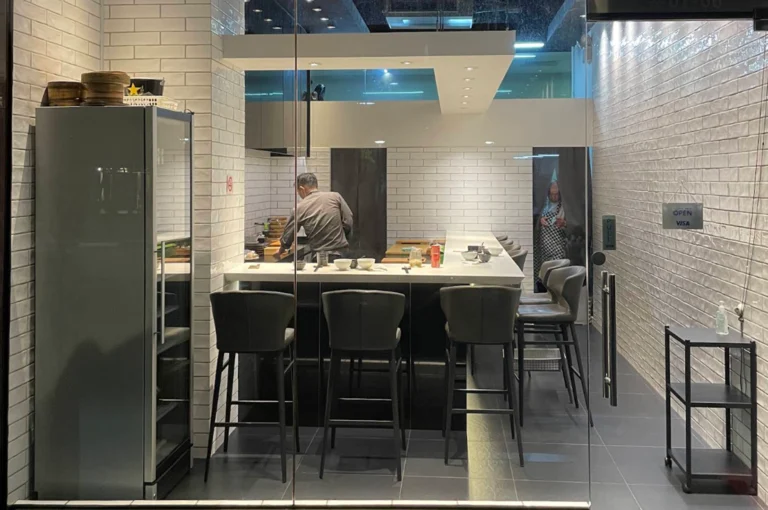
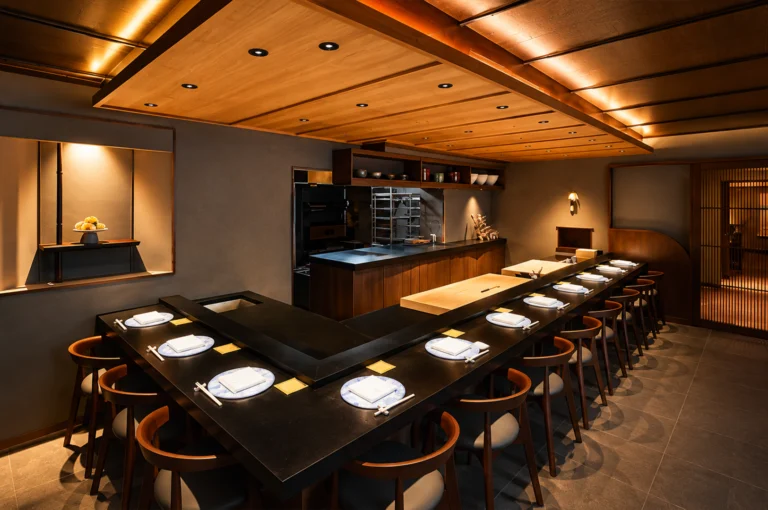
The setting is part of the experience. Ki-sho sits at 29 Scotts Road, Singapore 228224, in a black-and-white bungalow rather than a typical shopping mall or hotel restaurant. Inside, the main counter seats around 11 diners, keeping the chef and preparation area within easy view.
The atmosphere is quiet and understated. Sitting at the counter, I could watch the chef work without the experience ever feeling theatrical. That intimacy is particularly well suited to kappo style omakase, where the chef prepares different ingredients and cooking methods directly in front of the diner.
Chef Taro Takayama: The Thinking Behind the Kappo Style & Aristocratic Craftsmanship
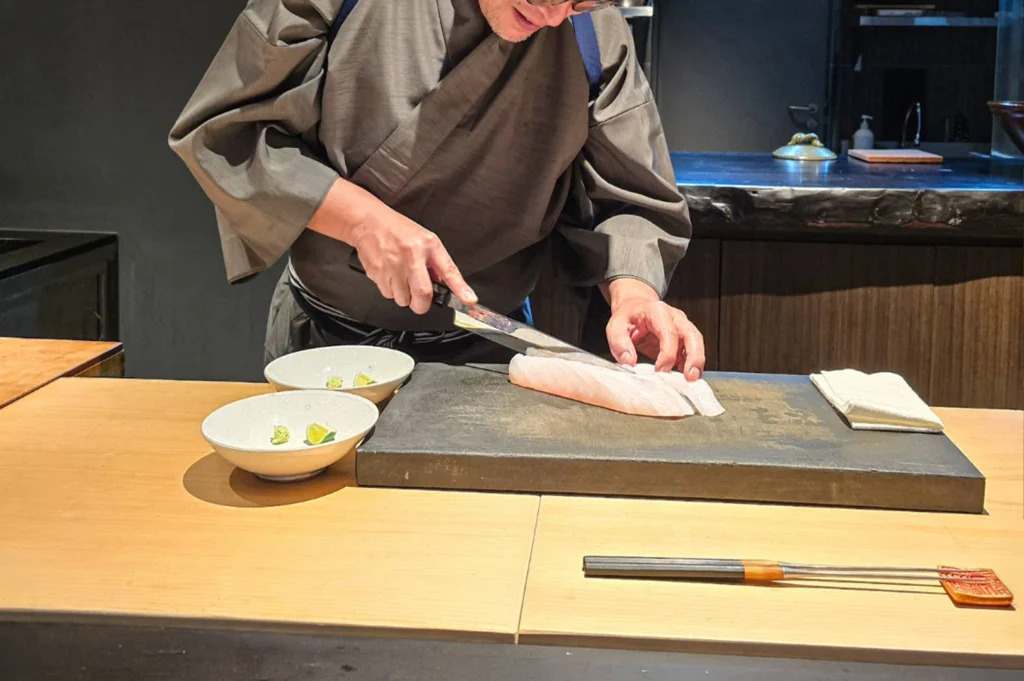
The current direction of Ki-sho 葵匠 is closely tied to Chef Taro Takayama. Born in Wakayama, Chef Takayama trained at Kashiwaya Senriyama and Koryu Kitashinchi before moving to Singapore in 2013, where he served as private chef to the Japanese Ambassador. He later ran Takayama and Hanare by Takayama.
That background helps explain the restaurant’s current kappo style omakase. Rather than restricting the meal to sushi, Chef Takayama uses traditional techniques to bring out the character of seasonal ingredients through several forms of cooking, including the use of clear dashi soup and collagen rich broth.
The name Ki-sho is associated with “aristocratic craftsmanship,” and the idea fits the restaurant’s restrained approach: the food feels considered without needing to announce itself.
Kappo Style Omakase: What the Meal Actually Feels Like
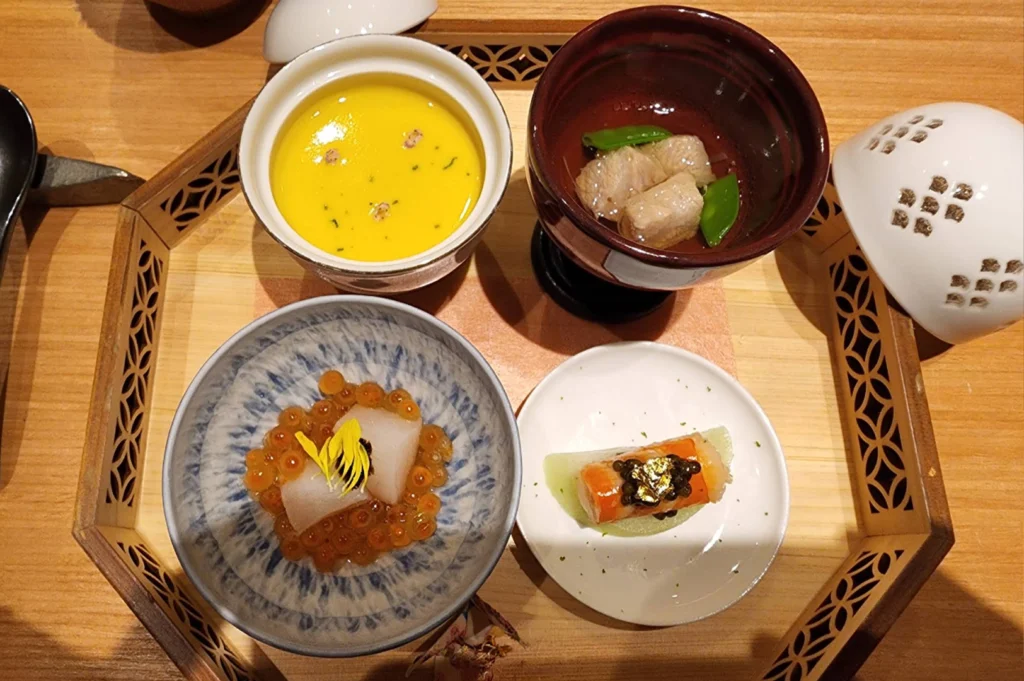
The official menu describes kappo as a style that combines the elegance of kaiseki with a more intimate and interactive chef-led setting. At Ki-sho, that translates into a multi-course meal where the chef decides the progression according to the season and available ingredients.
Instead of receiving one sushi piece after another, the meal changes pace. Seasonal sashimi can be followed by a warm preparation, then a grilled course featuring rock fish, belt fish, or freshwater eel, before the meal settles into a comforting bowl of Japanese rice cooked in dashi stock.
That variety is what I enjoyed most. It gives the chef more ways to express the ingredients, and it gives diners more textures and flavours to notice throughout the evening.
The Zen Garden Platter and Seasonal Sashimi
One of the more memorable courses is the Zen Garden Platter, a small collection of seasonal bites arranged almost like a miniature garden. Recent menus have included monkfish liver, chilled corn soup, seaweed with bafun uni, fried kanu cubes, shrimp taro, and other rotating ingredients. The platter is designed as a sake-friendly interlude, so each small dish brings a slightly different flavour and texture.
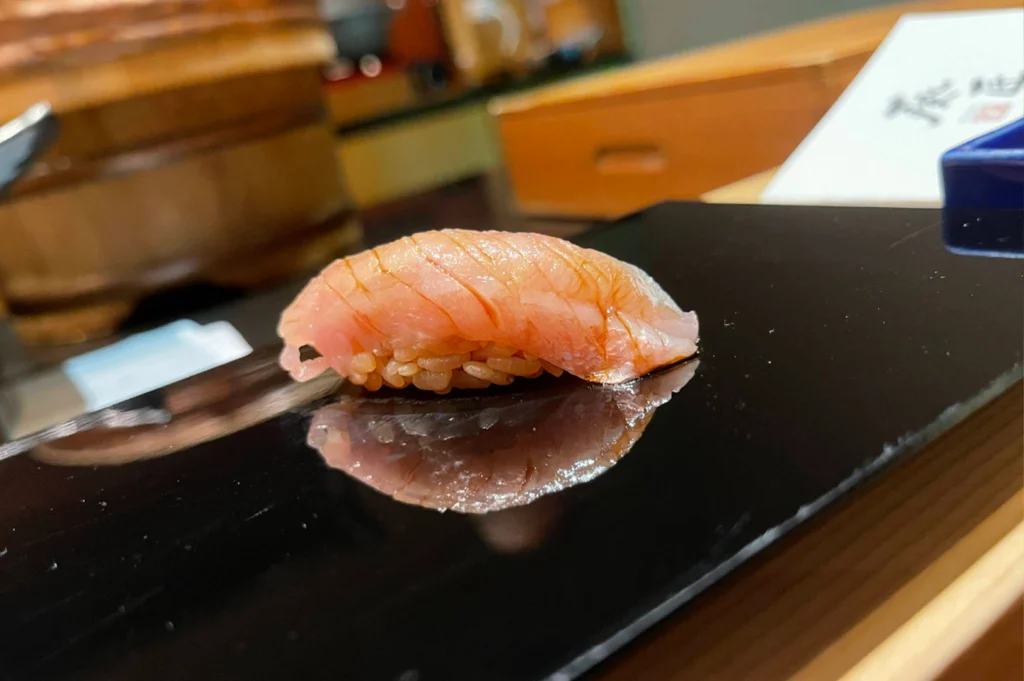
The seasonal sashimi that follows gives the meal a cleaner, more direct expression of the fish. Recent menus have featured kinmedai, kuromutsu, dry-aged bluefin tuna, surf clam, and sea bream, with preparations ranging from fresh cuts to lightly seared or aged fish.
This is where the kappo format becomes interesting. The chef isn’t simply showing the ingredients in their raw state; he changes their treatment according to what will bring out the best texture and flavour.
Tottori Wagyu: The Unexpected Main Event
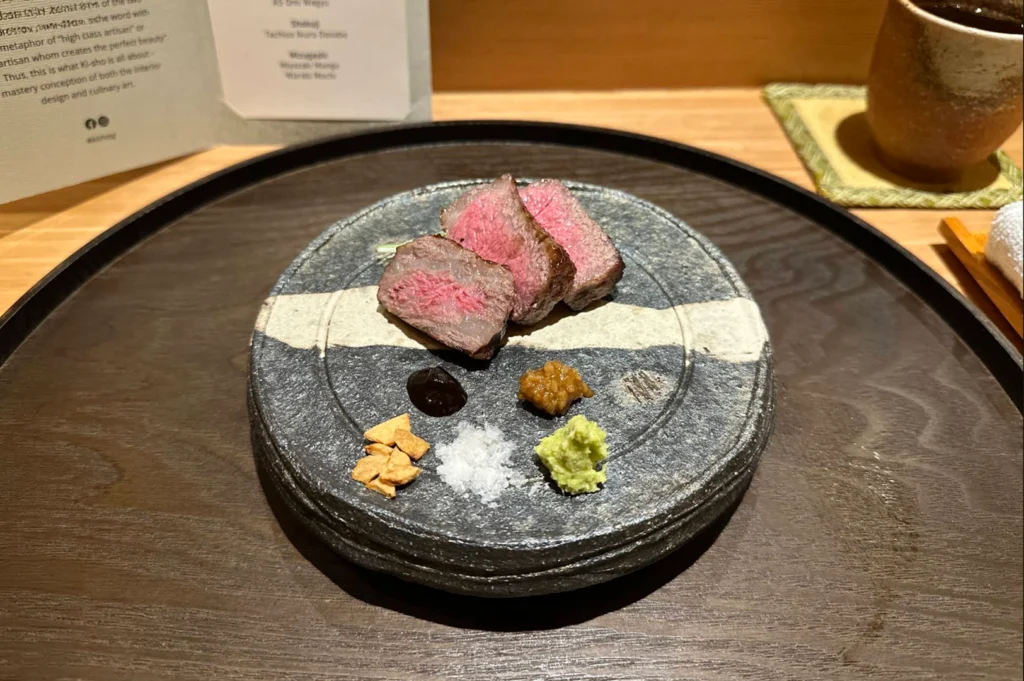
If there is one dish that has become closely associated with the current Ki-sho menu, it is Tottori Wagyu. Chef Takayama personally visited the farm and brought the beef into Singapore, and recent coverage describes Ki-sho as the first and only restaurant in Singapore to offer this particular Tottori Wagyu.
What surprised me was the preparation. Rather than grilling the beef heavily, the wagyu has been served shabu-shabu style, allowing the meat’s marbling and sweetness to remain apparent without making the dish feel excessively rich.
For diners who do not eat beef, seasonal fish or grilled buri may be offered instead, depending on the menu. That flexibility is useful because the experience remains centred on the chef’s progression rather than making one ingredient mandatory.
The Charcoal-Grilled Courses Bring a Different Texture
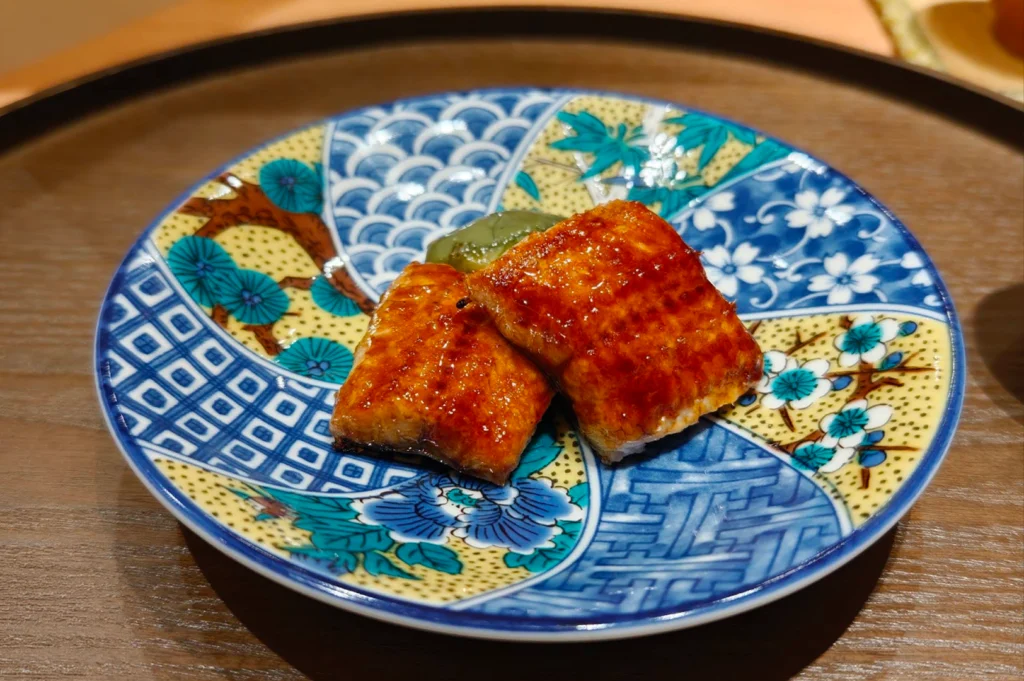
The meal becomes more comforting as the cooked courses arrive. Previous menus under Chef Takayama have included charcoal-grilled unagi, with the crisp skin contrasting against the soft flesh, as well as grilled nasu (eggplant) from Kochi Prefecture. The smoke from the charcoal adds another layer without covering the natural sweetness of the ingredients.
Other menus have included grilled fish, aged seafood, and sauces built around ponzu sauce, freshly grated wasabi, snow salt, and different miso preparations such as white miso.
There have also been more adventurous dishes, including shirako or fish sperm served in a rich broth made with pork knuckle marrow and dried fukahire (shark fin). It is very much an acquired taste, but it demonstrates how far the kappo format can move beyond the familiar sushi-counter repertoire.
Japanese Rice Cooked in Fish Bone Stock
The meal’s rice course provides a welcome change of pace. One recent preparation featured grilled saba mixed with Japanese rice cooked in fish bone stock, alongside fried turnip cubes, shredded fried maitake mushroom, house-made pickles, and soup. The stock was made from grilled fish bones, giving the rice a deeper savoury character.
I particularly like this part of the progression because it feels more like comfort food than a grand finale. After the sashimi and richer dishes, a warm bowl of rice made with a special rice blend and a clear dashi soup gives the meal a sense of completion.
It is also a reminder that the restaurant’s cooking is not built entirely around luxury ingredients. Sometimes the most satisfying dish is simply good rice, a fragrant broth, and carefully handled fish.
Dessert Brings the Meal Back to Something Gentle
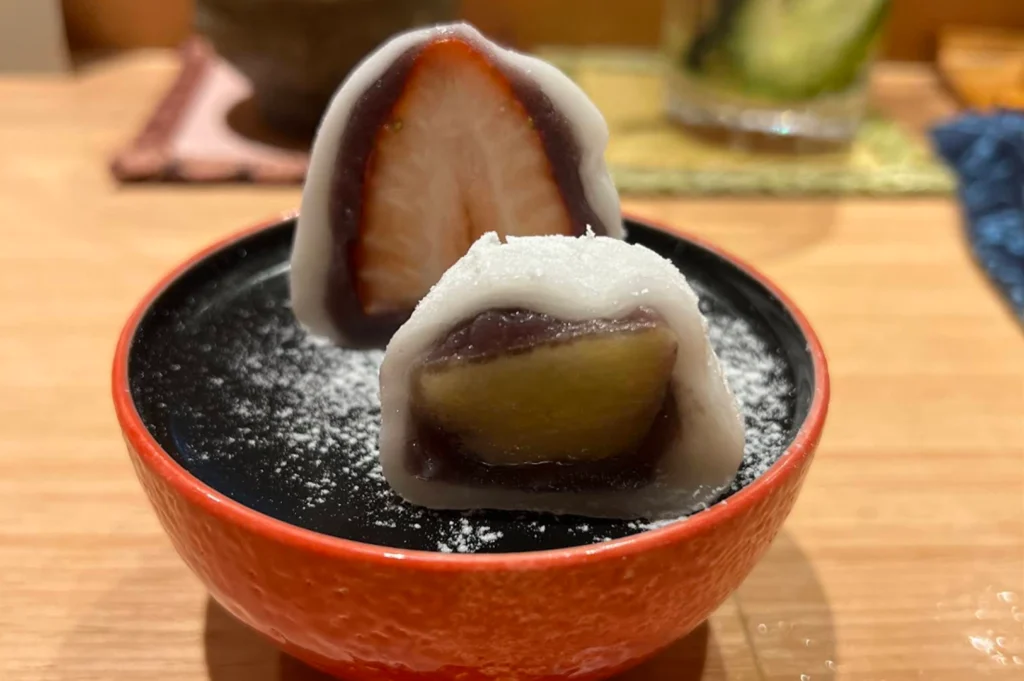
The dessert course is deliberately lighter after such a varied meal. Recent menus have included Japanese peaches with Hokkaido milk ice cream and yuzu, followed by matcha and hojicha financiers — also a Takayama mainstay — both deep in flavour, and not too sweet. Other seasonal desserts can include housemade warabi mochi and fresh fruit.
The financiers in particular make a pleasant ending: crisp outside, soft inside, and full of tea flavour. A welcome hot tea alongside dessert gives the meal a quieter finish.
Ki-sho Menu and Pricing
The current restaurant offers an exclusively curated Chef Kappo Omakase, with menus changing seasonally.
Current pricing:
- Lunch: Sou — S$168++; Yui — S$280++
- Dinner: Yui — S$280++; Shin — S$360++
Lunch runs Monday to Friday, while dinner is available Monday to Saturday. Saturday lunch and public-holiday lunch are closed. The S$168++ lunch is particularly interesting for diners who want to experience a proper kappo style omakase without committing to the most extensive dinner menu.
If Ki-sho has you curious about trying omakase at a gentler price point, our guide to Cheap Omakase Singapore: Reliable Picks for a Full Omakase Experience rounds up more approachable options for enjoying a complete chef-led meal.
Practical Details for Dining at Ki-sho
Ki-sho 葵匠: 29 Scotts Road, Singapore 228224
- Nearest MRT: Newton MRT is the closest station; Orchard MRT is another option.
- Lunch: Monday–Friday, 12pm–3pm
- Dinner: Monday–Saturday, 6:30pm–11pm
- Closed: Sunday
- Dress code: Smart casual; sandals, flip-flops and singlets are discouraged.
- Parking: Available on the premises.
- Seating: Approximately 11 counter seats, plus private dining facilities on the second floor.
Reservations are recommended, particularly if the kappo style omakase and counter experience are the main reason for visiting.
Is Ki-sho Worth Trying?
What I took away from Ki-sho was not a single spectacular dish, but the way the meal kept changing shape. The restaurant gives Chef Taro Takayama room to move between raw seafood, charcoal-grilled dishes, wagyu, rice, soup, and dessert. The result feels distinctly different from a sushi-only omakase, where the progression is largely defined by nigiri.
For a first time at Ki-sho, I would choose the counter. It is there that the kappo philosophy makes the most sense: you can watch the chef make each dish, notice how ingredients change under different techniques, and let the meal unfold without knowing exactly what will arrive next.
If you enjoy Japanese food but want your omakase to be broader than sushi, Ki-sho offers a thoughtful alternative. It is a place where the chef’s cooking becomes the conversation, and where a meal can move from delicate sashimi to smoky fish, rich Tottori Wagyu, comforting Japanese rice, and a quietly sweet dessert without ever feeling disconnected.