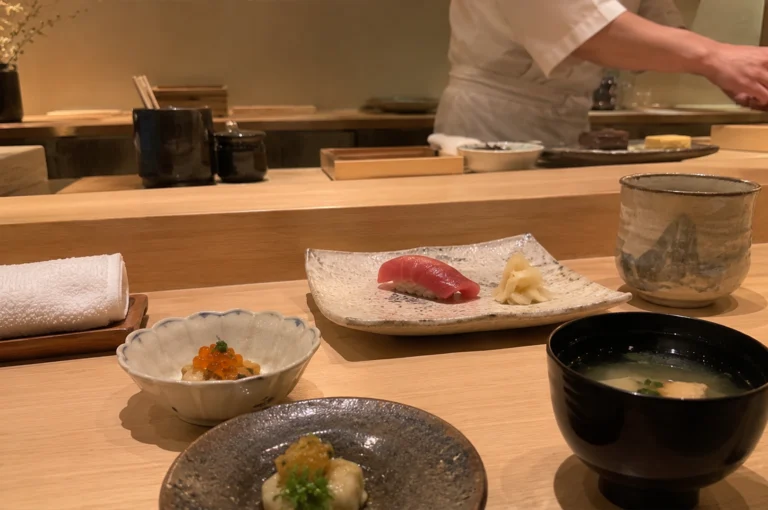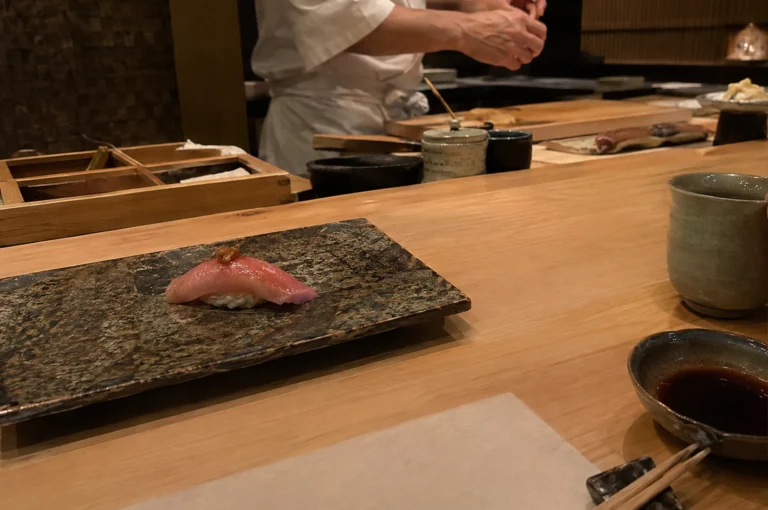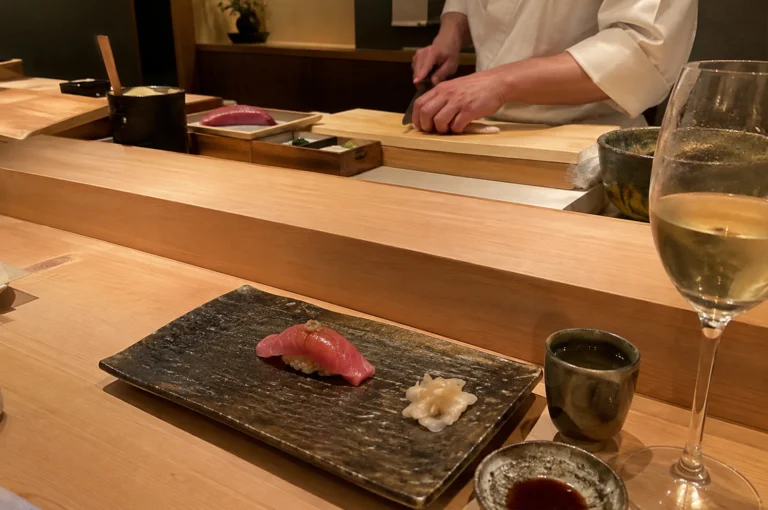
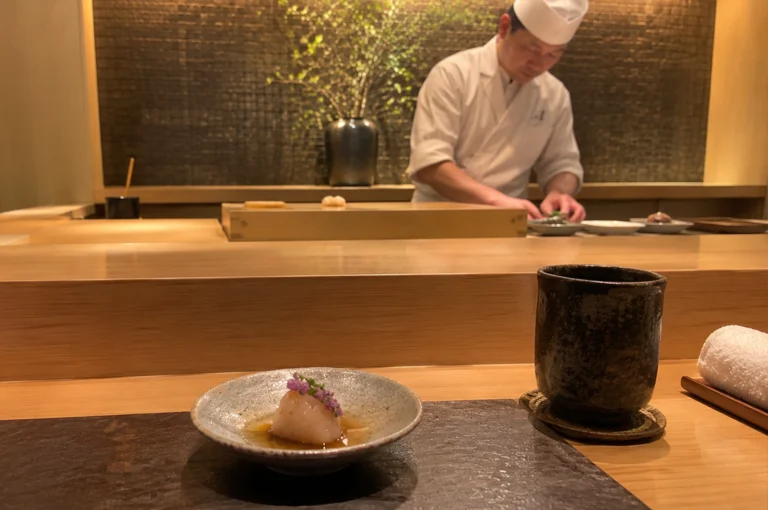
There is a particular feeling that comes with sitting down for omakase.
You know a meal is about to begin, but you do not necessarily know exactly where it will take you.
That uncertainty creates a quiet sense of anticipation.
The first course sets the tone, offering an early glimpse of the chef's approach. From there, each dish creates another small moment of curiosity.
What will arrive next?
Which ingredient will be featured?
How will the chef choose to prepare it?
These questions are part of the enjoyment.
Unlike a conventional meal where guests can see the entire menu before ordering, omakase leaves room for surprise.
Even returning diners can experience that feeling because ingredients change with the seasons and chefs may introduce different preparations from one visit to another.
The anticipation also changes the way guests experience each course.
Rather than thinking about the entire meal at once, attention naturally moves toward what is directly in front of them.
A small plate arrives, it is enjoyed, and then the focus shifts back to the counter.
This creates a rhythm that can make several hours at the restaurant feel surprisingly immersive.
By the time the final course arrives, the meal has become more than a collection of dishes.
It has developed into a sequence of small discoveries, each one building on the last.
Perhaps that is why the anticipation itself becomes part of the memory.
The enjoyment of omakase does not begin with the first bite.
In many ways, it begins with wondering what that first bite will be.
Discover why anticipation is such an important part of omakase, from the first course to the final dish and everything in between.