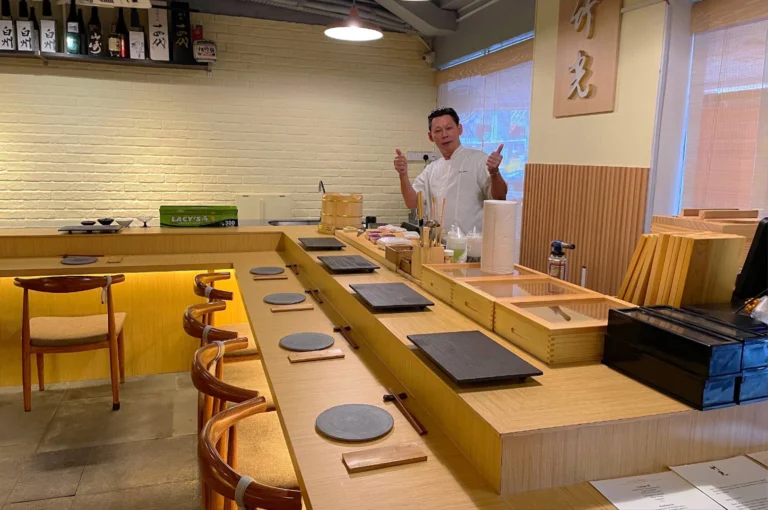
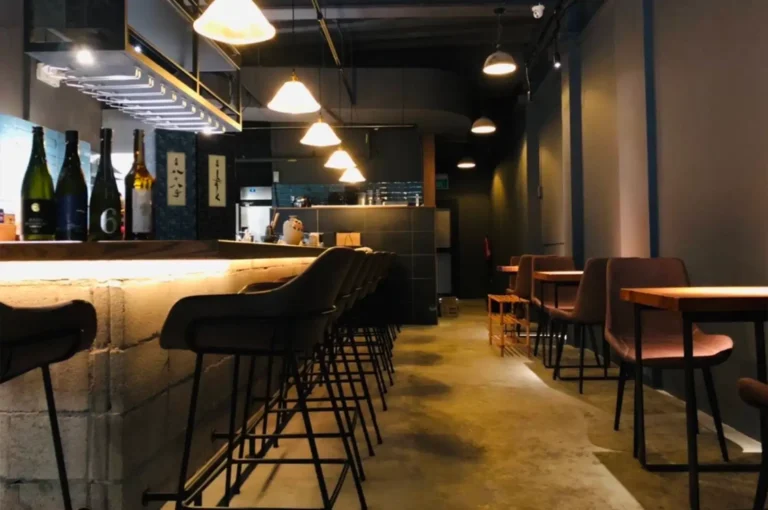
The first thing that caught my attention at SAKEMARU Artisan Sake Hideout wasn’t the food. It was the sake. Rows of bottles and a dark, intimate interior set the mood before the first dish arrived. Sitting at the counter, I could already tell this would be a different kind of Japanese meal. The restaurant isn’t trying to recreate the quiet formality of a traditional sushi-ya. Instead, it feels like a place where sake, food and conversation are meant to share the same stage.
That became the most enjoyable part of the evening. The omakase gives the meal its structure, but the sake adds another layer, changing how certain dishes taste as the courses move from fresh seafood to grilled preparations, meat and rice.
SAKEMARU Artisan Sake Hideout: The Setting Comes First
At 55 South Bridge Road, SAKEMARU sits between the Boat Quay and Clarke Quay areas. From outside, it is easy to walk past without realising what is inside.
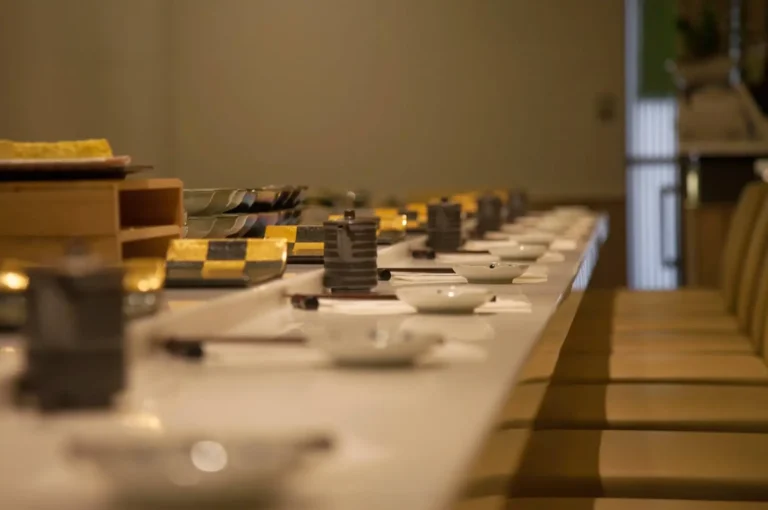
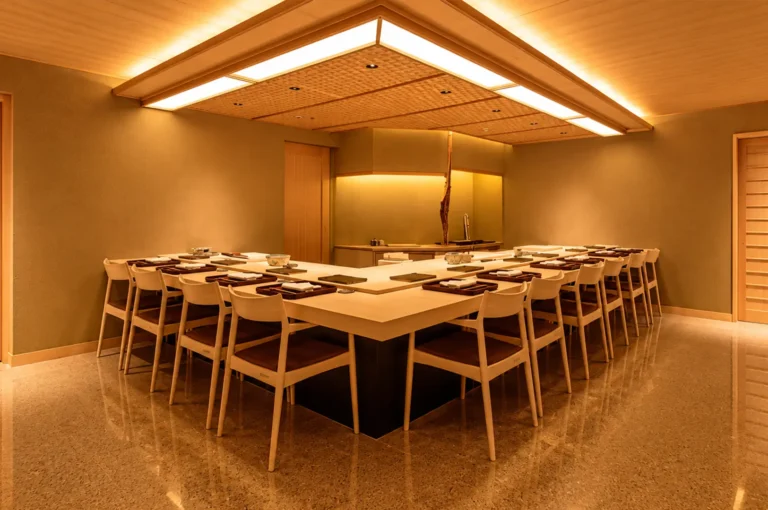
The restaurant opens into a darker, industrial-style space with both counter seating and regular tables. The counter is where I would choose to sit for the omakase. It brings you closer to the chef and makes the preparation feel like part of the meal rather than something happening somewhere behind a wall.
There is a relaxed energy here. It feels more like a hidden Japanese drinking spot than a formal fine-dining room, which makes it particularly appealing for a long evening.
Artisan Sake: More Than Something to Drink
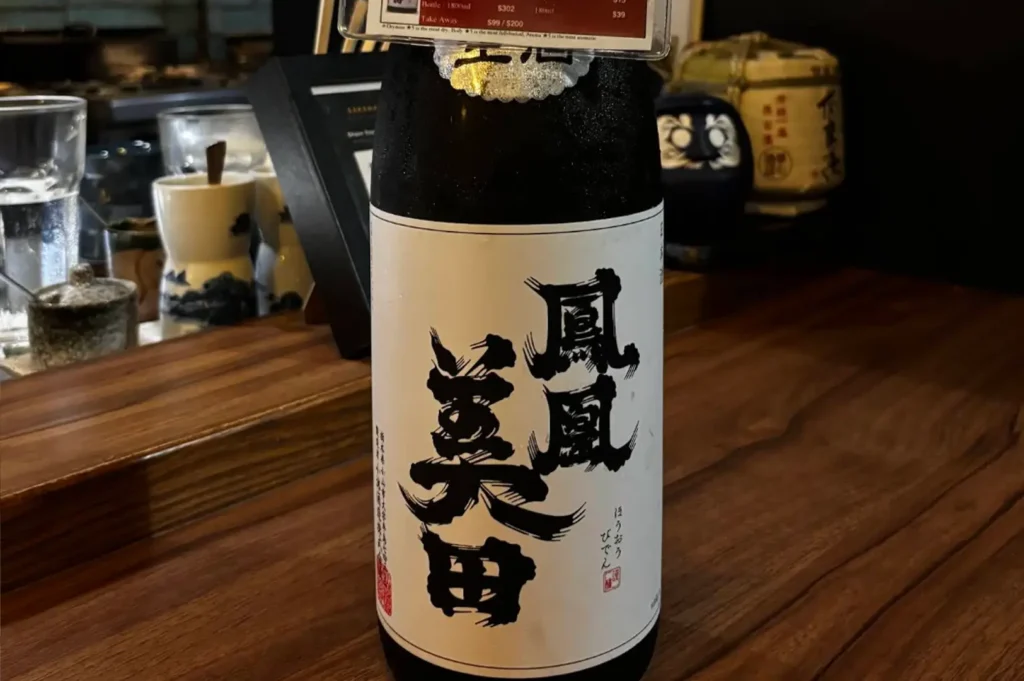
The name Artisan Sake Hideout is not just branding. Sake is genuinely central to the restaurant.
SAKEMARU focuses on artisanal sake from Japan, with a wide selection available for dine-in. The restaurant regularly introduces different bottles and seasonal selections, so there is plenty of room to explore beyond the labels that are already familiar.
What I enjoyed was letting the staff guide the choice rather than trying to pick a bottle based purely on its name. A lighter sake can keep delicate seafood feeling clean, while a fuller one can stand up to grilled meat or richer sauces. The right pairing doesn’t simply accompany the dish; it can change the way the dish tastes.
The Omakase Doesn’t Follow One Straight Line
The food is where SAKEMARU Artisan moves away from the typical sushi-counter experience. The current omakase is built around modern Kappo-style Japanese cuisine, so the meal can travel through several cooking methods rather than remaining focused on sushi.
A progression can include:
- Seasonal appetisers
- Sashimi and fresh seafood
- A warm or steamed preparation
- Tempura or another fried dish
- Grilled seafood or meat
- Sushi
- Claypot rice
- Miso soup
- Dessert
The exact dishes change with the season and ingredients available. Recent menus have included everything from kegani and hotaru ika tempura to wagyu, grilled fish, sashimi and claypot rice. That variety makes the meal feel more substantial than a sushi-only omakase.
What Stood Out From the Food
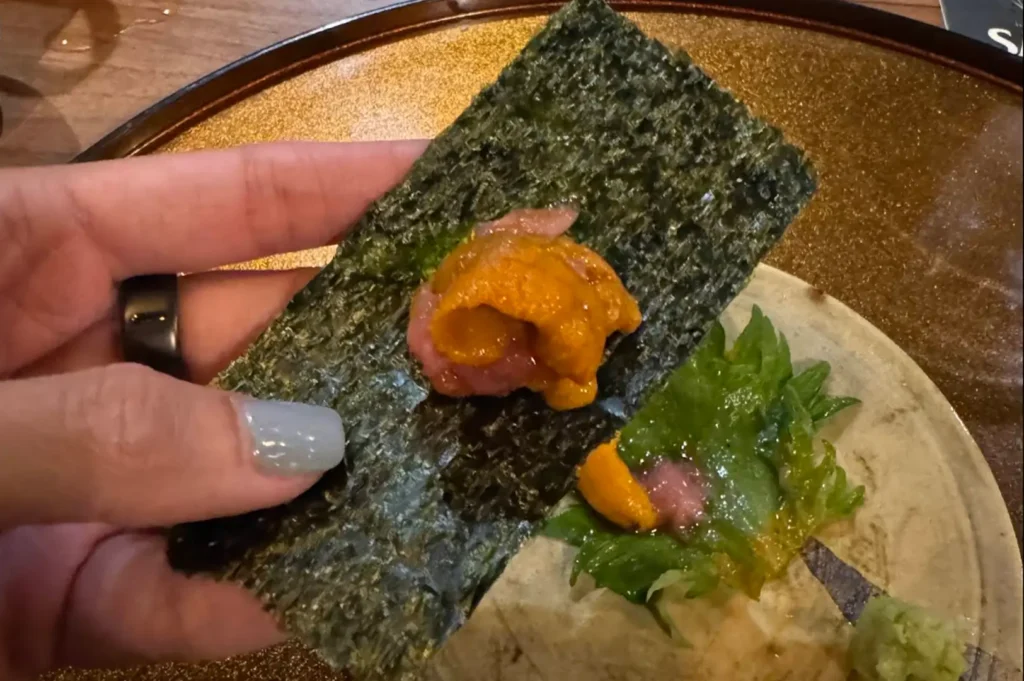
The opening courses can be playful. A recent omakase included kegani with Tosa-zu vinegar jelly, hotaru ika tempura and sawara sushi with uni. Another seasonal menu featured sanma, kohada and grilled Nagasaki salmon.
The contrast is what I liked. There might be something delicate and briny in one course, followed by something crisp and fried, then a richer preparation.
One recent menu included wagyu striploin with peas alongside grilled madai. The beef was particularly satisfying, while the fish provided a lighter counterpoint. The meal doesn’t ask every dish to be the star. Some courses are there to create balance.
Your Gateway to the SAKEMARU Experience: Must-Know Details
- Address: 55 South Bridge Road, Singapore 058686
- Lunch: 11:30am–2:30pm
- Dinner: 6pm–11pm
- Closed: Sunday
- Dining: Counter and table seating
- Style: Modern Kappo-style Japanese cuisine
- Sake: Extensive artisanal selection
- Reservations: Recommended for omakase
- Phone: +65 6513 2789
Current menus and omakase pricing can change, so I would confirm the latest details when booking.
When Sake and Food Find the Right Combination
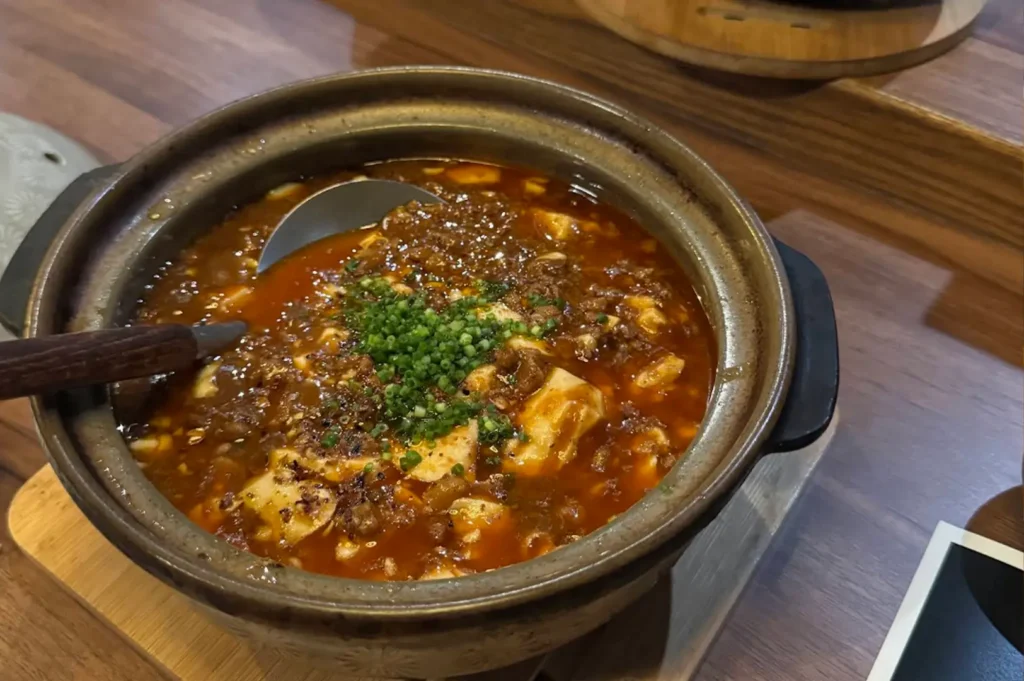
This is where the restaurant’s concept really makes sense. A recent autumn menu was paired with Hanamura Junmai from Akita, described by a diner as delicately sweet and floral. That same diner found the combination particularly enjoyable with the seasonal food.
Older menus have shown just how deliberately the restaurant can approach pairing. One course of grilled Miyazaki A5 sirloin was matched with a warmer Tengumai Junmai from Ishikawa, while a mushroom and sea eel claypot rice was paired with warm Kuromatsu Kenbishi.
That made me appreciate why SAKEMARU feels different from an ordinary Japanese restaurant. The sake isn’t something ordered after deciding what to eat. It can become part of the decision itself.
For diners who enjoy the omakase format but want to compare it with more affordable omakase experiences in Singapore, our guide rounds up options at different price points.
The Rice Course Slows Everything Down
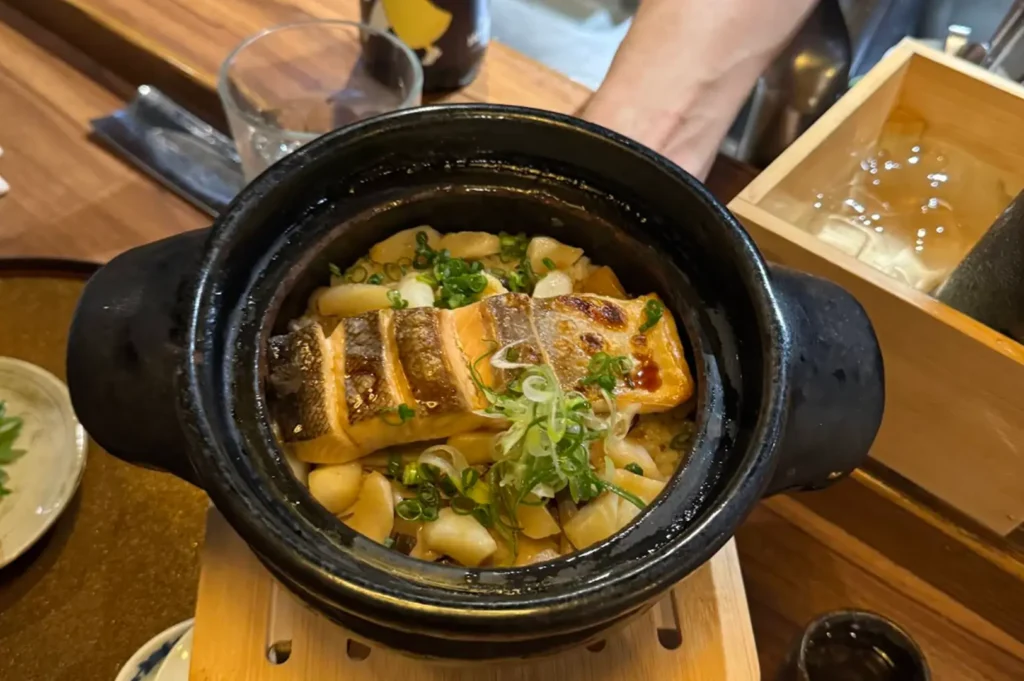
After the seafood and richer courses, the arrival of claypot rice feels almost comforting. Recent menus have included sakura ebi and onion claypot rice, while older omakase courses featured mushroom and sea eel rice served with miso soup.
The rice is a useful change in pace. It is warm, savoury and filling without needing the drama of premium sushi ingredients. I actually think these quieter courses are important to the experience. After several different flavours, something as simple as warm rice and soup gives the meal a chance to settle.
Chef Kudo Keeps the Menu Moving
The current omakase is associated with Chef Kudo, whose seasonal menus give the restaurant a constantly changing quality. That means repeat visits can feel genuinely different. A diner returning during another season may encounter different seafood, vegetables, grilled dishes and rice preparations.
I like that approach because it makes the restaurant feel responsive rather than fixed. The chef has room to work with what is good at the time instead of forcing the same signature dishes onto every menu. Recent diners have also specifically praised the warmth of Chefs Kudo and Yuki, describing them as engaging and enjoyable to chat with at the counter.
My Take on SAKEMARU Artisan Sake
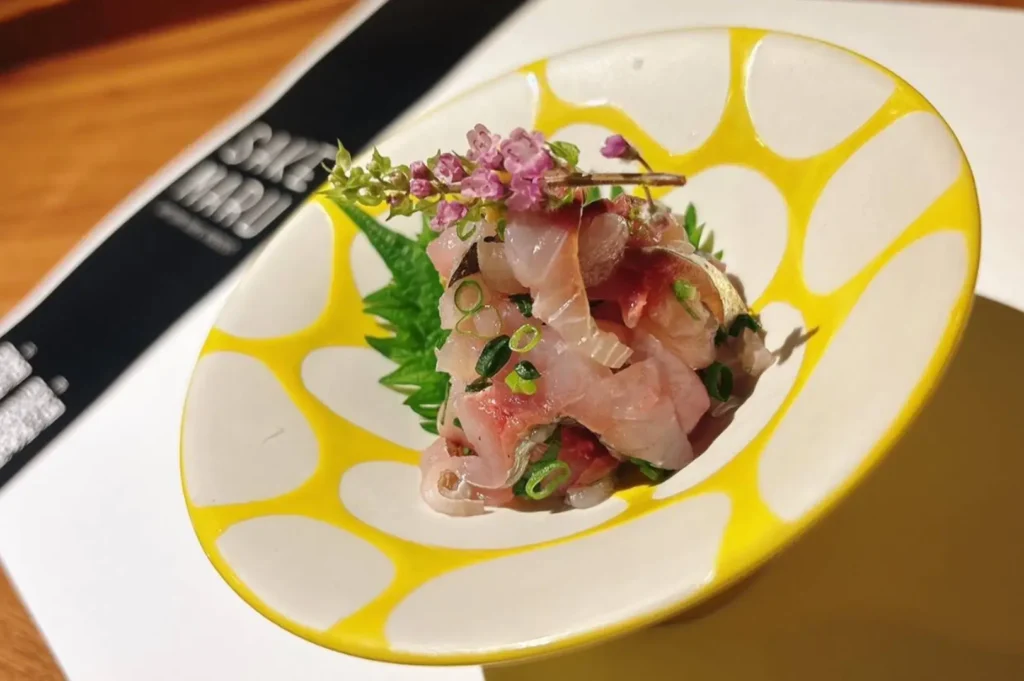
What makes SAKEMARU Artisan Sake Hideout memorable is the combination rather than any single dish. The seafood is fresh, the cooked courses give the meal variety, and the sake selection creates another dimension that you don’t get at a conventional sushi counter. Even the more comforting moments, grilled meat, claypot rice and miso soup, have a place within the progression.
For diners who prefer highly formal Edomae sushi, there are more focused counters in Singapore. But if you want an omakase where artisan sake is genuinely part of the omakase dining experience, SAKEMARU feels like a different kind of night out.
I left with the feeling that the restaurant’s name describes it quite well. It really does feel like a little hideout: somewhere to sit at the counter, try something new, let the chef create the meal, and discover how a good sake can turn a perfectly enjoyable dish into something a little more memorable.