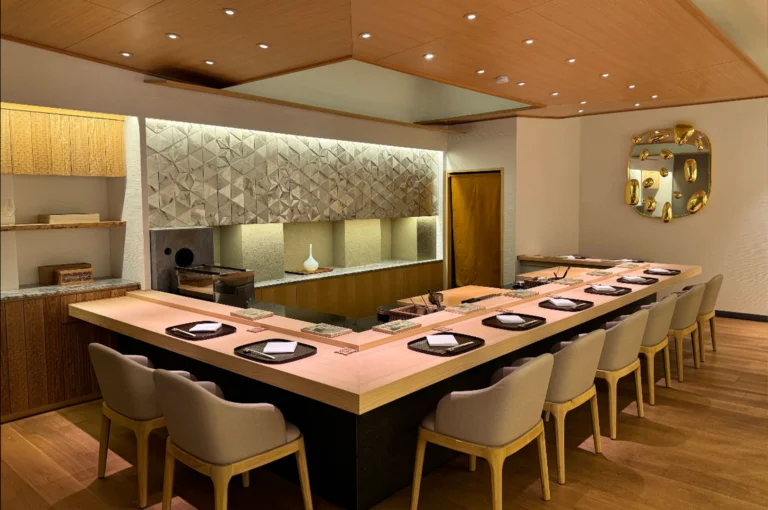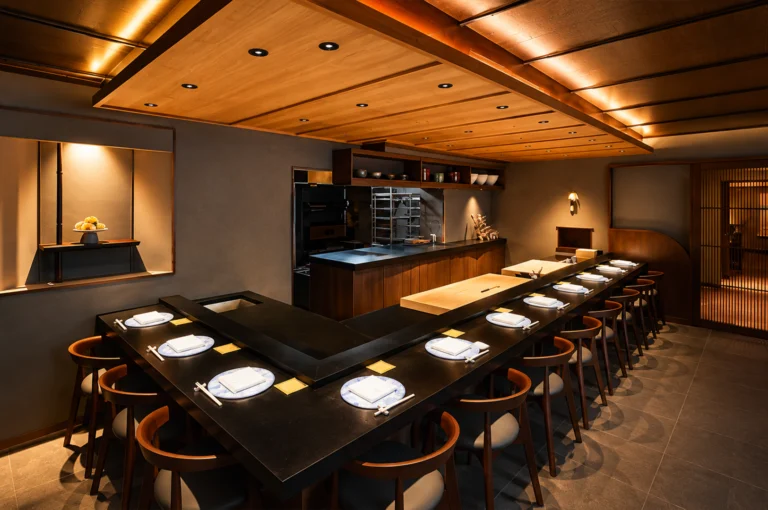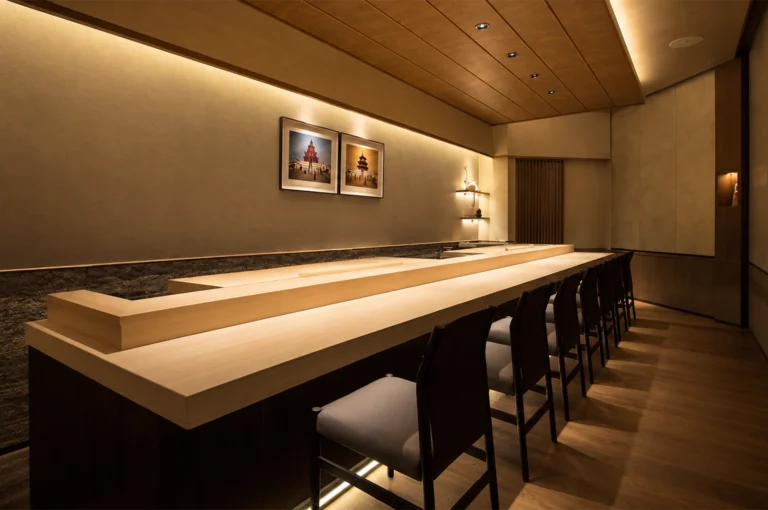
Finding Ishizawa feels like part of the experience. Tucked inside the Raffles Hotel Shopping Arcade, the restaurant sits quietly away from the hotel’s grander spaces. Once inside, however, the mood becomes much more intimate. There are only nine seats at the counter, and from there, almost everything comes back to the chef.
During my visit, I found myself paying attention to things I might normally overlook: the way the fish was handled, the temperature of the rice, and how a little extra acidity could change an entire piece of sushi. It felt less like visiting a new sushi restaurant and more like getting to know a chef through his own cooking.
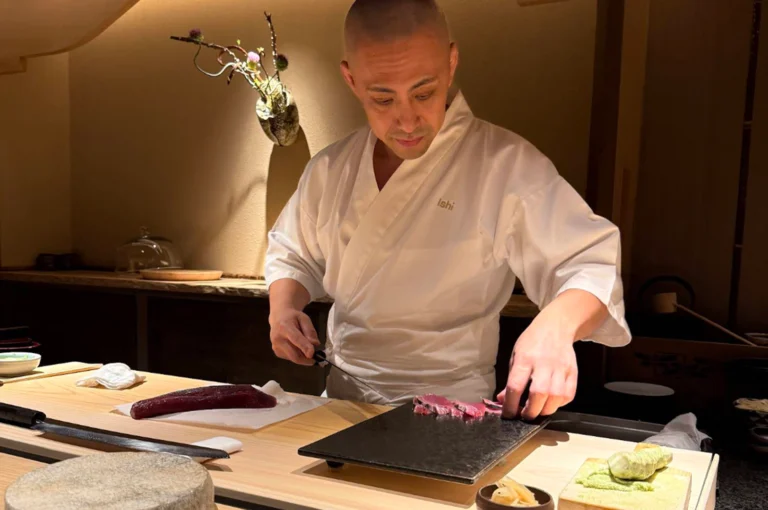
That chef is Takahiro Ishizawa, who spent more than two decades in Japanese sushi kitchens, including as head chef of the Michelin-starred Shinji by Kanesaka. Ishizawa is his opportunity to move beyond that chapter and develop a style that is unmistakably his own. (ishizawa.sg)
A Quiet Counter Hidden Inside Raffles Hotel
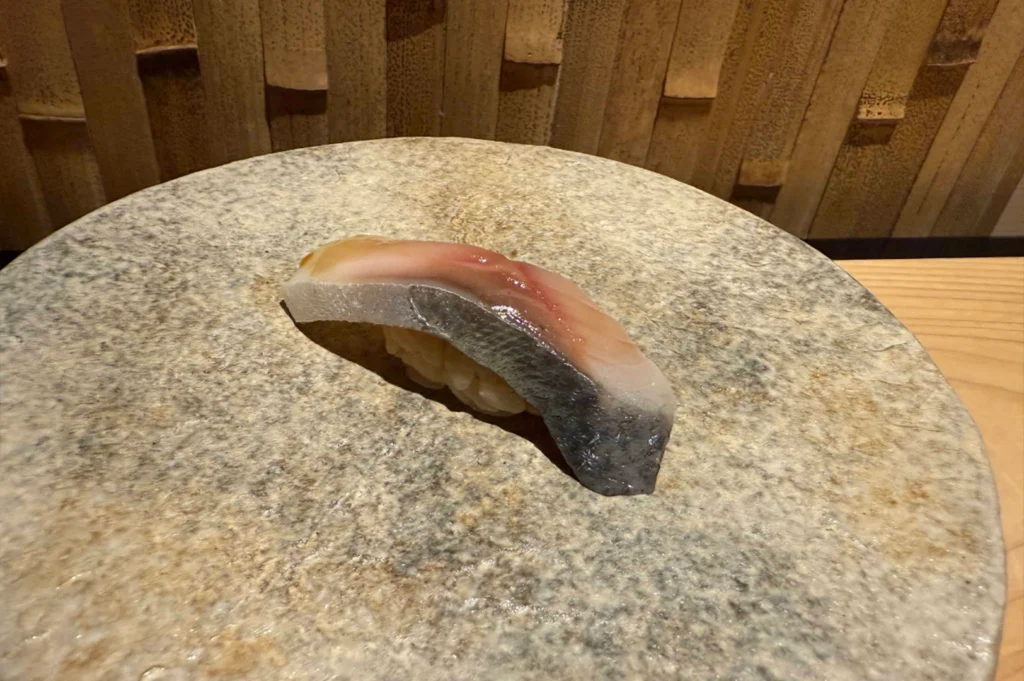
The setting is understated. Ishizawa occupies #01-11 at Raffles Hotel Shopping Arcade, 328 North Bridge Road, with the nine-seat counter forming the heart of the restaurant.
There is something comforting about the scale. With so few diners, the chef does not feel separated from the room. You can watch each piece being prepared from only a short distance away, and the pauses between courses feel almost as important as the food itself.
MICHELIN currently describes Ishizawa as an exclusive nine-seater and highlights its counter-dining format. The restaurant is currently MICHELIN Selected, rather than Michelin-starred.
The Chef’s New Chapter
What makes Ishizawa interesting is the story behind it.
Chef Takahiro Ishizawa was born in Niigata, a region known for its rice-growing heritage. After years of working in established sushi kitchens, including Shinji by Kanesaka at Carlton Hotel, he left the Kanesaka group at the end of 2024 and opened his namesake restaurant in April 2025.
That history is present without dominating the meal. What I noticed instead was a chef who seemed comfortable taking familiar Edomae foundations and adjusting them to his own preferences.
The restaurant describes Ishizawa as a new chapter built around continuous refinement. That idea comes through most clearly at the counter, where the details are restrained but deliberate.
What Changes When the Rice Takes Centre Stage
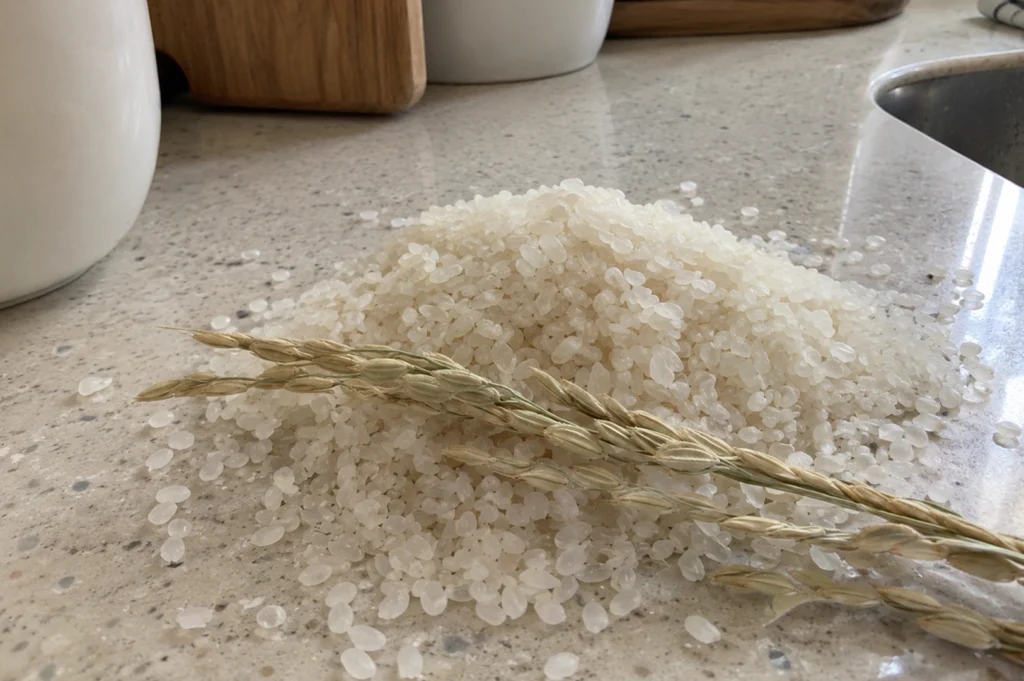
One of the most noticeable characteristics of Ishizawa’s sushi is the shari.
The restaurant uses Akita rice dressed with a house blend of vinegars, while fresh seafood is flown from Japan four times a week.
The rice has enough personality to become part of the conversation. Its acidity can feel quite pronounced, particularly beside delicate fish. With richer pieces such as otoro, however, that sharper edge can provide a useful counterpoint to the fattiness.
I enjoyed noticing how different each pairing felt. The rice was not there simply to hold the fish together; it actively shaped the bite.
A Meal That Leaves Room for Choice
Ishizawa offers several omakase menus rather than forcing every diner into one fixed progression.
Lunch
- Kan — S$160++: Appetiser, 12 nigiri, maki, soup and dessert
- On — S$220++: Appetiser, 15 nigiri, maki, soup and dessert
- Hou — S$260++: Appetiser, two sashimi, eight nigiri, hot dish, soup and dessert
- Sha — S$360++: Premium omakase
Dinner
- Kyoku — S$280++: Appetiser, 15 nigiri, maki, soup and dessert
- Jitsu — from S$350++: Chef-curated menu based on diner preferences
- Sho — S$450++: Appetisers, two sashimi, nine nigiri, hot dish, soup and dessert
- Ten — from S$550++: Premium omakase (ishizawa.sg)
The range makes the experience surprisingly flexible for a high-end sushi counter. A first-time diner can choose a more focused lunch, while someone celebrating a special occasion can opt for a longer premium progression.
What I Would Look Forward to at the Counter
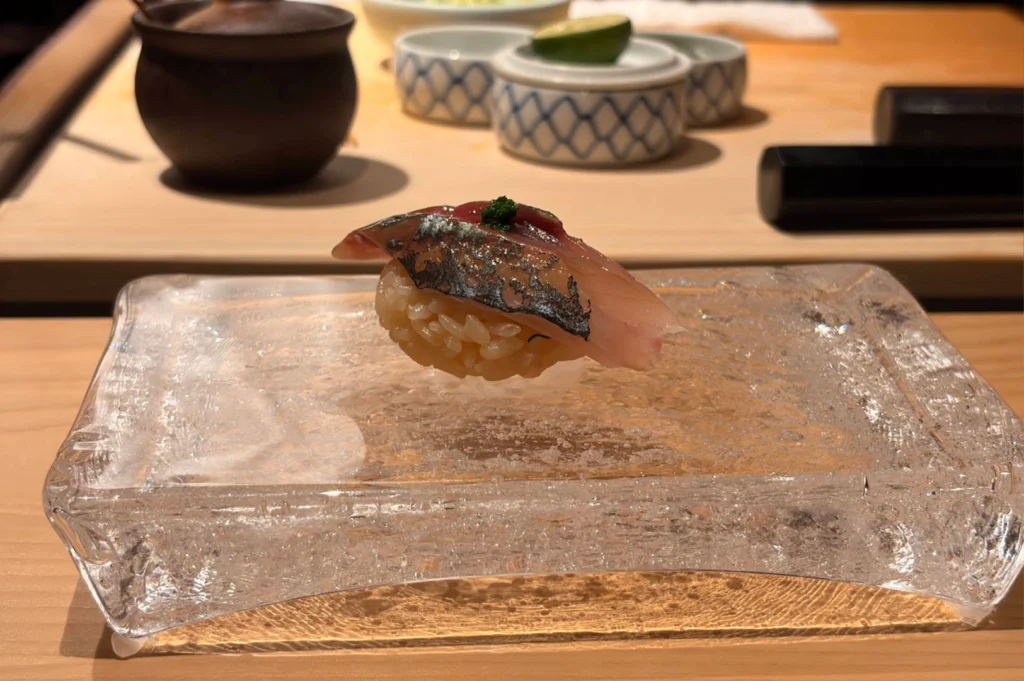
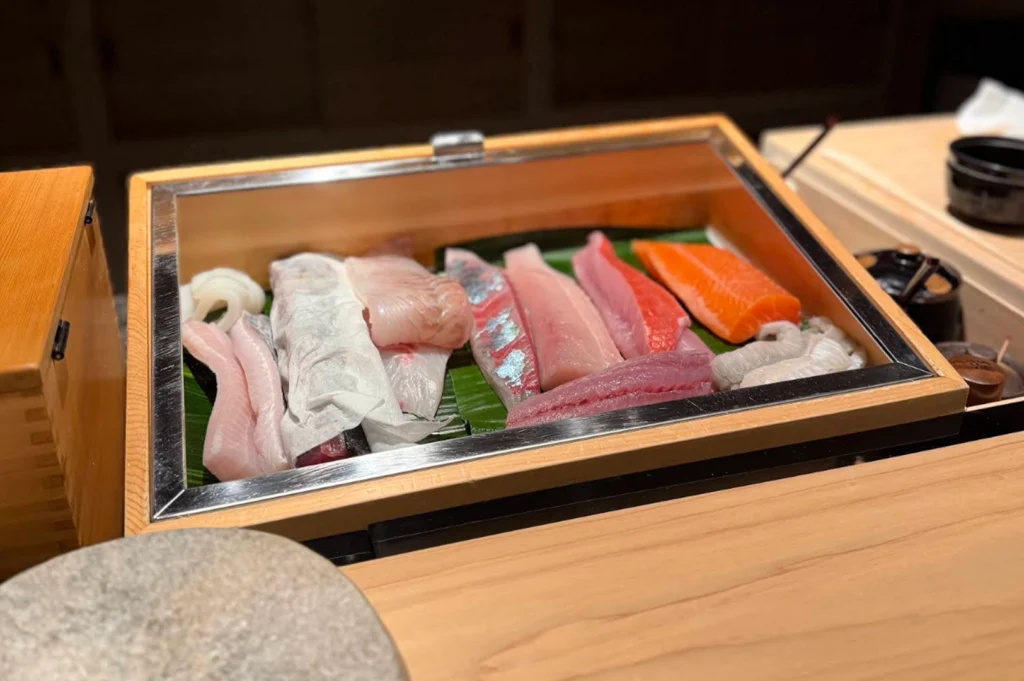
The exact menu changes with the seafood available, so I would not go in expecting a fixed list of sushi. Recent dining accounts have included hirame, shima aji, kinmedai, botan shrimp, chutoro, otoro, Aomori uni, nodoguro and anago, alongside cooked dishes and seasonal appetisers.
Some of the more memorable moments come from the contrast between pieces. A delicate white fish can feel almost weightless, followed by something much richer. A smoky preparation can then reset the palate before the next nigiri.
That variation is part of what makes sitting at the counter worthwhile. You are not simply working your way through a checklist of expensive seafood.
The Seafood Arrives With a Sense of Timing
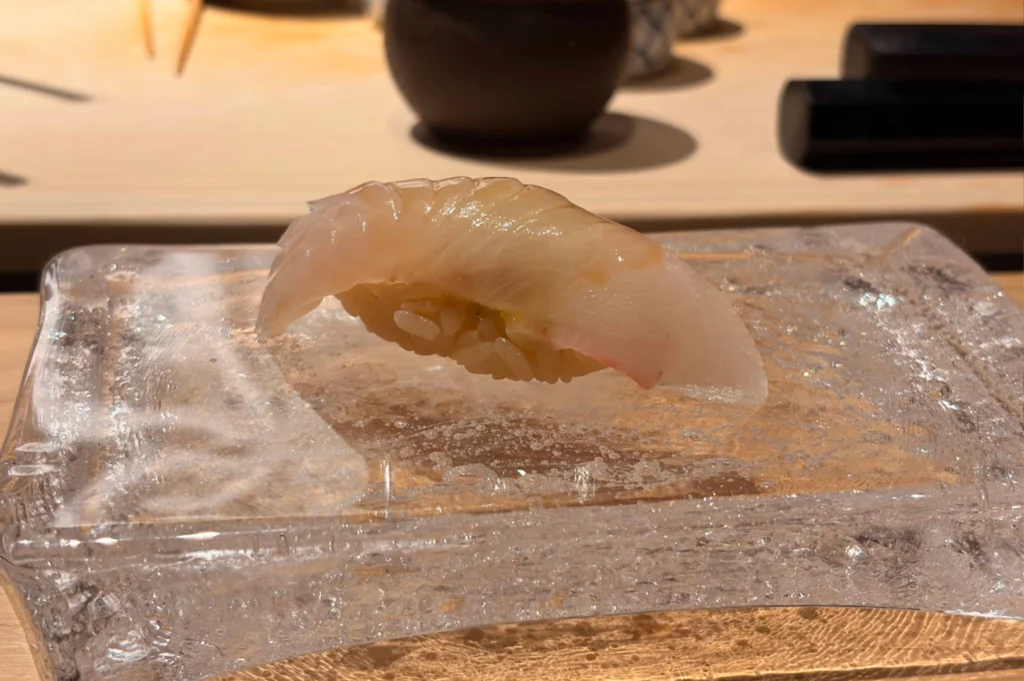
Ishizawa receives its seafood from Japan four times a week, according to MICHELIN. That frequency matters because the menu can respond to what is arriving rather than relying on a completely fixed selection.
During the meal, that means the chef has room to make decisions based on the condition of the ingredients. Some fish may be served more directly, while others benefit from ageing or careful preparation.
It is a subtle distinction, but it is one I appreciated. The best part of omakase is often the feeling that the meal belongs to that particular day.
The Atmosphere Is More Personal Than Formal
Despite the Raffles Hotel address, Ishizawa does not feel like a grand hotel dining room. The counter keeps things close. A recent September 2026 account described Chef Ishizawa as warm and conversational, with a relaxed lunch rhythm and even a few playful moments during the progression.
That warmth changes the mood. You can ask about a particular fish or technique without feeling that you are interrupting some carefully choreographed performance.
For me, this was one of the most enjoyable parts of the experience. The chef’s personality gradually becomes as memorable as the food.
Before Booking Ishizawa
A few practical details are worth knowing before making a reservation:
- Address: Raffles Hotel Shopping Arcade, #01-11, 328 North Bridge Road, Singapore 188719
- Lunch: 12pm–3pm
- Dinner: 6pm–10:30pm
- Closed: Sunday
- Seating: Nine-seat counter
- Reservations: Essential
- Phone: +65 9012 3938
- Children: Guests aged 12 and above are welcome when ordering a full set course.
The restaurant’s location inside Raffles Hotel also makes it convenient for diners already around City Hall, Bras Basah or the Civic District.
If you’re curious about more approachable options, Best Omakase Singapore’s guide to affordable omakase experiences rounds up counters where you can enjoy a full chef-led meal at a gentler price point.
My Take on Ishizawa
What I liked about Ishizawa is that it does not feel like a chef trying to recreate his past.
There is clearly a strong Edomae foundation behind the meal, but Chef Ishizawa now has his own counter, his own shari, his own menu structure, and the freedom to decide how he wants the experience to develop. That makes the restaurant feel like a work in progress in the best possible way.
For diners who enjoy quiet sushi counters, carefully handled Japanese seafood and chefs with a strong sense of craft, Ishizawa is worth considering. It is particularly appealing if you enjoy noticing the smaller details, the acidity of the rice, the condition of the fish, the timing of each piece, and the personality of the person preparing it.
And that, perhaps, is the most appealing thing about sitting at his omakase counter: you are not watching a finished chapter. You are watching a chef write a new one.