At Sushi Takemitsu, the most interesting part of the meal is not necessarily the most expensive ingredient. It is what happens when the chef gives the fish time.
That philosophy became clear as I worked through the omakase. Instead of relying entirely on the clean sweetness of freshly cut seafood, Takemitsu uses ageing to develop deeper umami, softer texture and a longer finish. Sitting at the counter, I found myself paying closer attention to how each fish changed from one course to the next.
The Aged Sushi Is the Main Story
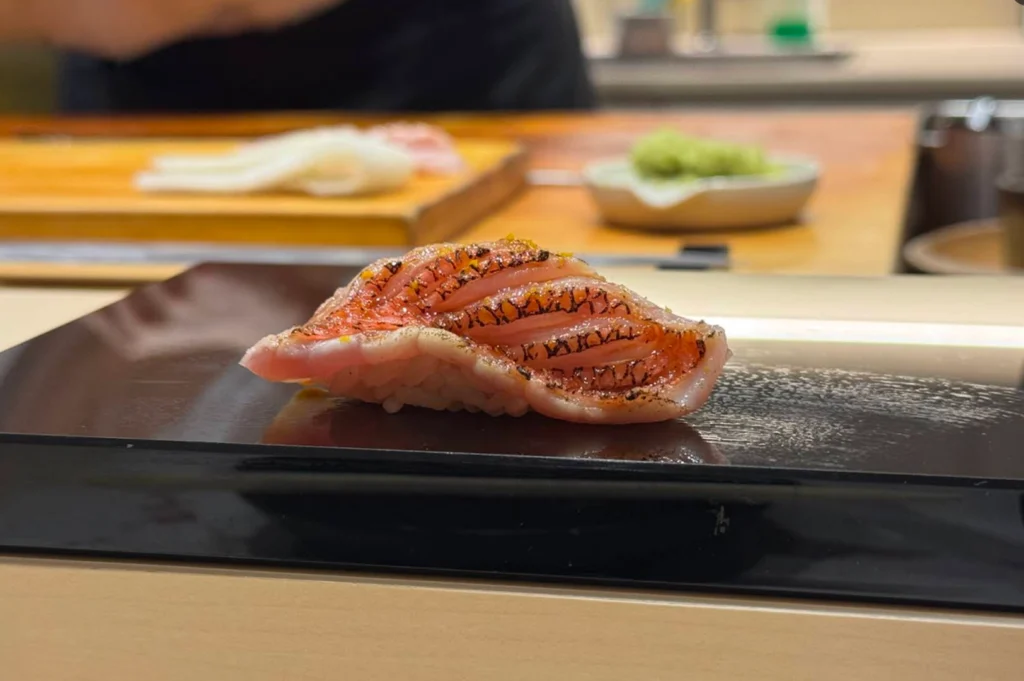
Ageing is what gives Sushi Takemitsu its identity. Fish such as shima aji, hirame, salmon and akami can be aged to concentrate their natural flavours before being served as sushi. The difference is subtle rather than dramatic: the texture becomes more developed, while the flavour gains a savoury depth that lingers.
I particularly enjoyed the moments when the fish and rice seemed to meet in the middle. The shari provides enough seasoning and acidity to keep richer pieces balanced, allowing the aged fish to remain the focus.
What Arrives During the Omakase
The menu changes with availability, but the current structure gives the meal plenty of variety.
Recent menus include:
- Amuse bouche
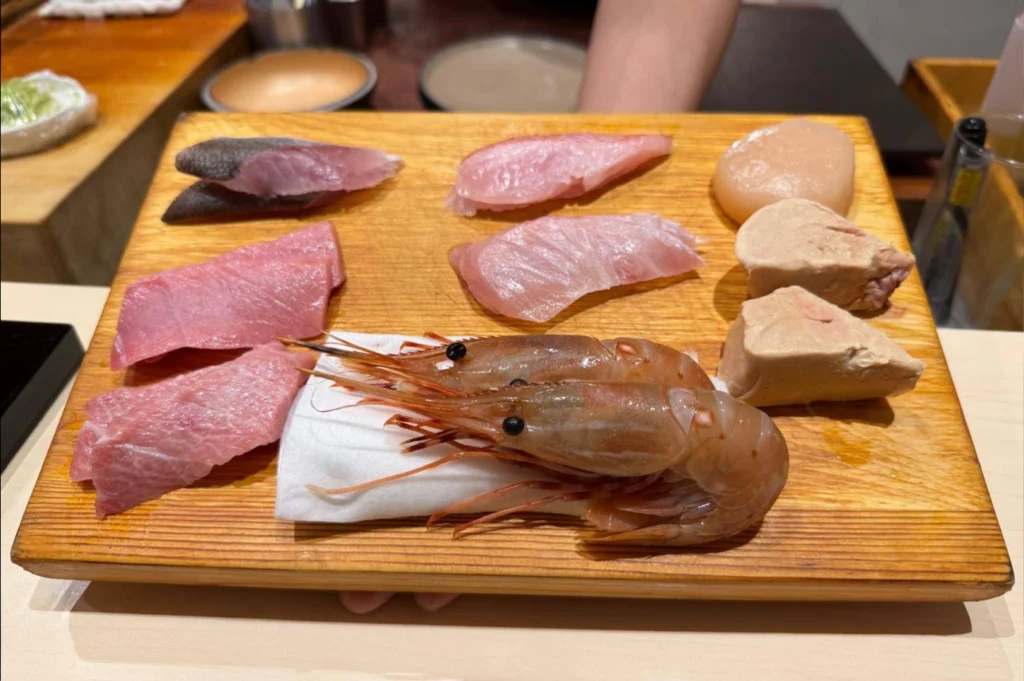
- Otsukuri or sashimi
- Seasonal hot dish
- Chawanmushi
- Sushi courses
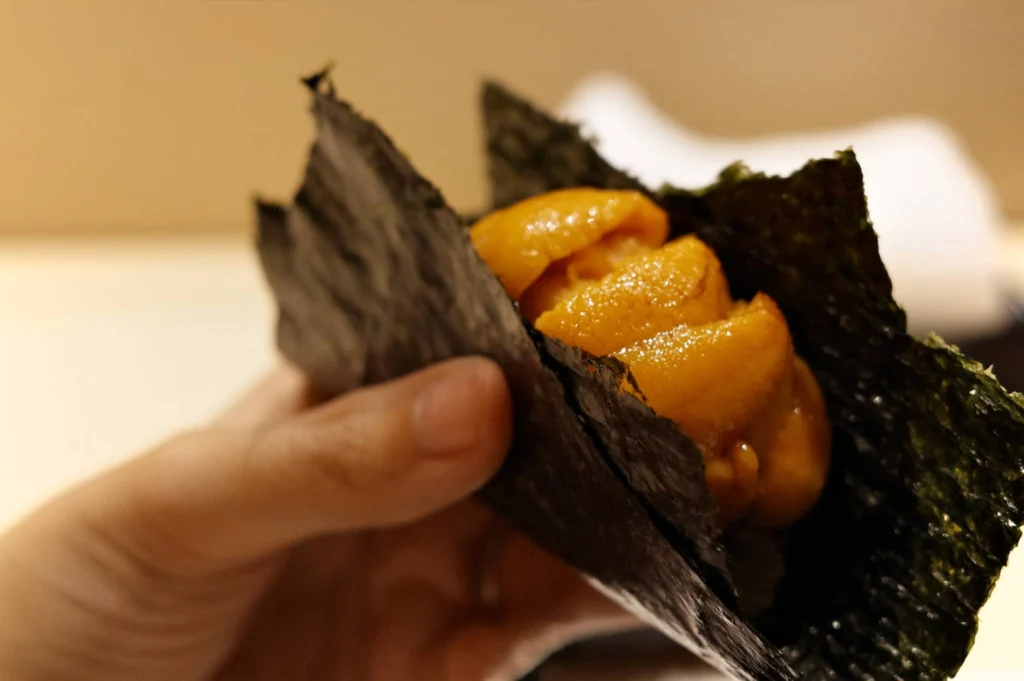
- Uni hand roll
- Soup
- Dessert
The current lunch menus are S$128++ and S$168++, while dinner options include a S$168++ menu and the more extensive S$268++ Takemitsu menu.
I liked that the progression does not stay entirely within sushi. The warm dishes create pauses between the fish, making the overall meal feel more complete.
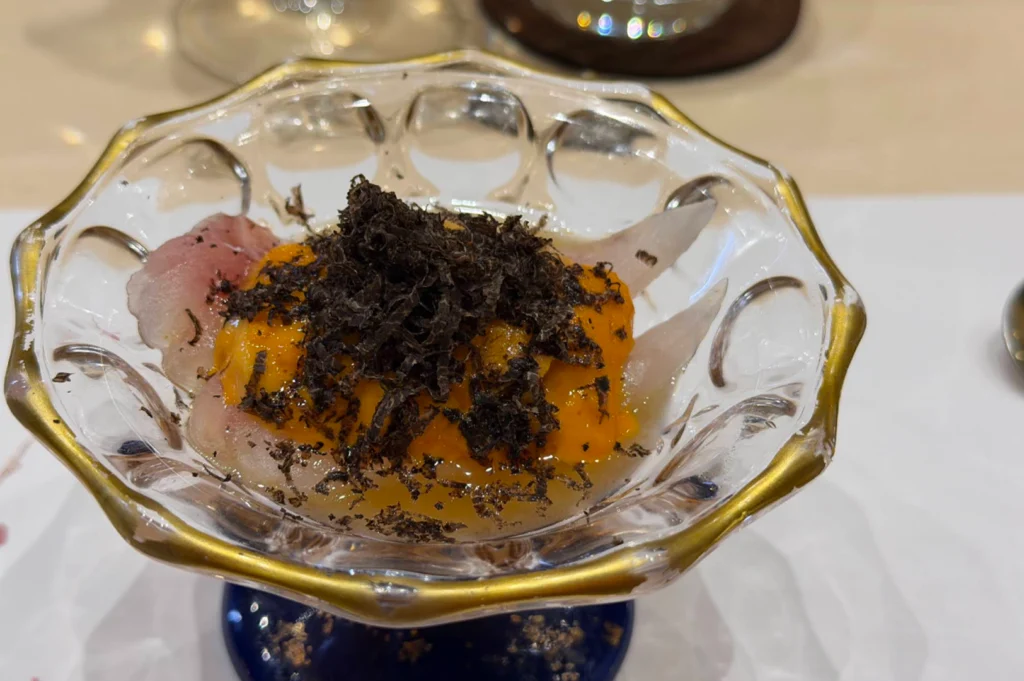
The uni hand roll is one of the recurring highlights, and it provides a useful contrast to the more restrained aged sushi. Uni brings creamy sweetness, while richer versions paired with toro create a much more indulgent bite. It is the sort of course that gives the meal a little lift after several pieces of more delicate fish.
The contrast works. Takemitsu can be quiet and restrained one moment, then unexpectedly luxurious the next.
A Small Counter With a Relaxed Feel
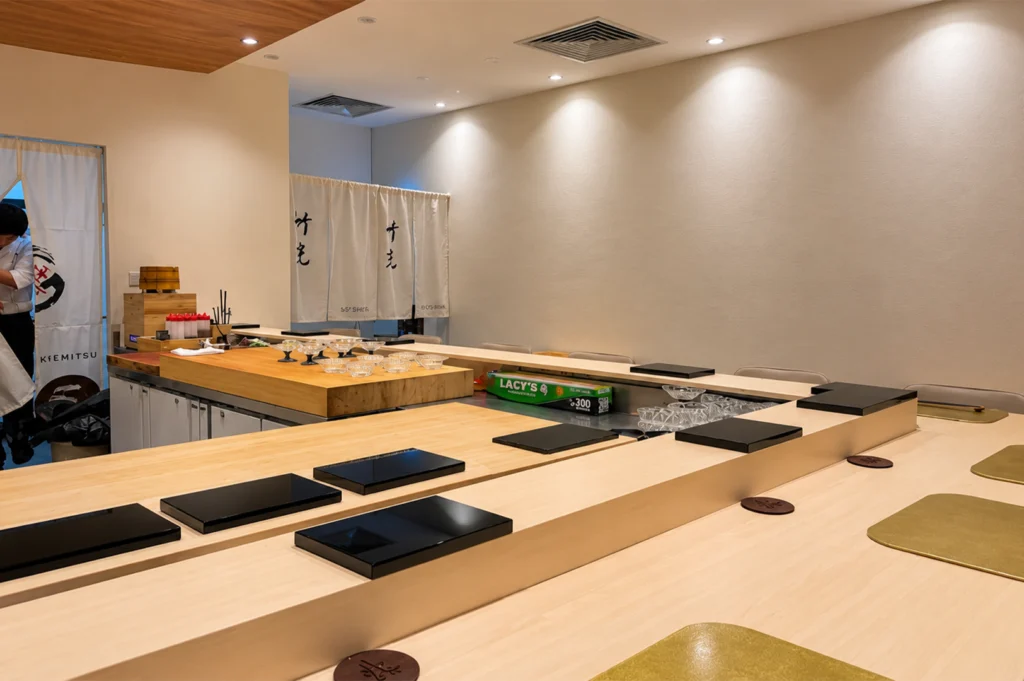
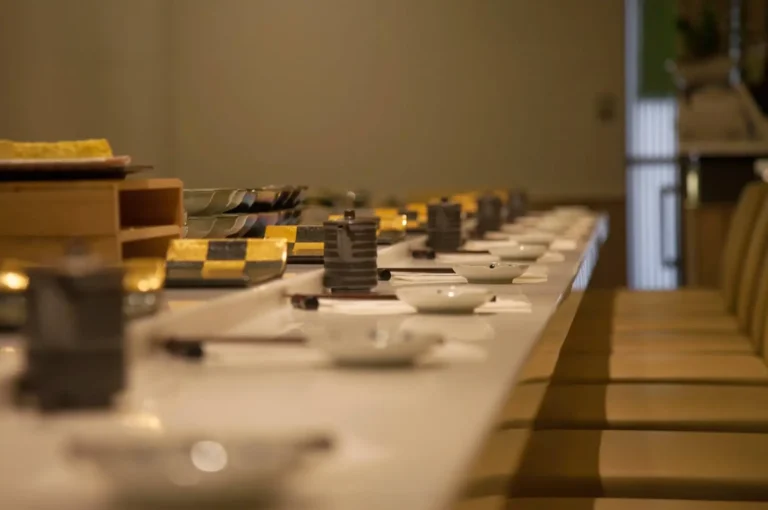
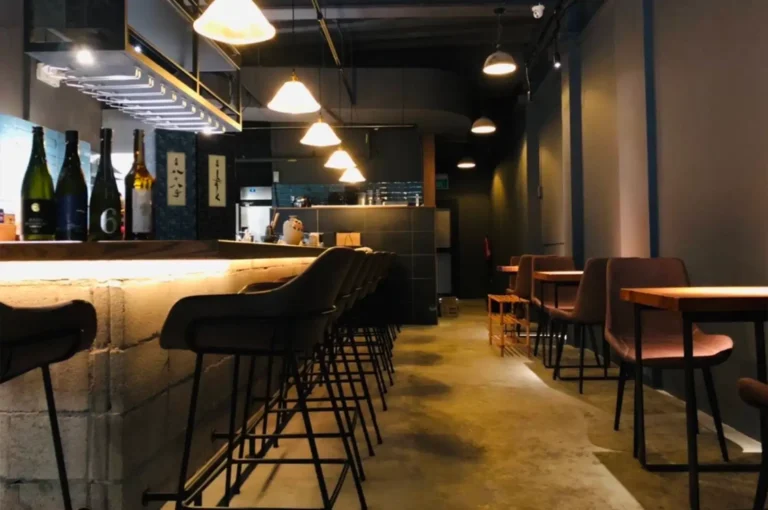
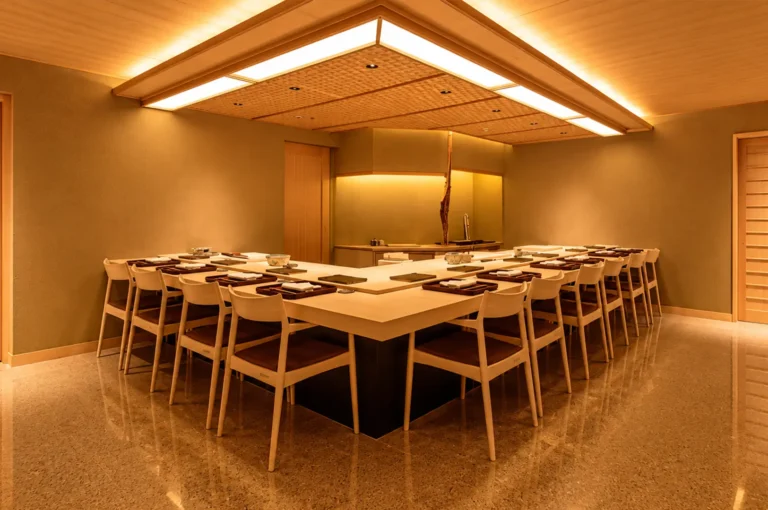
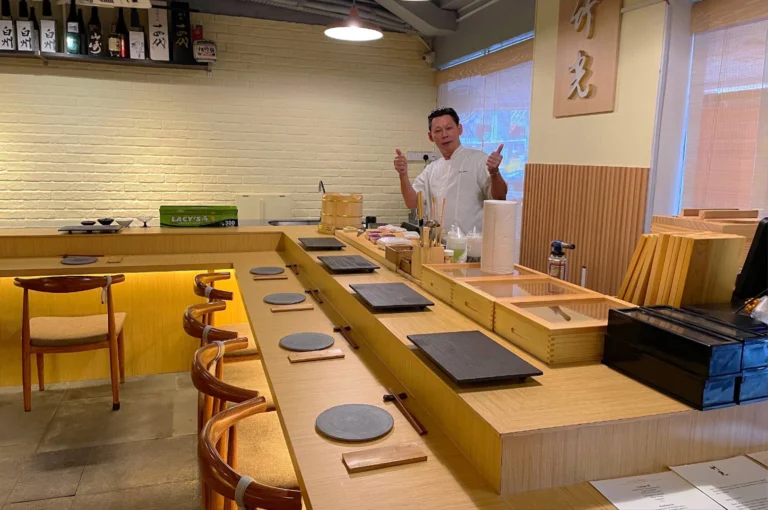
The restaurant is at 140 Robinson Road, making it convenient for CBD diners. The counter is intimate enough to watch the chefs prepare each course, but the atmosphere does not feel overly ceremonial. Recent diner feedback has described the chef as knowledgeable and friendly, with attentive service adding to the experience.
I found that balance appealing. You can focus on the sushi without feeling as though you need to sit completely still and silently observe.
Why the Rice Matters
Aged fish needs a thoughtful partner. The sushi rice has enough acidity and seasoning to balance the richer flavours that develop through ageing. With leaner fish, it provides structure; with fattier pieces, it keeps the bite from becoming too heavy.
This is one of those details that is easy to overlook when reading a menu, but much easier to appreciate at the counter. The fish may be the headline, but the rice determines how the final bite comes together.
Lunch or Dinner?
If this is your first visit, I would consider lunch. The S$128++ lunch menu offers an accessible introduction to the restaurant's approach without immediately committing to the more extensive dinner experience. The S$168++ option adds further depth, while the S$268++ dinner menu is better suited to diners who want a longer progression.
If you're looking for more approachable ways to explore the format, Best Omakase Singapore's guide to affordable omakase experiences is a useful next stop.
Practical details
Sushi Takemitsu
140 Robinson Road, #01-02, Singapore 068907
- Lunch: Tuesday–Sunday, 12pm–3:15pm
- Dinner: Tuesday–Sunday, 6pm–10:30pm
- Closed: Monday
- Phone: +65 8339 4810
- Style: Japanese sushi omakase
- Setting: Intimate counter dining
- Parking: Street parking
Current menus and prices should be confirmed when booking, as the restaurant rotates its offerings.
My Take
Sushi Takemitsu is most interesting when you stop thinking about freshness as the only measure of good sushi.
The chef's ageing process gives the fish another dimension, and the rest of the omakase is structured around letting those flavours develop gradually. The richer uni and toro courses provide contrast, while the cooked dishes and soup keep the meal from becoming repetitive.
For diners curious about aged sushi and the effect of time on flavour and texture, Takemitsu offers something more specific than a standard sushi counter. It is a quieter kind of craftsmanship — one where the most important work happens before the fish ever reaches the plate.
For more thoughtfully selected omakase experiences across Singapore, explore Best Omakase Singapore and discover your next counter worth sitting at.