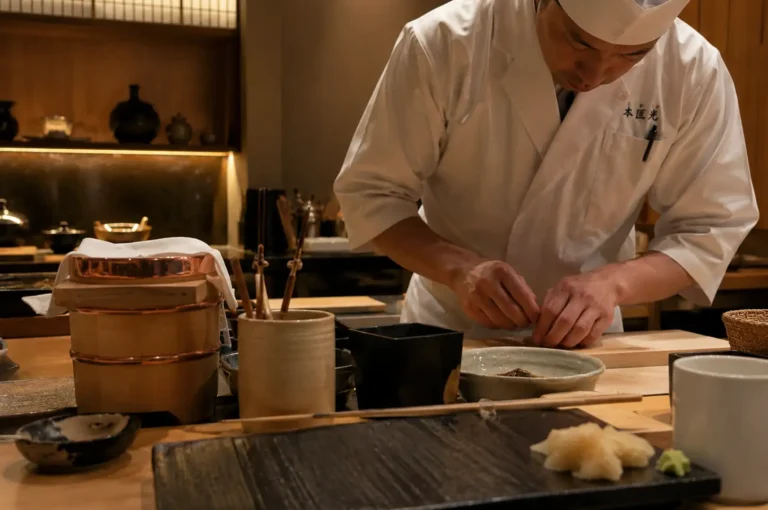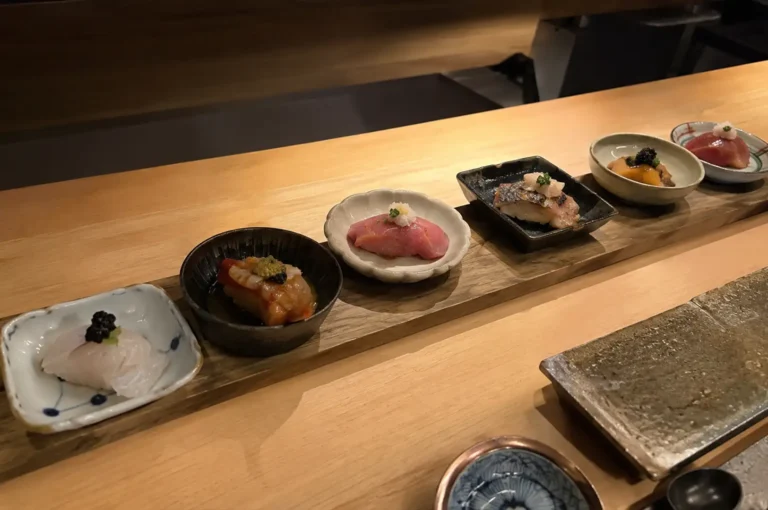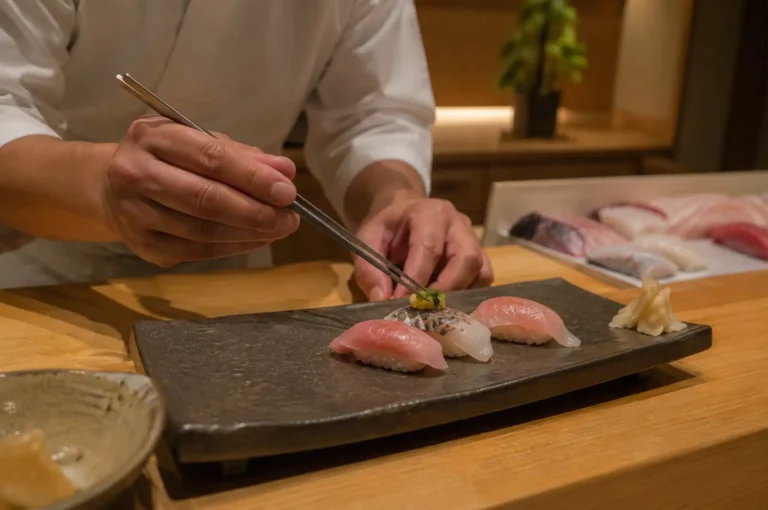
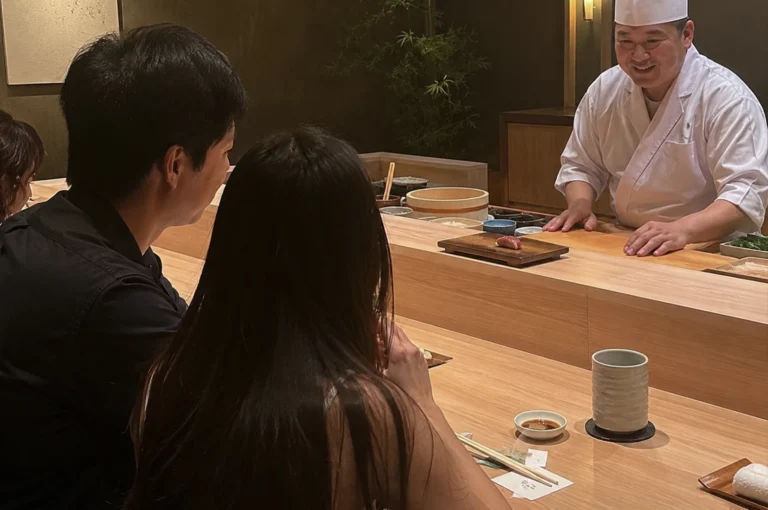
I noticed it before a single word was spoken.
Not the chef placing the first piece of sushi onto the counter. Not the soft “irasshaimase” as guests entered. Not even the clinking of cups or the quiet shuffle of seats adjusting closer to the wood counter.
It was the smile.
A small one. Almost unnoticeable if you were not paying attention.
The couple beside me exchanged it after the chef handed over the first course. Across the counter, another guest gave the same expression after taking a bite, pausing for a second before speaking. Even the chef himself smiled first, as if the food had already said what needed to be said long before language could catch up.
That is what struck me most about dining in an omakase restaurant.
For a place centered around conversation between chef and guest, so much of the experience happens in silence.
There is something deeply human about reactions arriving before words do. We tend to explain things immediately. We search for the right description, the clever observation, the perfect compliment. But in that quiet Japanese counter setting, I realized how honest the first reaction usually is.
A smile does not rehearse itself.
It appears instinctively. Softly. Sometimes almost shyly.
And somehow, that feels more respectful to the meal than trying to over-explain every flavor.
In many omakase spaces, especially the more intimate ones, there is an unspoken rhythm. Guests watch carefully. The chef notices everything without seeming to look directly at anyone. Water glasses are refilled quietly. Sushi is eaten almost immediately after being served. Timing matters. Presence matters.
But what fascinated me most was how emotion traveled across the counter without needing translation.
One guest widened their eyes after tasting uni. Another covered their mouth slightly after the sweetness of shrimp settled in. Someone laughed quietly after realizing how unexpectedly warm a handroll felt against their fingers.
And almost every time, the reaction began the same way:
With a smile.
Before “this is good.”
Before “I’ve never tasted anything like this.”
Before asking questions about ingredients flown in from Japan.
Just a smile.
I think that is part of what makes omakase feel so personal. It removes the pressure to perform your appreciation. You do not need to become a food critic for the night. You simply respond honestly. The chef offers something carefully prepared, and your face answers before your voice does.
There is a tenderness to that exchange.
Maybe that is why the experience lingers long after dinner ends. Not because of how expensive the meal was or how exclusive the reservation felt, but because for a brief moment, reactions became simpler and more sincere.
Someone smiled before saying anything.
And somehow, that said everything already.