Not every love story begins with a grand gesture.
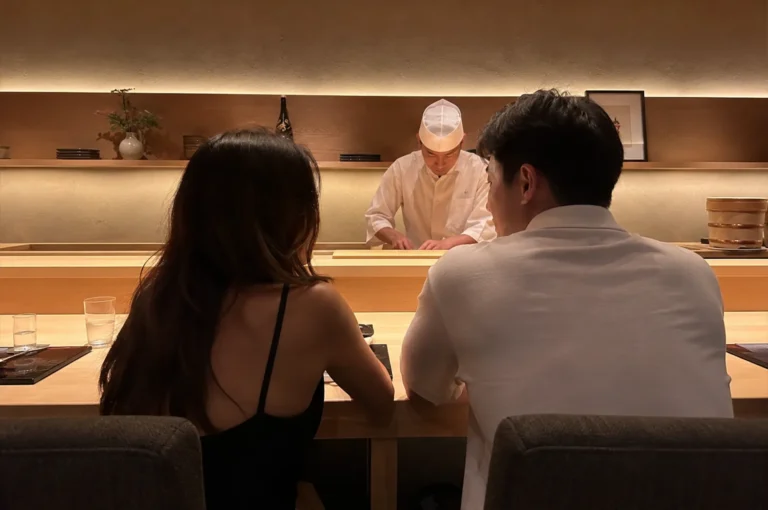
Some start quietly, across a polished wooden counter, with two people sitting side by side as a chef carefully prepares each course. There are no distractions, no loud music competing for attention, and no pressure to fill every silence. There is only the rhythm of the meal, the anticipation of what comes next, and the shared experience unfolding one piece at a time.
This is part of what makes omakase such a unique setting for connection.
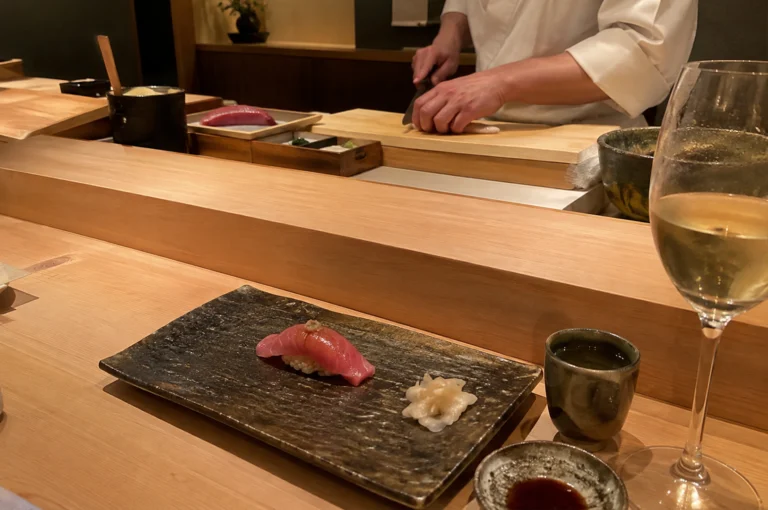
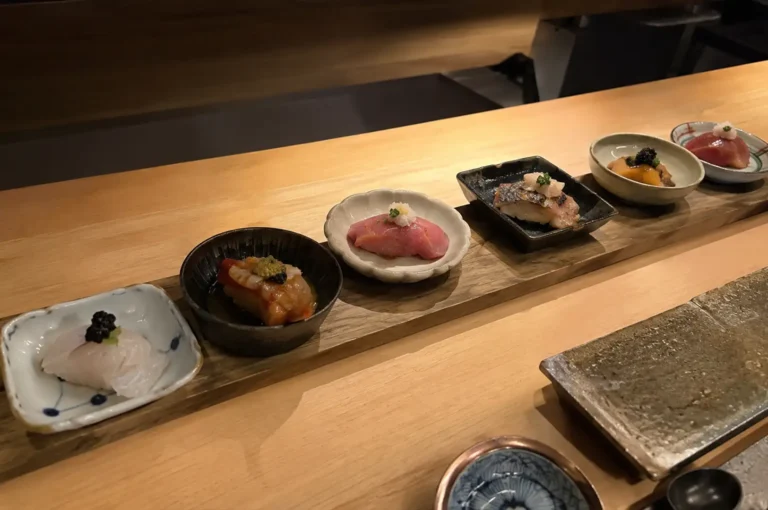
Unlike traditional dining where guests scan menus and make choices independently, omakase asks diners to trust the chef’s journey. Everyone at the counter experiences the meal together. Each course arrives simultaneously, creating natural moments of conversation. A glance exchanged after tasting an exceptional piece of otoro or a smile shared during a surprising seasonal creation can feel more meaningful than an entire evening of small talk.
The beauty of omakase is that it encourages presence.
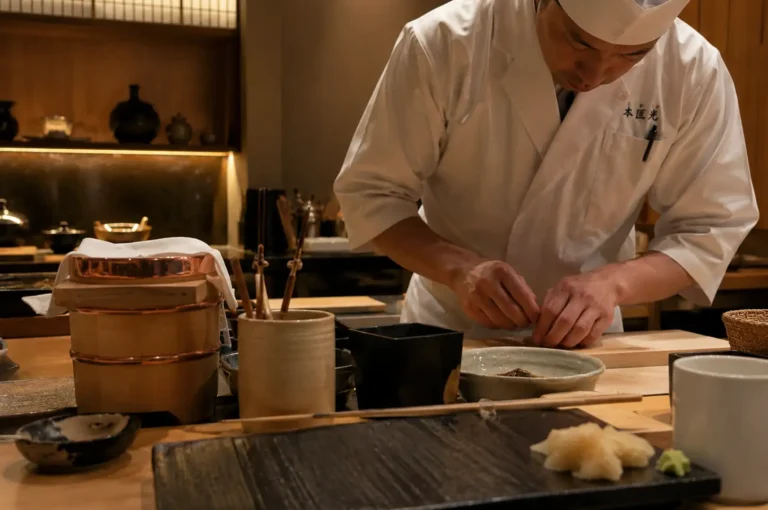
Modern dating often unfolds amid endless distractions. Phones vibrate. Notifications interrupt conversations. Reservations are rushed. Yet at an omakase counter, attention naturally shifts to the moment. Guests watch the chef’s hands, listen to explanations about ingredients, and savor each bite intentionally. In that environment, conversations tend to become more genuine. People listen more closely. They notice details. They become curious about one another.
Perhaps that is why so many memorable relationships seem to include an omakase dinner somewhere in their story.
For some couples, it is a first date that unexpectedly lasts hours because neither person wants the evening to end. For others, it becomes a place to celebrate milestones, a promotion, an anniversary, a proposal, or simply another year spent together. Certain counters become woven into the fabric of a relationship, returning each season like a favorite chapter in a beloved book.
There is also something inherently intimate about sharing trust.
The word “omakase” translates roughly to “I leave it up to you.” Diners place their confidence in the chef’s expertise, allowing the experience to unfold without knowing exactly what is coming next. In a subtle way, relationships require a similar mindset. Love often asks people to embrace uncertainty, remain open to surprises, and trust that the journey itself will be worthwhile.
The finest omakase experiences understand this emotional dimension. They are not simply serving fish and rice. They are creating moments. The chef remembers returning guests. Seasonal ingredients tell stories of time and place. Conversations emerge naturally among strangers who, for a few hours, share the same experience. Every detail contributes to an atmosphere where memories can form effortlessly.
Of course, not every guest arrives seeking romance. Many come for the craftsmanship, the ingredients, or the culinary artistry. Yet even then, the experience often leaves people feeling connected to the chef, to Japanese culinary traditions, and to the companions sitting beside them.
Food has always played a role in human connection. Families gather around tables. Friends celebrate over meals. Couples mark important occasions through dining experiences they will remember for years. Omakase simply elevates this tradition into something more intentional and immersive.
Long after the final piece of sushi has been served and the last cup of tea has been poured, what remains is rarely just the memory of what was eaten.
People remember the laughter between courses. They remember the chef’s warm greeting. They remember the excitement of discovering something new together. They remember how they felt.
And sometimes, years later, when someone asks how their story began, the answer is surprisingly simple:
It started at an omakase counter.