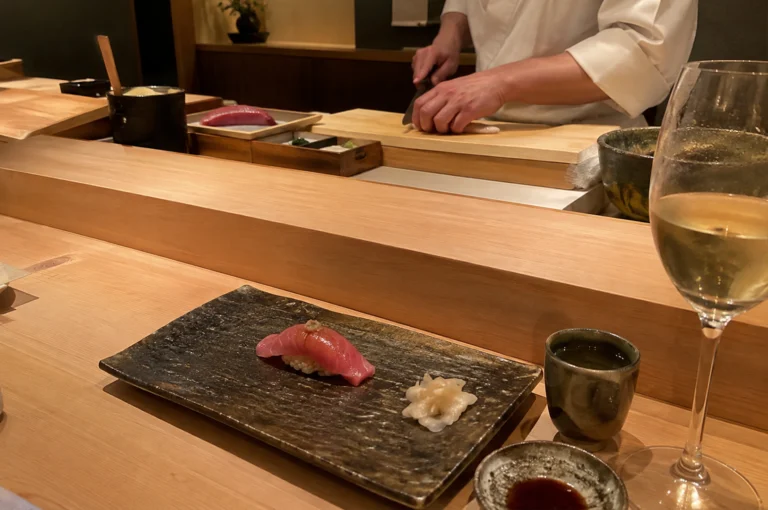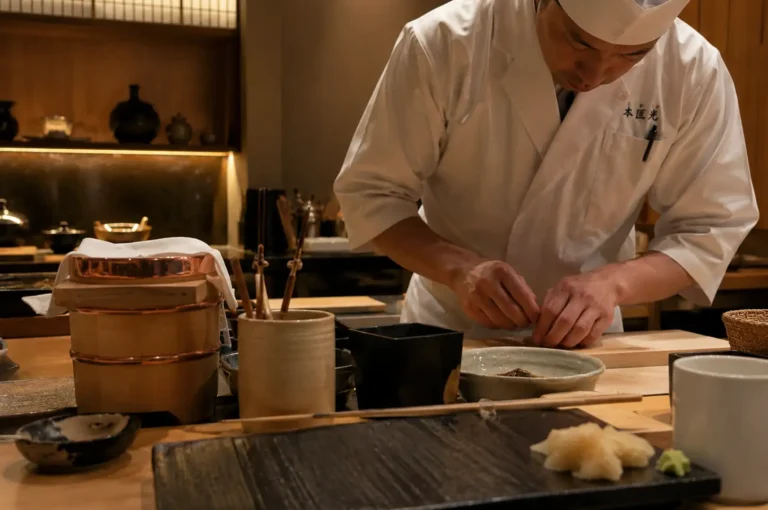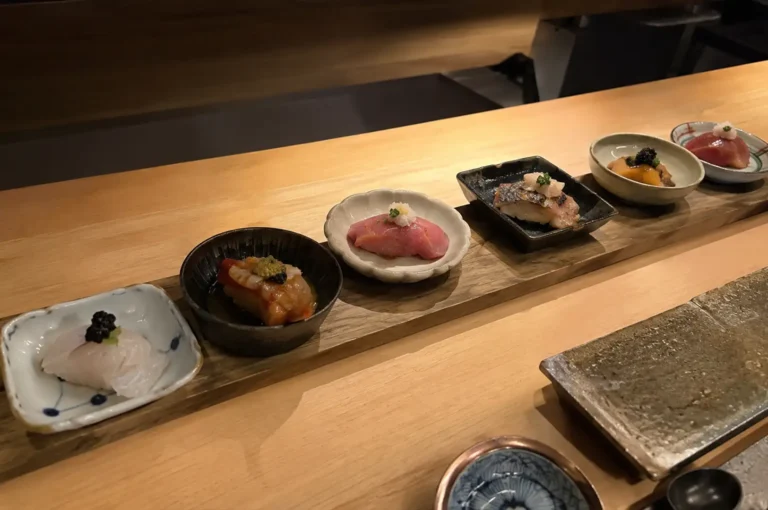
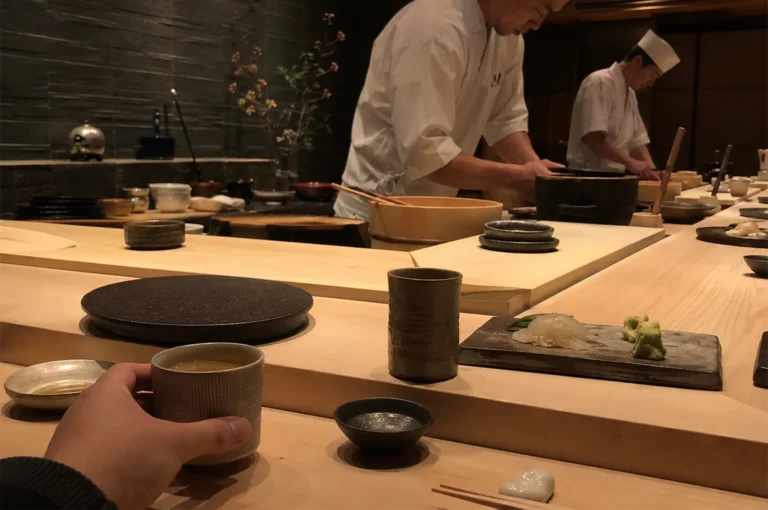
There’s a particular kind of silence that lives inside an omakase counter.
Not empty silence but intentional silence. The kind that stretches just long enough for anticipation to form, where the next course hasn’t arrived yet, but you already trust that it will be worth waiting for.
It isn’t really about food. It’s about the slow unfolding of attention, how something simple becomes intimate when it is revealed to you in stages.
At an omakase counter, you don’t choose. You surrender.
The chef decides the rhythm, the sequence, the surprise. One moment, a delicate slice of fish arrives brushed with citrus and memory. Next, a warm piece of rice carries quiet precision in its warmth. There is no rush to understand everything at once. Understanding comes later after the taste has already settled somewhere deeper than language.
That is what makes omakase feel strangely similar to falling in love.
At first, you are attentive in a cautious way. You notice details because you are trying to decide what this experience is. The lighting. The way the chef moves without spectacle. The confidence of someone who doesn’t need to explain every gesture.
Then something shifts.
You stop analyzing. You start receiving.
Each course becomes a kind of conversation without words. A piece of toro that melts too quickly to question. A broth that tastes like it has been waiting for you longer than you’ve been here. A bite that feels less like consumption and more like being allowed access to something private.
Love, at its most honest, often works the same way.
It doesn’t arrive fully formed. It arrives in chapters you don’t realize you are reading until you’re already halfway through the story. You begin to recognize patterns: what makes the other person pause, what they return to, what they never say but always express anyway.
And just like at the counter, you realize control was never the point.
The beauty of omakase is not in surprise alone, but in trust, the willingness to let someone else guide your experience with care. It is the quiet agreement that says: show me what you think I should taste next.
Somewhere between the third course and the seventh, something soft happens. You stop waiting for the “best dish” because you realize the experience isn’t building toward a climax. It is already complete in motion. Each plate is both an introduction and continuation. Nothing is wasted. Nothing is rushed.
That’s what makes it feel like falling in love.
Not the intensity people expect but the patience they forget to value.
By the end of the meal, there is usually one final course that feels almost unnecessary in its perfection. Not because it is the most elaborate, but because it carries the weight of everything that came before it. A quiet conclusion that doesn’t announce itself as an ending.
You leave the counter slightly changed, though nothing dramatic has happened on the surface. No declarations. No grand gestures. Just a sequence of small, precise moments that, together, formed something larger than themselves.
And perhaps that is the real lesson hidden inside the experience.
Love rarely begins with certainty. It begins with tasting something once, then trusting the next course enough to stay for it.