An omakase menu rarely announces itself all at once. You take a seat at the counter, perhaps order sake or tea, and the first small dish appears. There is no long menu to study and often very little indication of what the next course will be. That uncertainty is not a gap in the experience; it is part of the design.
In omakase dining, a traditional Japanese dining style, the chef controls the progression of the meal, moving through different temperatures, textures and preparations in a sequence that feels natural rather than rigid. Sashimi may lead into a warm dish, followed by sushi, soup and dessert. At another restaurant, the order may shift entirely.
Understanding that rhythm makes the experience far more interesting and memorable.
How an Omakase Menu Is Built
At its simplest, omakase means leaving the choice to the chef. But a thoughtful omakase menu involves more than choosing a collection of expensive ingredients.
The chef curates a course progression around several things at once:
- what seafood is at its freshest seasonal ingredients best that day, often sourced from the renowned Toyosu Market in Japan;
- the richness and texture of each dish to ensure a good balance;
- the temperature of the food;
- how strongly each course is seasoned;
- and how full the diner is becoming.
The chef may begin the morning with an idea of the menu, then adjust it according to the day’s freshest ingredients. Seafood arriving from Japan or the Toyosu Market, for example, can influence what becomes sashimi, what is aged or cured, and what is better suited to a cooked preparation.
A seasonal tasting menu based around ingredient quality gives the chef room to respond rather than simply reproduce yesterday’s meal.
Why Seasonal Sashimi Often Comes Early
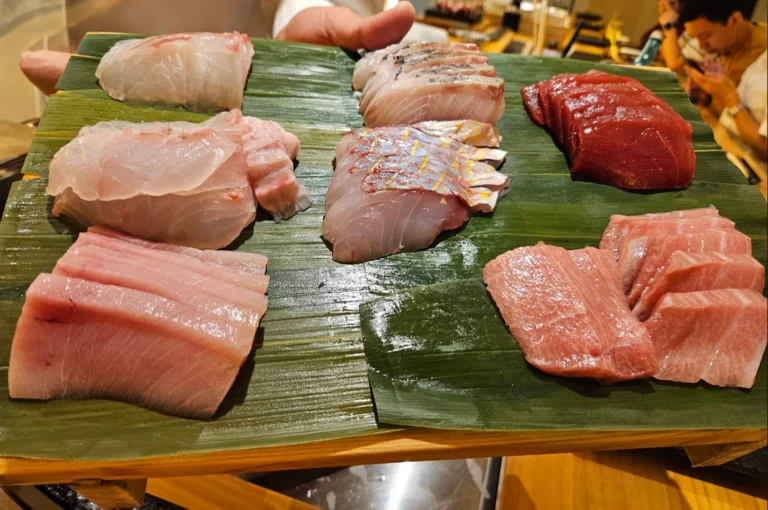
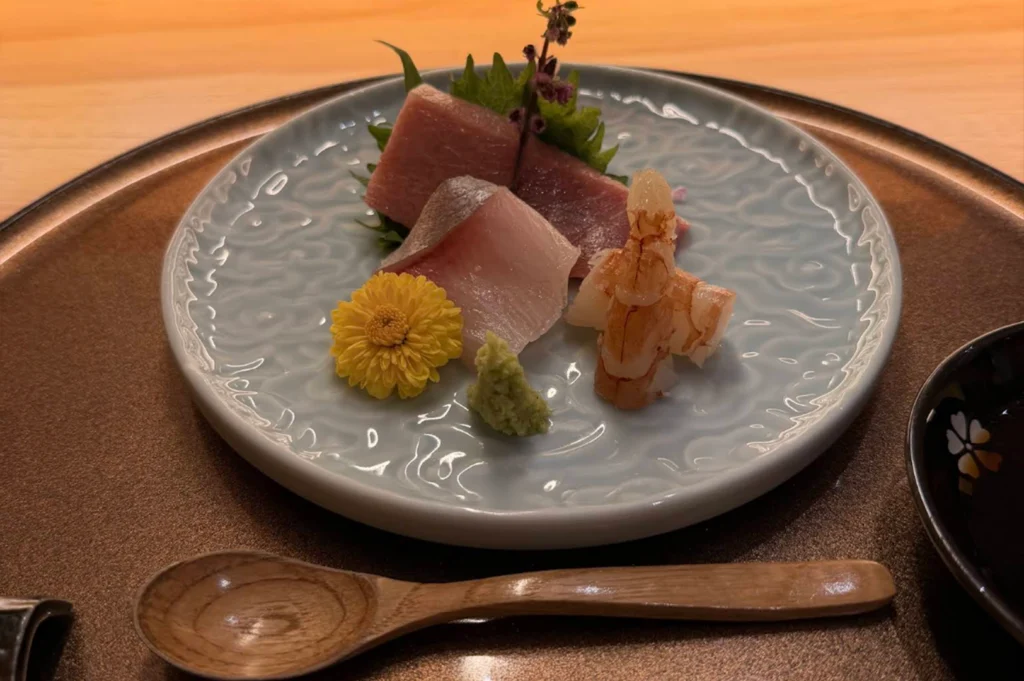
Sashimi frequently appears near the beginning because it allows diners to taste the character of the seafood before heavier flavours enter the meal. Japan’s tourism authority describes sashimi as fresh raw fish served without rice, allowing the ingredient itself to remain the focus.
That simplicity is deceptive.
A piece of seasonal sashimi may have been aged, salted, lightly cured or cut in a particular direction before it reaches the table. Even the thickness of the slice changes how the fish feels and tastes. This part of the meal might include white fish, tuna, scallop, shellfish or premium sashimi selected according to season, often featuring prized items like otoro or uni.
Hot Dishes Change the Rhythm of Omakase Dining
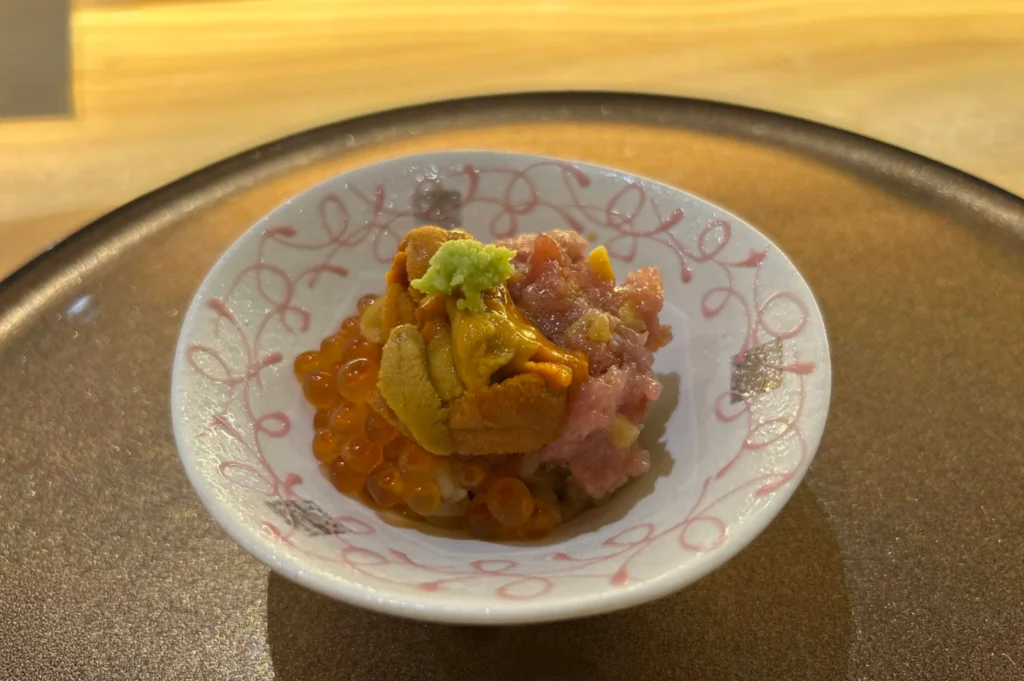
After several cool, delicate courses, warmth can be surprisingly welcome. Many omakase menus ranging from simple to elaborate introduce hot dishes between sashimi and sushi, giving both the palate and the pace of the meal a gentle reset. These might include grilled fish, steamed seafood, soup, tempura or another cooked dish built around seasonal ingredients.
Traditional Japanese course cuisine itself values a variety of techniques. Japan’s Ministry of Agriculture describes cooking methods including raw preparation, simmering, grilling, steaming and frying as important elements within Japanese course dining.
They also stop the meal from becoming a parade of raw seafood. A good omakase has movement: cool and warm, lean and rich, soft and crisp. The hot dishes create some of those transitions.
Why Nigiri Comes Later in the Dining Experience
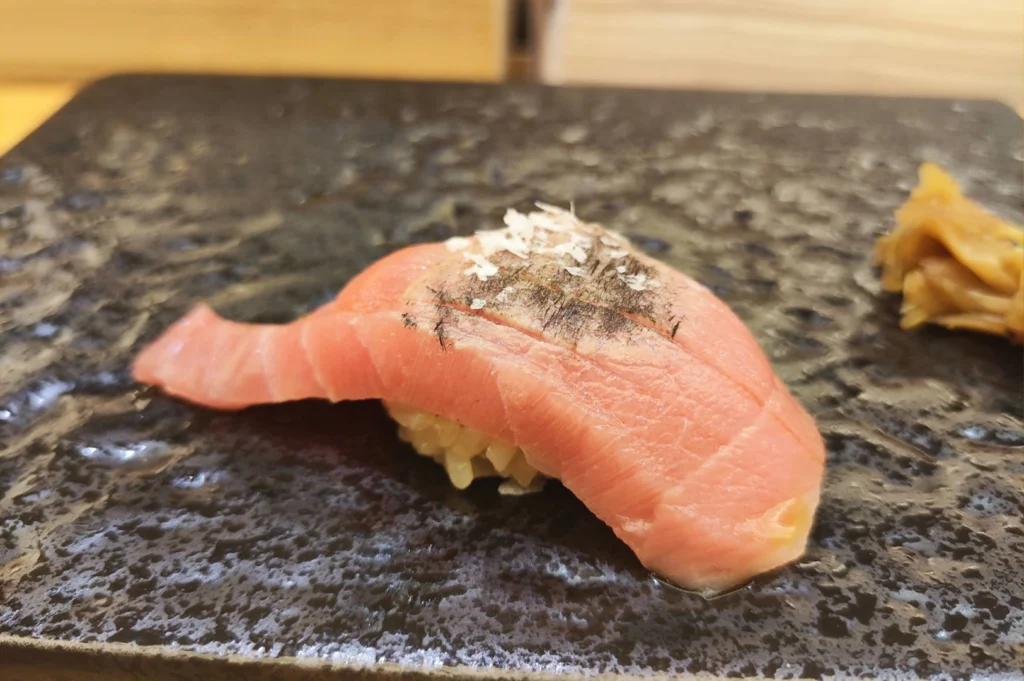
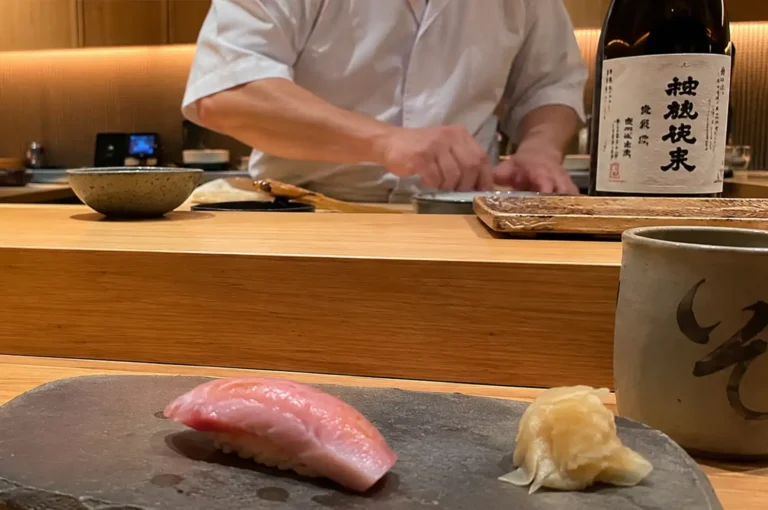
Eventually, attention often shifts toward nigiri. This is where the relationship between fish and rice moves centre stage. Nigiri-zushi is fundamentally a combination of vinegared rice topped with another ingredient. Yet in a serious omakase restaurant, that simple construction involves remarkable precision.
The rice, or shari, needs the right temperature, acidity and texture. The fish may be raw, cured, aged, seared or brushed with sauce. The amount of wasabi can change from one piece to another. And timing matters.
How Sushi Courses Usually Progress
The sushi courses themselves often have their own internal rhythm. There is no universal order, but many chefs move from relatively delicate flavours toward richer ones. A lighter white fish might appear before tuna, followed later by richer cuts such as otoro, uni or eel.
The sequence can also be used to manage texture. A clean, lean fish may be followed by something softer and fattier. A piece of sea urchin might arrive as gunkan-style sushi or another preparation because its texture does not behave like a conventional slice of fish.
This is where the chef’s experience becomes particularly visible. One Michelin-listed Tokyo sushi restaurant, for example, moves from side dishes and sashimi into vegetable preparations before signalling the transition to nigiri. That is a useful reminder that there is no single compulsory formula.
Premium Sashimi and Premium Ingredients Do Not Always Mean Better Omakase
There is a temptation to judge an omakase restaurants by how many luxury ingredients appear.
Uni. Otoro. Caviar. Wagyu. Perhaps even gold flakes.
These can certainly be delicious, but an omakase meal is not automatically better because every dish contains something expensive. Three portions of premium sashimi cannot compensate for poor pacing. Neither can a long range of hot dishes rescue sushi rice that is badly seasoned.
What Happens Between the Main Courses?
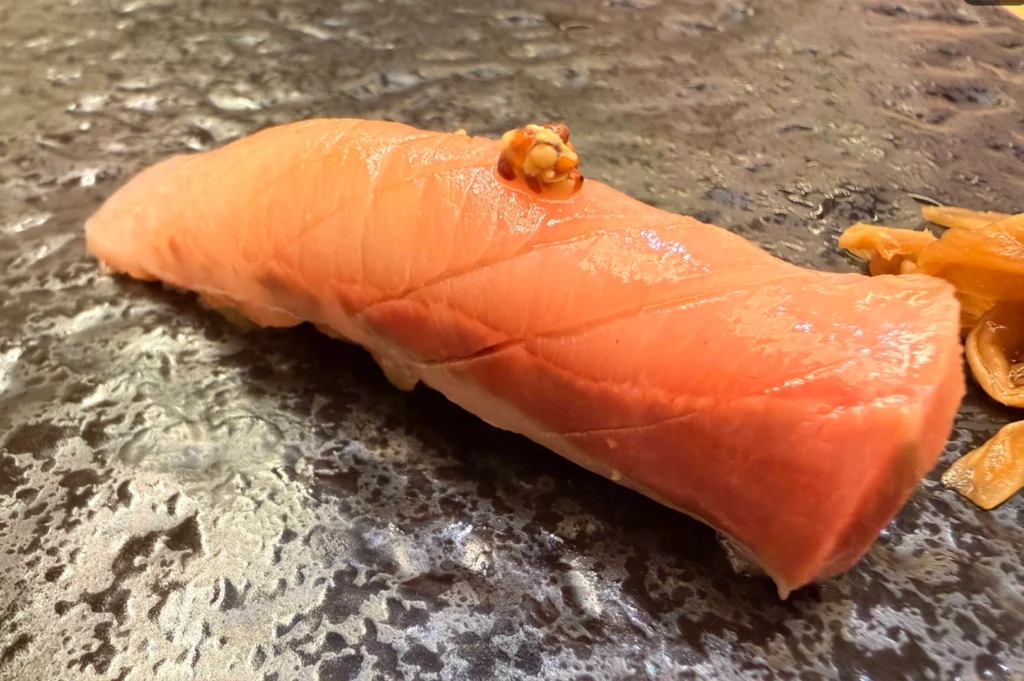
The transitions are easy to overlook, but they matter. A chef may introduce soup before returning to sushi. A small vegetable dish might follow something fatty. Pickled ginger cleans the palate between pieces of nigiri. Tea, sake or wine can complement different parts of the meal.
At some counters, a hand roll appears near the end. At others, tamago serves almost as a final test of technique before dessert. These aren’t random additions. Each course gives the diner a little space before the next flavour arrives. The entire dining experience works rather like a conversation: intensity rises, settles, then rises again.
Lunch Courses Versus Dinner Courses
A lunch omakase and a dinner omakase can follow the same basic philosophy while feeling quite different.
- Lunch courses are often more concise. A restaurant may reduce the number of appetisers or cooked dishes while keeping a focused progression of sashimi and sushi. Lunch omakase is often priced more affordably, appealing to those on a budget or seeking a shorter experience.
- Dinner usually gives the chef more room. When dinner starts, there may be additional seasonal appetisers, more elaborate expertly prepared hot dishes, a broader range of premium sashimi and perhaps several more pieces of sushi before dessert, making the experience more memorable and leisurely.
Why Counter Seating Matters
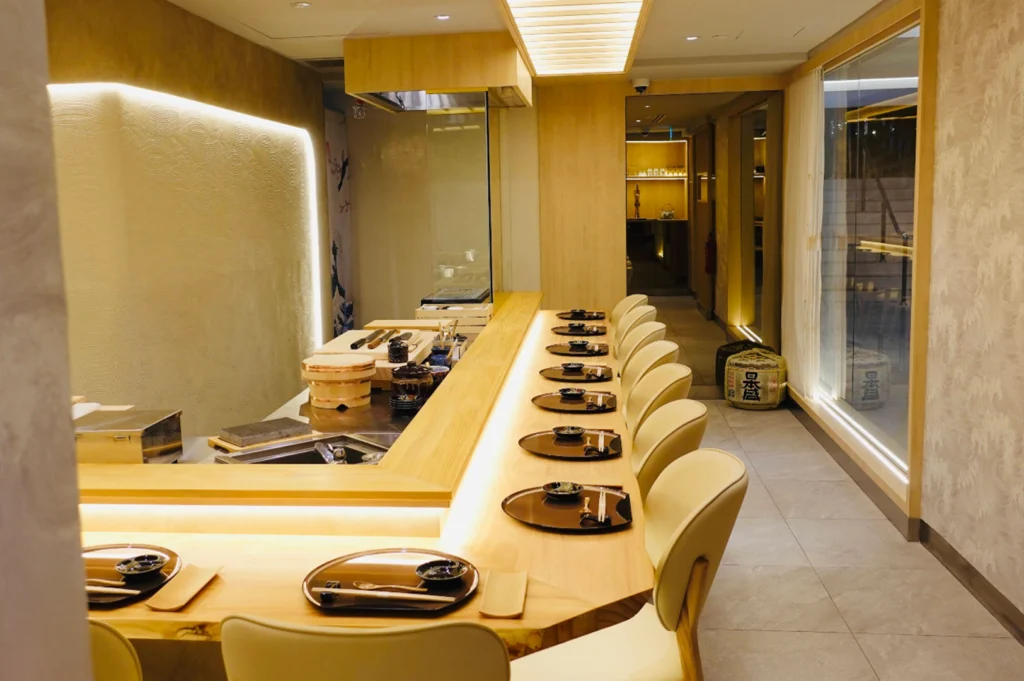
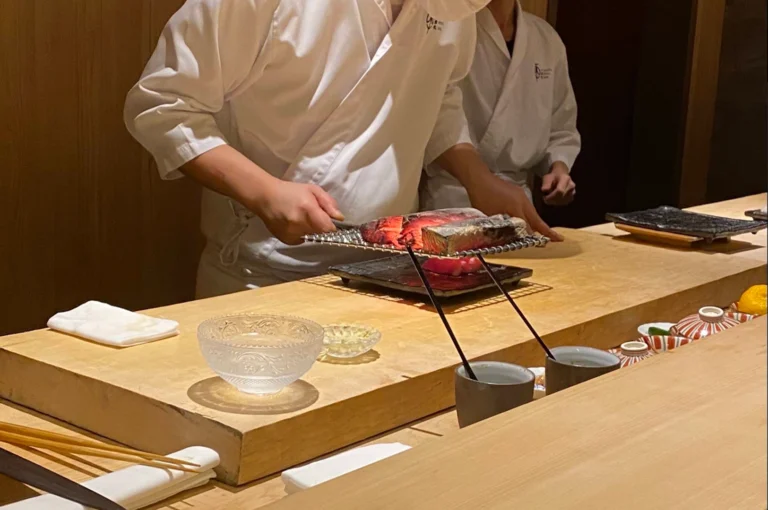
There is a practical reason counter seating remains such a defining part of omakase. You can see the meal being built. The chef is not simply preparing food somewhere behind the kitchen doors. You watch a fish being sliced, a portion of rice shaped, sauce applied and the finished piece placed directly in front of you.
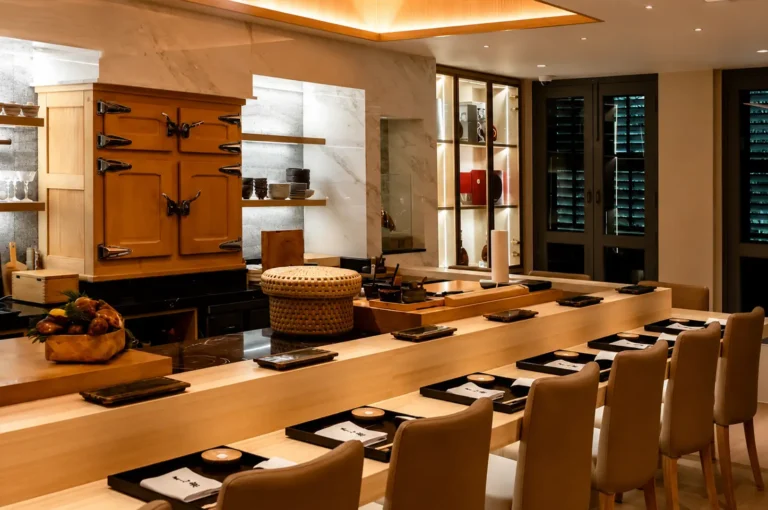
That visibility makes the dining experience more intimate. It also explains why many omakase restaurants keep seating limited, often to 8 to 14 guests. The chef can serve each person directly and control the timing of the course. At a table, you experience the finished dish. At the counter, you also experience the moment before it becomes one.
There Is No Single Correct Omakase Menu
Perhaps the most useful thing to understand is that an omakase should not be judged against one fixed template. One Japanese restaurant may focus almost entirely on sushi. Another may build half the meal around sashimi and expertly prepared hot dishes. Contemporary concepts may incorporate beef or unusual sauces, while traditional counters may remain deliberately restrained.
Even within the same restaurant, the menu can change with season and availability. What should remain consistent is intention. The chef chooses the ingredients, controls the sequence and adjusts the meal so one course prepares you for the next.
For a more budget-friendly introduction to the experience, you can also explore Best Omakase Singapore’sReliable Picks for a Full Omakase Experience, featuring affordable options that still deliver the full omakase experience.