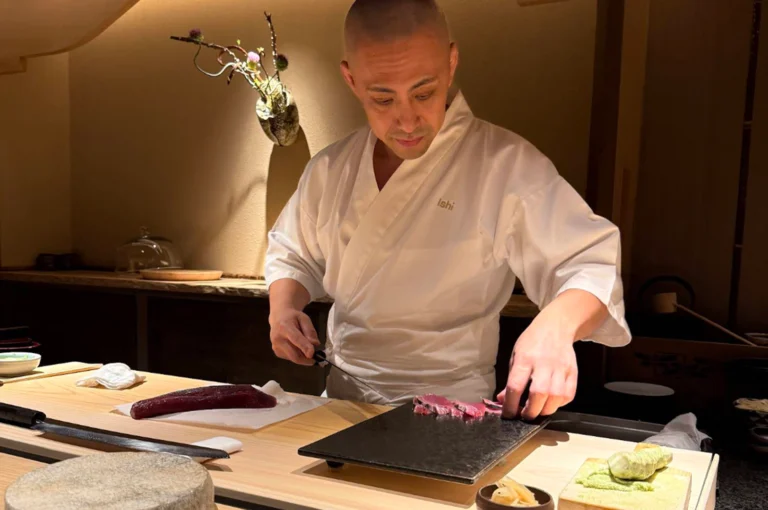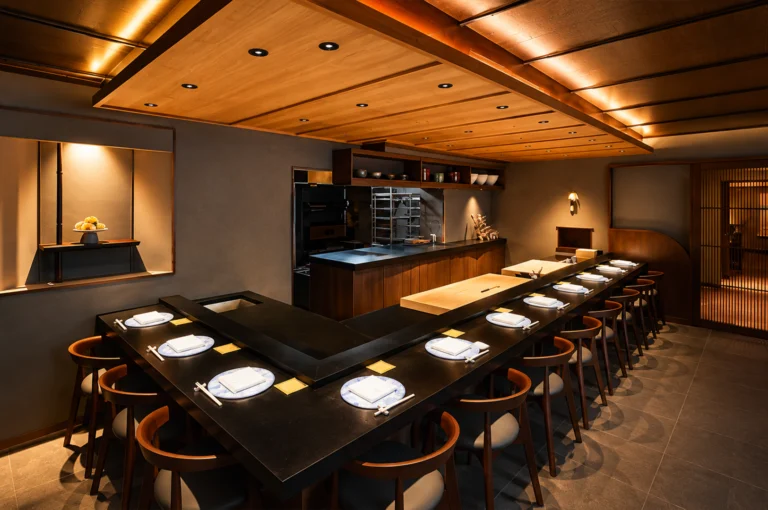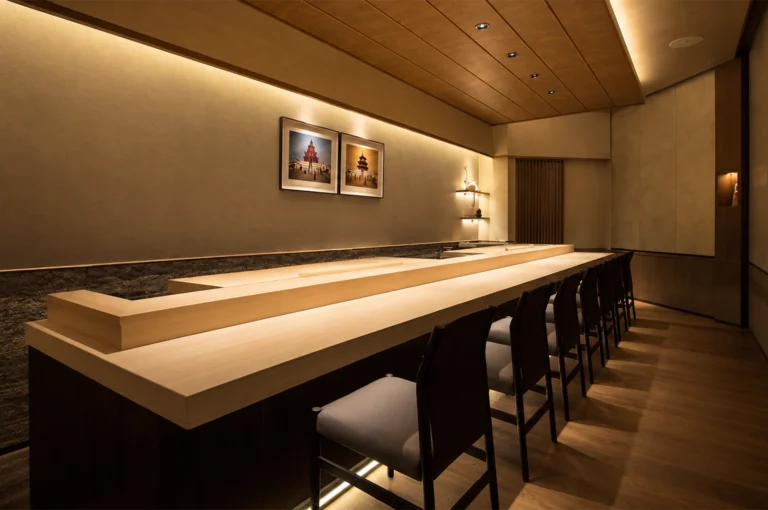
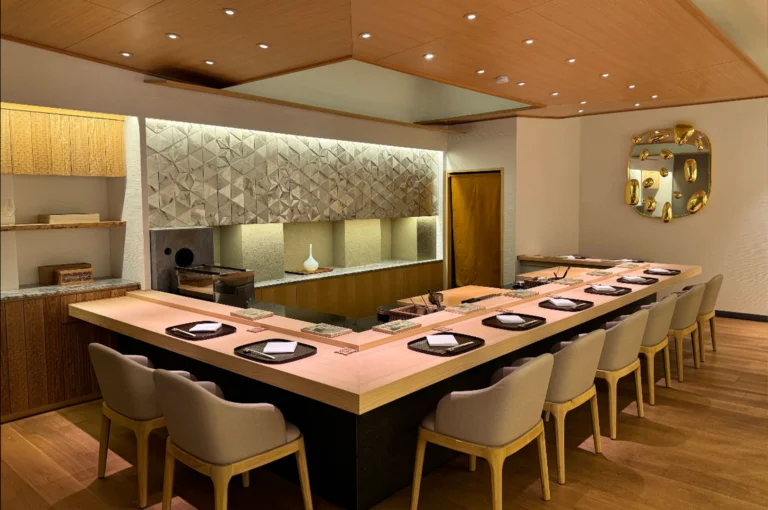
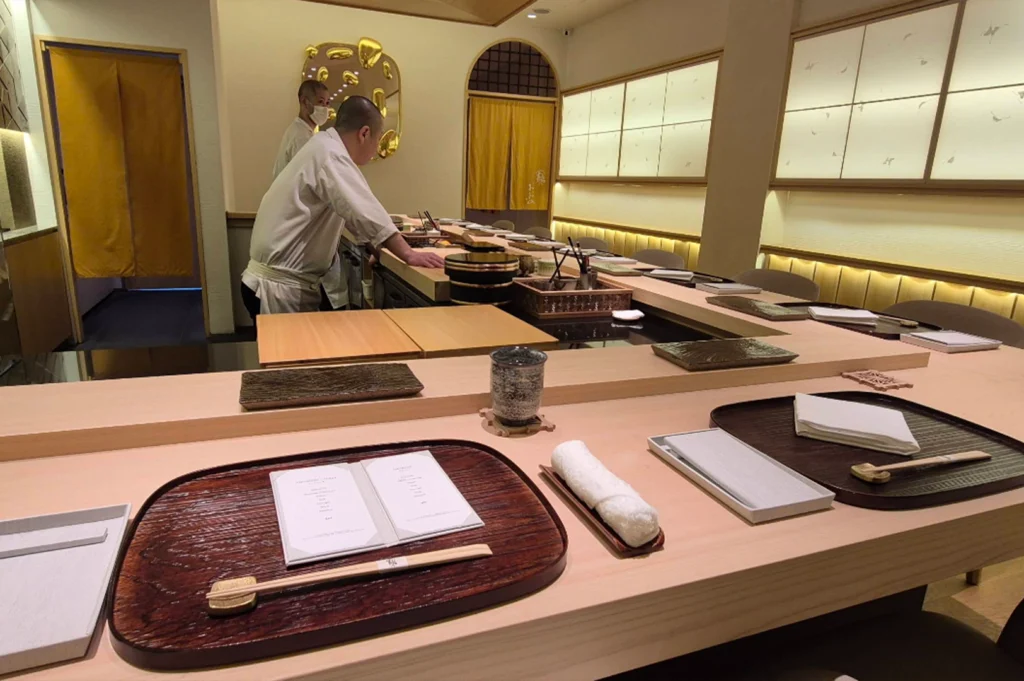
The first thing I noticed about Sushi Oono was the counter.
Made from a 300-year-old piece of hinoki, it gives the restaurant a sense of quiet history. There is no need for elaborate decoration when the chef is working directly in front of you. Once I settled into my seat, the evening felt naturally focused on the food, the rhythm of the preparation, and the small details that can easily be missed at a larger restaurant.
Located on Mohamed Sultan Road, Sushi Oono takes a distinctly traditional approach to omakase. Yet the experience does not feel stiff. Chef Keisuke Ohno has a warm presence at the counter, and the progression gives diners time to settle into his style of Edomae sushi.
Two Ways to Experience the Sushi Oono Counter
One thing I would consider before booking is which type of experience you actually want. Sushi Oono offers two tasting directions, giving diners a choice between concentrating on sushi or allowing more room for seasonal otsumami and drinks.
The sushi-focused option makes sense if you want to follow the progression of nigiri closely. The broader omakase spends more time on appetisers and cooked preparations before moving into sushi, making it feel more like a complete Japanese meal.
That distinction gives the restaurant some flexibility. You are not simply choosing a more expensive menu; you are choosing how you want the evening at the counter to unfold.
At a Glance
- Location: 14 Mohamed Sultan Road, #01-01, Singapore 238963
- Style: Edomae sushi omakase
- Counter: 300-year-old hinoki counter
- Lunch: From around S$220++ for the sushi-focused option
- Dinner: From around S$330++ for otsumami and sushi; higher omakase options available
- Best for: Diners who appreciate traditional sushi technique and aged seafood
Prices and menus can change, so I would confirm the current selection when making a reservation.
What Arrived at the Counter
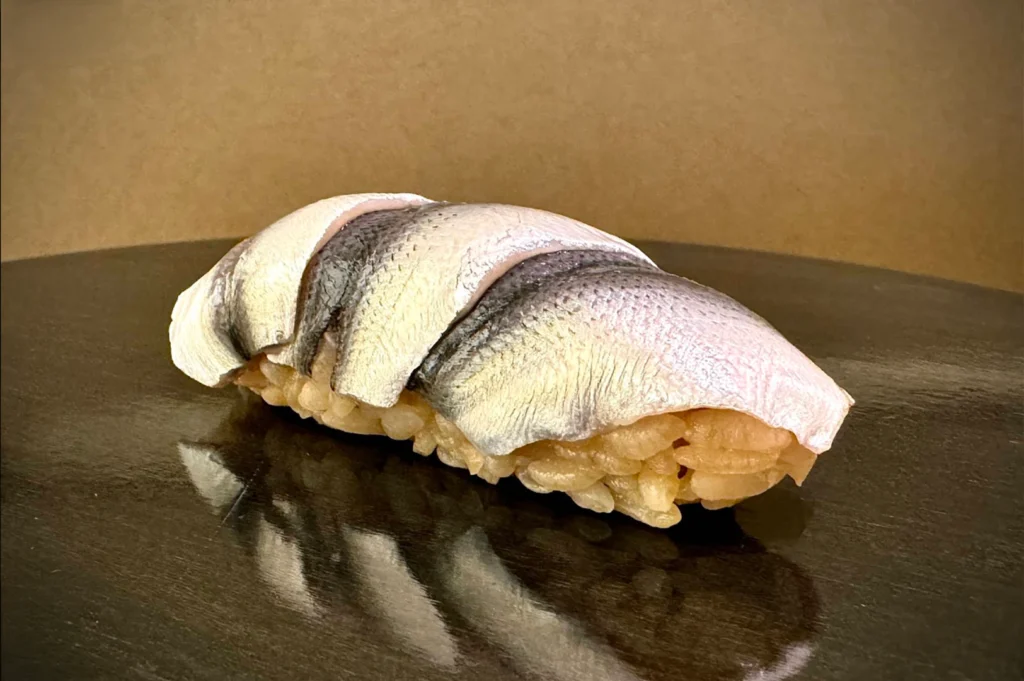
The meal gradually moved through different textures and flavours rather than presenting every piece with the same intensity.
The opening courses can include seasonal otsumami before the sushi begins. Depending on the menu and season, diners may encounter dishes such as eggplant, white fish, deep-fried mochi, dried sea cucumber, shirako or ankimo. These small plates give the meal a savoury beginning before the cleaner flavours of sushi take over.
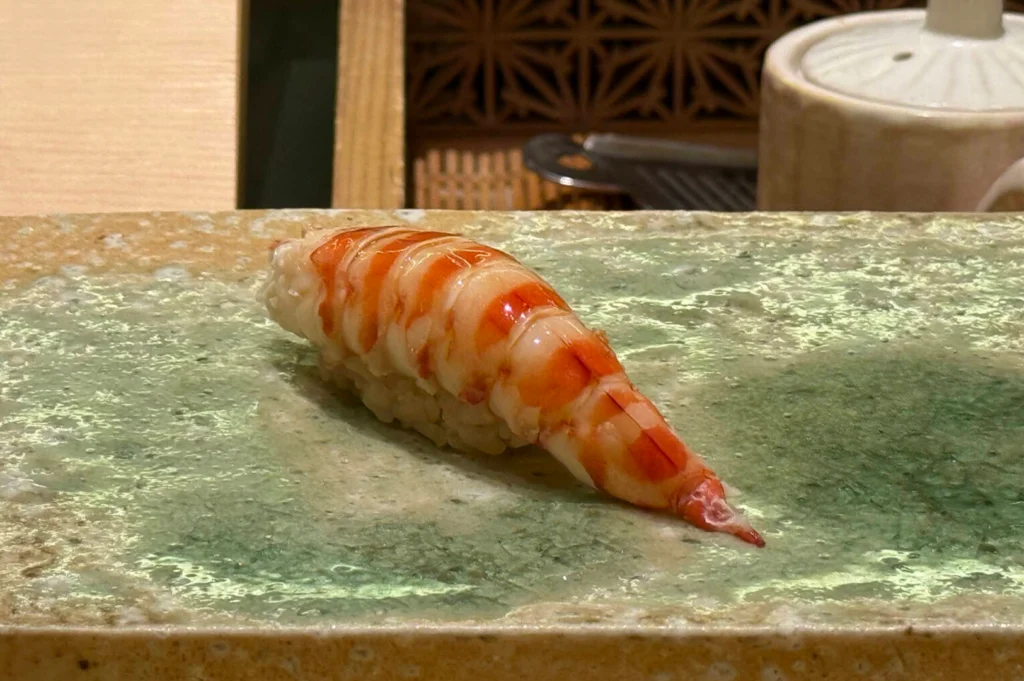
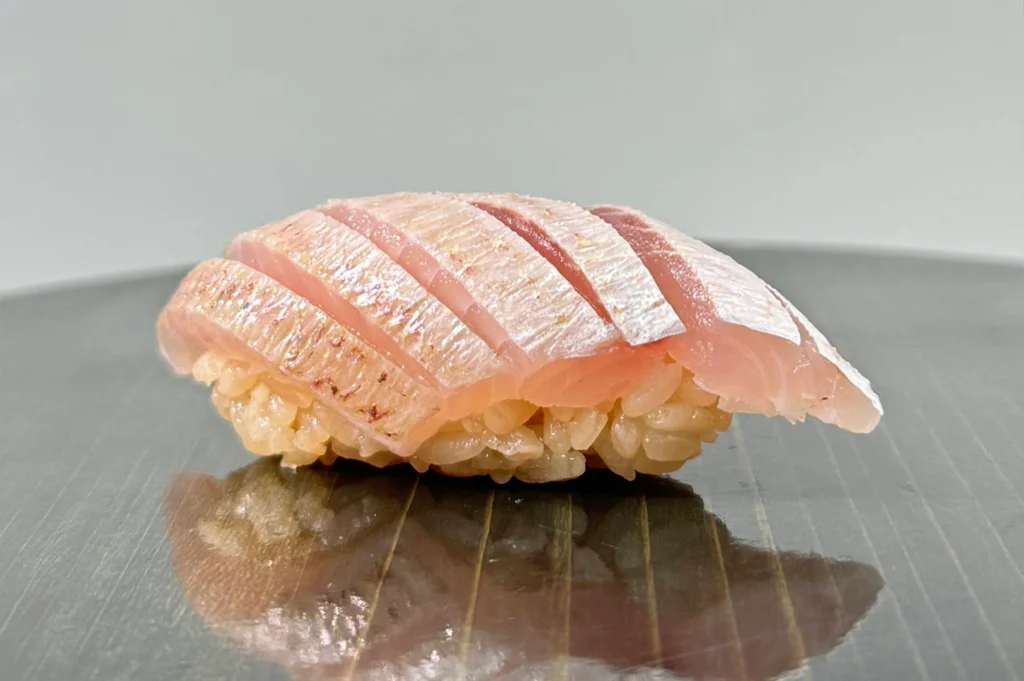
Then came the nigiri progression. Previous menus have included ika, hirame, kinmedai, tai, kohada, aji, nodoguro, uni, ebi and anago, alongside a progression of akami, chutoro and otoro. The exact selection changes, but I liked how the meal moved naturally from lighter fish into richer flavours.
A Few Pieces That Stay With You
- Maguro: The progression from akami to chutoro and otoro makes the differences in texture and richness especially easy to appreciate.
- Uni: Soft, creamy and naturally sweet, it provides a completely different sensation from the firmer fish earlier in the meal.
- Nodoguro: Richer and more savoury, it brings another layer of depth to the progression.
- Anago: A softer, warmer finish that rounds out the sushi before the final courses.
The pleasure here is not necessarily finding one spectacular piece. It is noticing how each piece prepares you for the next.
The Details That Change the Bite
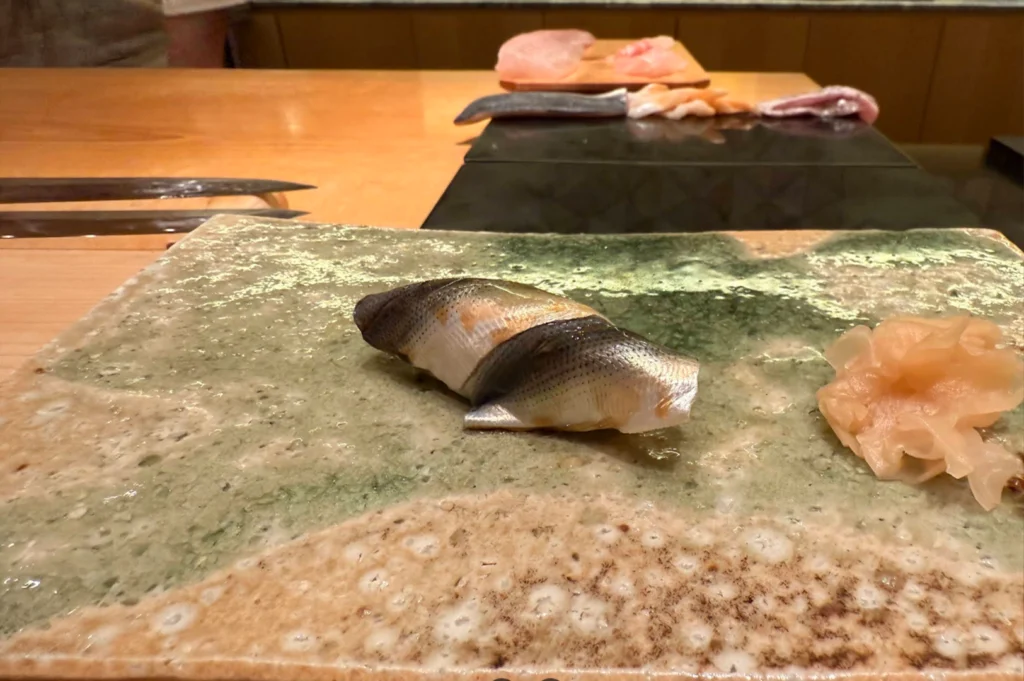
One of the things I found most interesting about Sushi Oono is the chef's approach to seasoning.
Chef Ohno's Edomae style is more assertive than some contemporary sushi counters. The rice and vinegar have enough presence to stand alongside richer fish, rather than quietly disappearing underneath them. Business Times has similarly described his approach as using stronger seasoning and traditional Edomae techniques.
That difference becomes particularly noticeable with fatty tuna. The acidity of the rice helps keep the richness in check, so the bite remains balanced rather than heavy.
It is a small technical detail, but sitting at the counter makes it easier to understand. You see the chef prepare the piece, then taste the relationship between rice, fish and seasoning almost immediately.
Chef Keisuke Ohno: A Traditionalist With His Own Rhythm
Chef Keisuke Ohno grew up in coastal Miyagi and comes from a fishing family. He later trained at sushi restaurants in Ginza before moving to Singapore, where he worked at Sushi Mieda and eventually opened Sushi Oono with his wife, Hiromi.
That background is easy to connect with the food. There is a strong respect for traditional Edomae methods, including ageing and curing fish, but the atmosphere around the counter remains relaxed.
Chef Ohno's personality is part of the experience too. He is able to explain what is being served without turning the meal into a formal lecture, which makes the technical side of sushi easier to appreciate.
The Room Between Courses
The atmosphere at Sushi Oono is deliberately understated. The low-key entrance and wood-heavy interior create a feeling of stepping away from the busier streets of Singapore, while the hinoki counter keeps the attention on the chef.
I also liked that the restaurant does not feel overly ceremonial. There is room for conversation, and the service feels warm without constantly interrupting the meal.
Hiromi Ohno, Chef Ohno's wife and a trained sommelier, also oversees the restaurant's drinks programme. The sake and wine selections make particular sense with the broader otsumami-focused menu.
If you love the idea of an omakase counter but want to explore more affordable omakase experiences in Singapore, our guide to Cheap Omakase Singapore: Reliable Picks for a Full Omakase Experience rounds up approachable options worth considering.
Before You Book Sushi Oono
There are a few practical details worth knowing before making a reservation:
- Address: 14 Mohamed Sultan Road, #01-01, Singapore 238963
- Lunch: 12pm–1pm last seating
- Dinner: 6:30pm–8pm last seating
- Closed: Sunday
- Seating: Counter dining
- Dress code: Smart casual
- Age requirement: Guests must be at least 10 years old
- Dietary restrictions: Vegetarian, gluten-free and fully cooked menus are unavailable
- Reservation: Each diner must order their own tasting menu
The restaurant also has a cancellation policy and requires a reservation authorisation, so it is worth reading the current booking conditions before confirming your table. (sushioono.com)
My Take: A Counter for Diners Who Like Their Sushi With Character
Sushi Oono left me with the impression of a restaurant that knows exactly what it wants its sushi to be.
The 300-year-old hinoki counter is beautiful, but the real character comes from Chef Ohno's Edomae approach: aged fish, assertive seasoning, carefully prepared rice and a progression that gives both otsumami and sushi their own moment.
I would recommend Sushi Oono to diners who enjoy traditional Japanese technique but also want to understand the personality behind it. The experience is not about chasing the most extravagant ingredient on the menu. It is about sitting close, paying attention, and allowing the chef to show you how a piece of fish can change through ageing, seasoning and timing.
For me, that is what makes the counter worth returning to. The meal feels familiar in its foundations, yet there is always room for the season and the chef's hands to make it feel slightly different. If you’re curious to discover more Japanese omakase experiences across Singapore, click here to explore more.