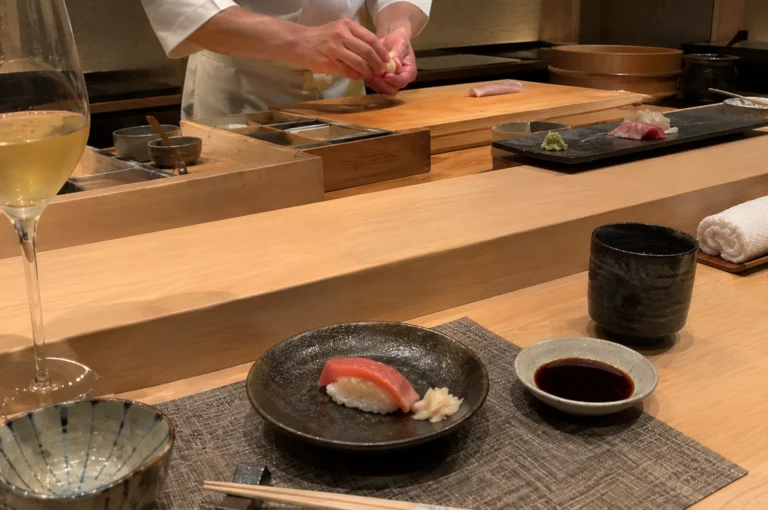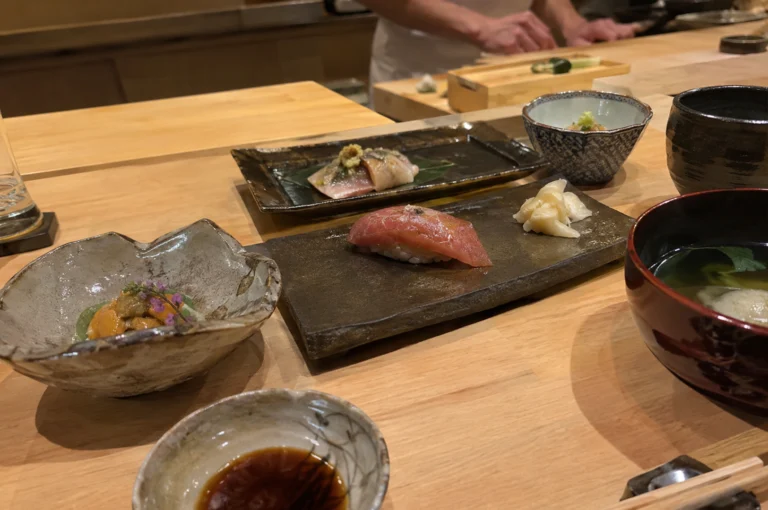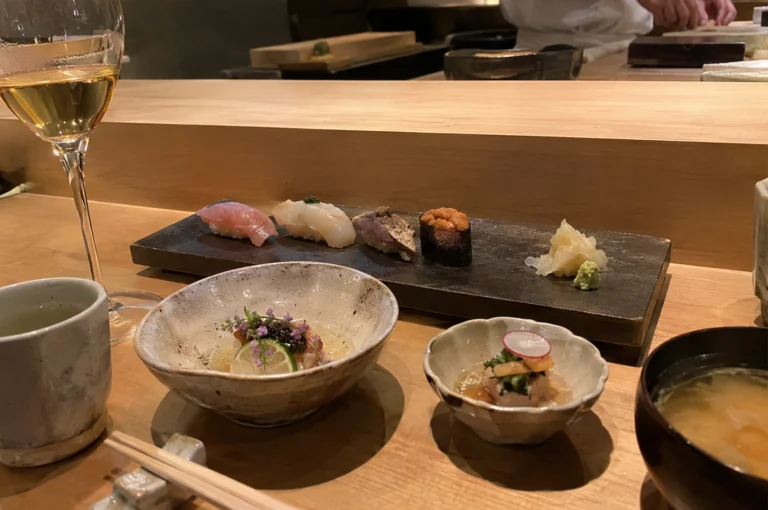
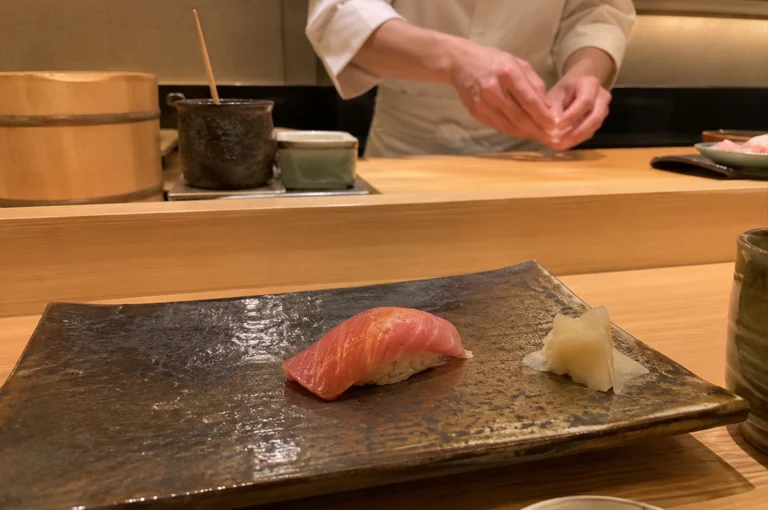
Some of the most memorable moments in omakase begin with ingredients that seem surprisingly simple.
A piece of fish, a little rice, or a seasonal vegetable may not look complicated at first glance.
Yet in the hands of an experienced chef, these ingredients can become the highlight of an entire meal.
The difference often comes down to technique.
The way an ingredient is sliced, seasoned, warmed, chilled, or paired can completely change how it tastes.
Even sushi rice, one of the simplest elements on the counter, requires careful attention to temperature, texture, and seasoning to complement the fish properly.
The chef's role is not necessarily to make an ingredient more complicated.
Instead, it is often about knowing when to leave it alone.
A particularly fresh piece of seafood may need very little beyond careful preparation and subtle seasoning.
Another ingredient might benefit from a more elaborate treatment that brings out characteristics that would otherwise remain hidden.
This restraint is part of what makes omakase craftsmanship so fascinating.
Guests may see only a few ingredients on the plate, but behind them are countless small decisions.
For food lovers, discovering these details can change the way they look at Japanese cuisine.
The experience becomes less about how many ingredients are used and more about how thoughtfully each one is handled.
That is why a seemingly simple course can sometimes become the dish diners remember long after the meal is over.