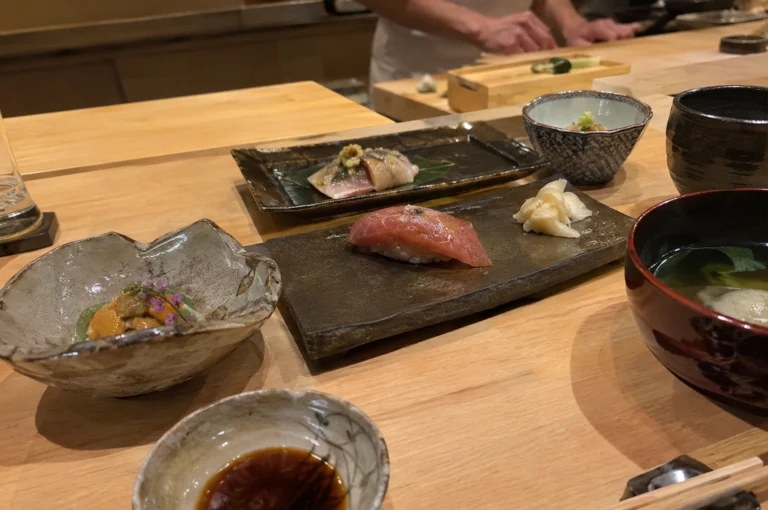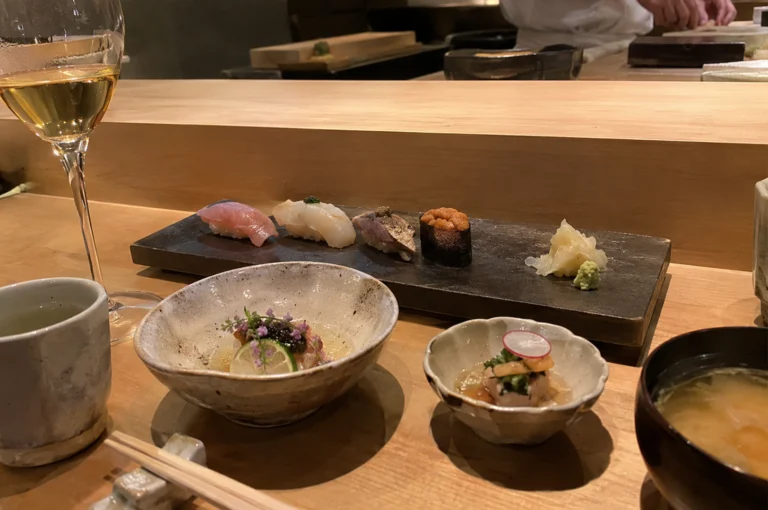
I thought omakase would simply be about good food. Expensive fish. Careful technique. A beautiful counter with quiet lighting and a chef focused on precision. I expected to admire the craftsmanship from a distance, the same way people admire art in a gallery respectfully, but without emotional involvement.
What I did not expect was how personal it would feel.
The first surprise was the silence. Not an uncomfortable silence, but the kind that slows everything down. At most restaurants, noise fills every empty space. Conversations overlap, plates arrive quickly, and the next course often appears before the previous one has even settled in your memory. Omakase moved differently. Every pause felt intentional. Every movement seemed measured.
You begin to notice things you normally ignore.
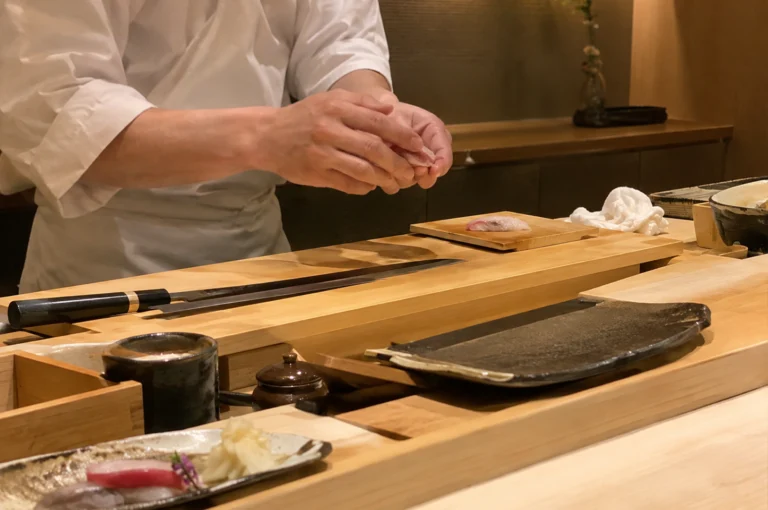
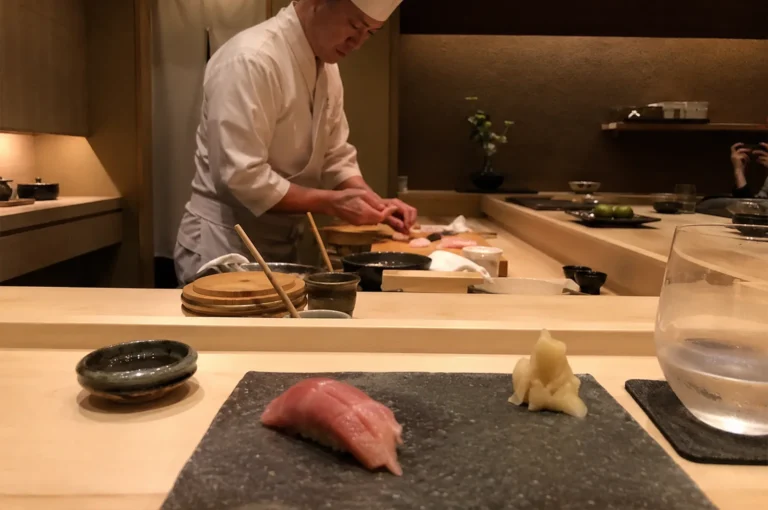
The way the chef wipes the knife after every slice. The brief glance before serving a piece. The careful placement of a plate directly in front of you, almost like the course was made for that exact moment and no other. Nothing feels random at an omakase counter. Even restraint feels deliberate.
That is where the experience becomes personal.
There is no large menu to hide behind. No endless choices competing for your attention. You are simply there, trusting someone else to guide the evening course by course. In a strange way, that trust changes how you eat. You stop rushing. You stop comparing. You become fully present because there is nothing else demanding your attention except what is directly in front of you.
The chef notices more than people realize too. Whether you finish quickly or slowly. Whether you hesitate before trying something unfamiliar. Whether your expression changes after the first bite. Omakase may look quiet from the outside, but beneath that silence is constant observation and adjustment. The experience subtly responds to the people sitting at the counter.
That human connection surprised me the most.
Some of the best moments were not even about the food itself. They were the small interactions in between. A brief explanation about where the fish came from. A smile after noticing your reaction. The calm confidence of someone repeating a craft they have spent years refining. It never felt performative. It felt sincere.
And maybe that is why omakase stays with people long after dinner ends.
The meal disappears piece by piece the moment you eat it, yet the experience lingers because it was never only about consumption. It was about attention. Care. Timing. Trust. Presence. Things that are increasingly rare in everyday life.
I expected to leave remembering a few excellent bites of sushi.
Instead, I left remembering how the entire evening felt.