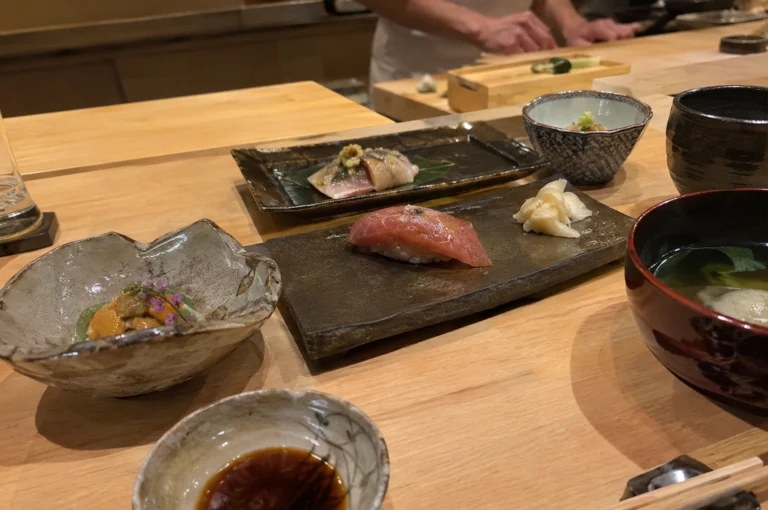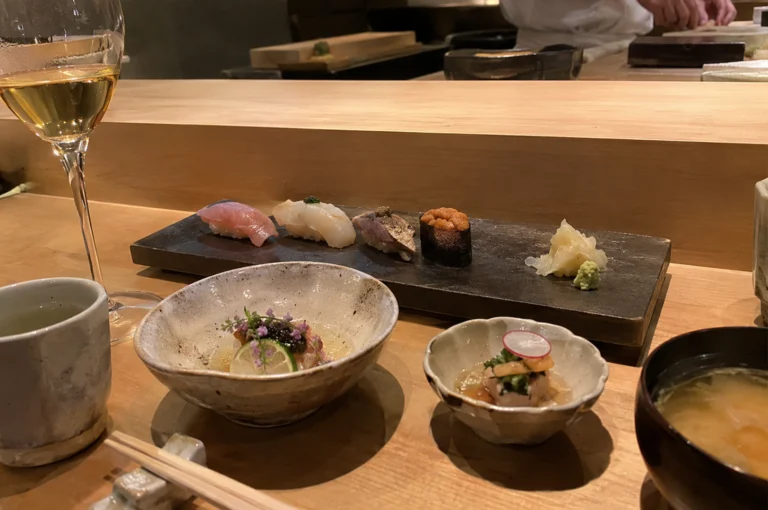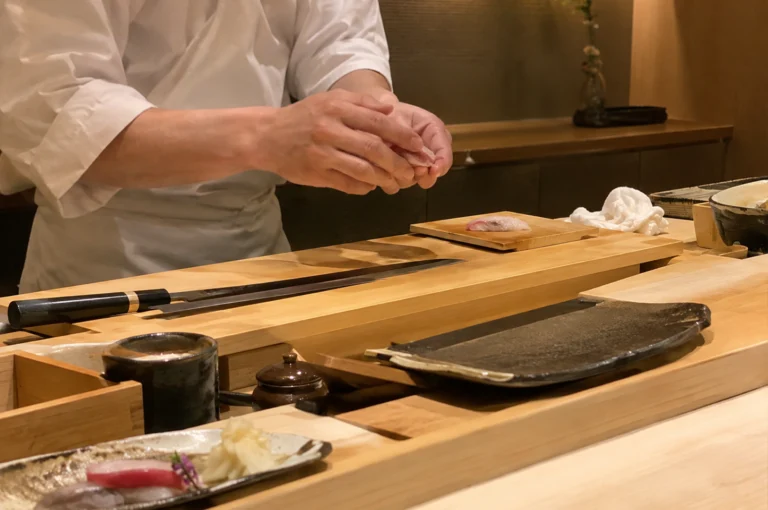
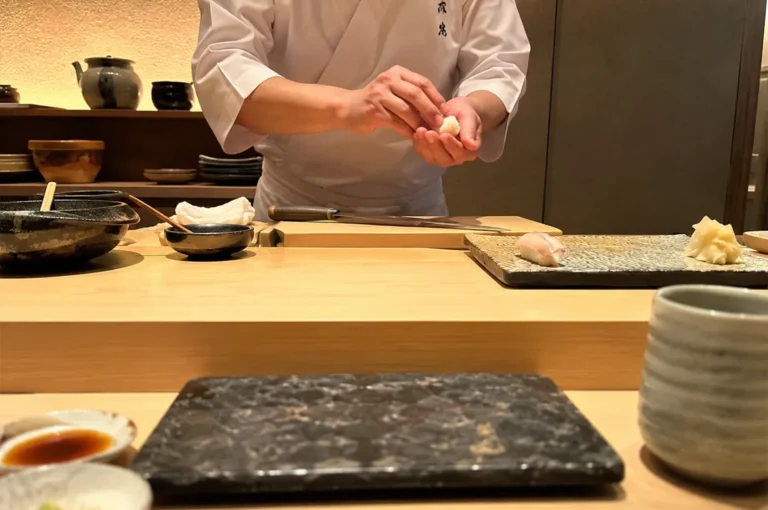
There are restaurants that impress you immediately. The room is loud with energy, the presentations are dramatic, and every course arrives designed to demand attention. Omakase felt different from the very beginning. Nothing asked to be noticed loudly, yet somehow every small detail became impossible to ignore.
That quiet precision was what made the experience memorable.
At the omakase counter, even the smallest movements seemed intentional. The way the chef folded the towel before service began. The exact placement of each plate on the counter. The brief pause before handing over a course. None of it felt rushed, even when the restaurant was full. There was a calmness to the rhythm of the evening that made everything feel carefully considered.
You start noticing details because there is space to notice them.
In everyday life, most meals are treated casually. Food arrives while phones light up beside the table. Conversations overlap with background music and distractions. Omakase removes much of that noise. The simplicity of the setting shifts your attention toward things that would normally disappear into the background.
The temperature of the rice.
The texture of the fish.
The sound of a knife against the cutting board.
The subtle nod from the chef after serving a piece.
Small things suddenly feel significant because the experience encourages presence instead of distraction.
What stood out most was how restraint became part of elegance. Nothing felt excessive. The portions were measured carefully. The seasoning never overwhelmed the ingredients. Even the décor stayed understated, allowing the focus to remain on the experience itself. Omakase does not rely on spectacle to create impact. It trusts precision instead.
And precision, when done properly, feels deeply personal.
There is also an intimacy to sitting at the counter that changes the atmosphere entirely. You are close enough to observe every movement, every adjustment, every moment of concentration. The barrier between preparation and dining almost disappears. Instead of simply receiving food, you witness the care behind it in real time.
That connection changes how people eat.
You slow down naturally. You pay attention more carefully. A single bite carries more weight because you watched the process that led to it. The details become meaningful not because anyone explains them loudly, but because you quietly understand their purpose while sitting there.
By the end of the meal, I realized the evening stayed with me not because of one dramatic course, but because of dozens of subtle moments woven together carefully throughout the experience.
A glance.
A pause.
A perfectly timed serving.
At the omakase counter, the smallest details never felt small at all.