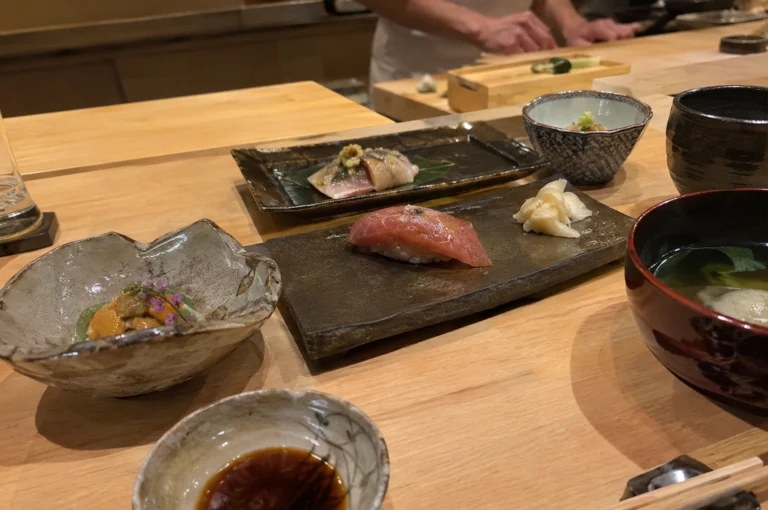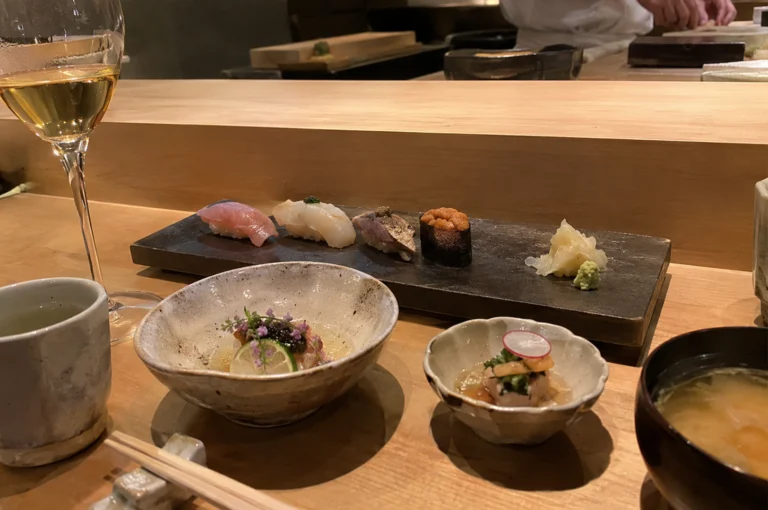
People often describe omakase by what was served.
The quality of the fish. The richness of the uni. The balance of the rice. The precision behind every cut and every movement. And while all of that matters, I realized afterward that the most memorable part of the experience was not actually the food itself.
It was how the evening made me feel.
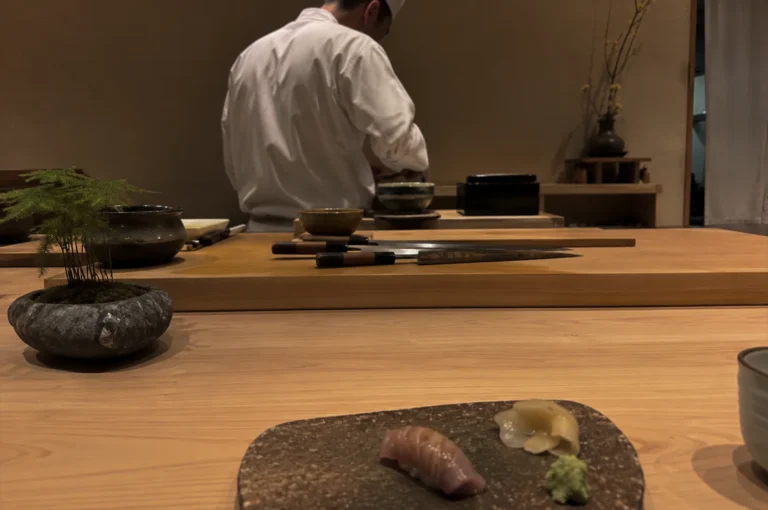
Omakase has a way of slowing people down without directly asking them to. The moment you sit at the counter, the atmosphere changes. Conversations soften. Movements become quieter. Even waiting between courses begins to feel intentional instead of inconvenient. In most restaurants, silence feels empty. In omakase, silence becomes part of the experience.
You start paying attention differently.
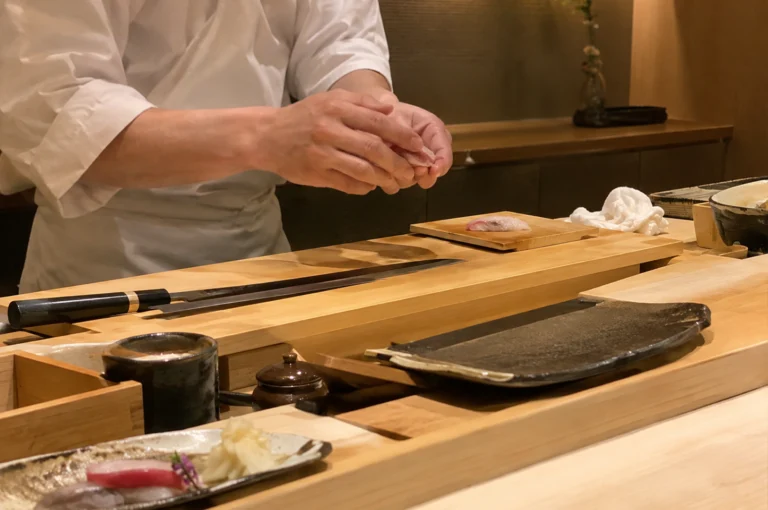
Not only to what is on the plate, but to everything surrounding it. The calm focus of the chef. The rhythm of preparation. The care behind details most people would normally overlook. A towel folded neatly beside the counter. The exact timing between servings. The way a course is placed directly in front of you with quiet confidence, then left alone without unnecessary explanation.
Nothing demands attention loudly, yet somehow everything holds it.
What stayed with me most was the human side of the experience. There is something strangely intimate about entrusting your meal entirely to another person. No long menu. No endless decision-making. Just trust that someone else has already thought carefully about what should come next.
And when done well, that trust feels comforting.
The chef notices more than diners realize too. A reaction after the first bite. Whether someone seems hesitant or excited. The pace at which each course is eaten. Omakase may appear minimalist from the outside, but beneath that simplicity is constant awareness. The experience quietly adapts around the people sitting there.
That connection is difficult to replicate elsewhere.
The meal itself disappears quickly. A piece of sushi lasts only seconds. The plates are cleared almost as soon as they arrive. Yet somehow the emotional impression remains longer than meals that were larger, louder, or more extravagant. Maybe because omakase is never only about consumption. It is about presence.
For a few hours, nothing competes for your attention except the moment directly in front of you.
And that feels increasingly rare.
Long after I forgot the exact order of courses, I still remembered the atmosphere. The calmness. The pacing. The feeling of being cared for through details small enough that most people would miss them entirely.
The food was excellent, of course.
But it was not the reason the evening stayed with me.